Black Swan SW 6279 reads as a deep, near-black on the wall. Its LRV of 4 puts it at the very dark end of the Sherwin-Williams range, meaning it absorbs nearly all light and presents as an almost solid black in most interior conditions. You will not see a lot of complexity at first glance, especially in lower-light rooms or on north-facing walls.
What separates Black Swan from a flat jet black is the warmth underneath. In strong natural daylight, or when it catches afternoon sun, the color opens up and reveals hints of charcoal, smoky gray, and, most distinctively, a soft plum or deep purple cast. That underlying warmth keeps it from feeling cold or institutional. It has a density that draws the eye without the hard edge a purely neutral black can carry.
Finish matters a lot here. In a matte or flat sheen it settles into a velvety, almost chalky depth. Bump it up to satin or semi-gloss on a front door or cabinets and the warm complexity becomes more visible, with the surface catching light and shifting between near-black and a deep smoky tone depending on your angle.
The undertone picture for Black Swan is genuinely contested, and that disagreement is worth taking seriously before you commit. The color data places it in the warm, near-neutral camp, a black that leans warm but stays broadly neutral. Many independent reviewers, however, consistently call out a plum or purple cast, particularly in daylight and in rooms with white or cool-toned surrounding finishes that let the undertone surface.
Both readings are defensible. At LRV 4 the color is so dark that undertones stay buried under most conditions, which is why some people see simply a warm black and nothing else. But when bright natural light hits it, or when it is placed next to a crisp cool white, the violet-adjacent quality becomes visible and can read as distinctly purple to eyes that are tuned in to it. If your space gets strong daylight at any point during the day, plan for that plum note to show up.
The practical takeaway is to sample large and look at multiple times of day, including morning light, midday sun, and lamp light in the evening. If you are pairing it with cool whites or gray-leaning neutrals, the plum undertone will be more pronounced. Warm whites and creams tend to harmonize with the warmth in Black Swan and keep the purple note quieter. Do not skip the on-site test; with a color this dark, a digital swatch or small chip will not tell you what you need to know.
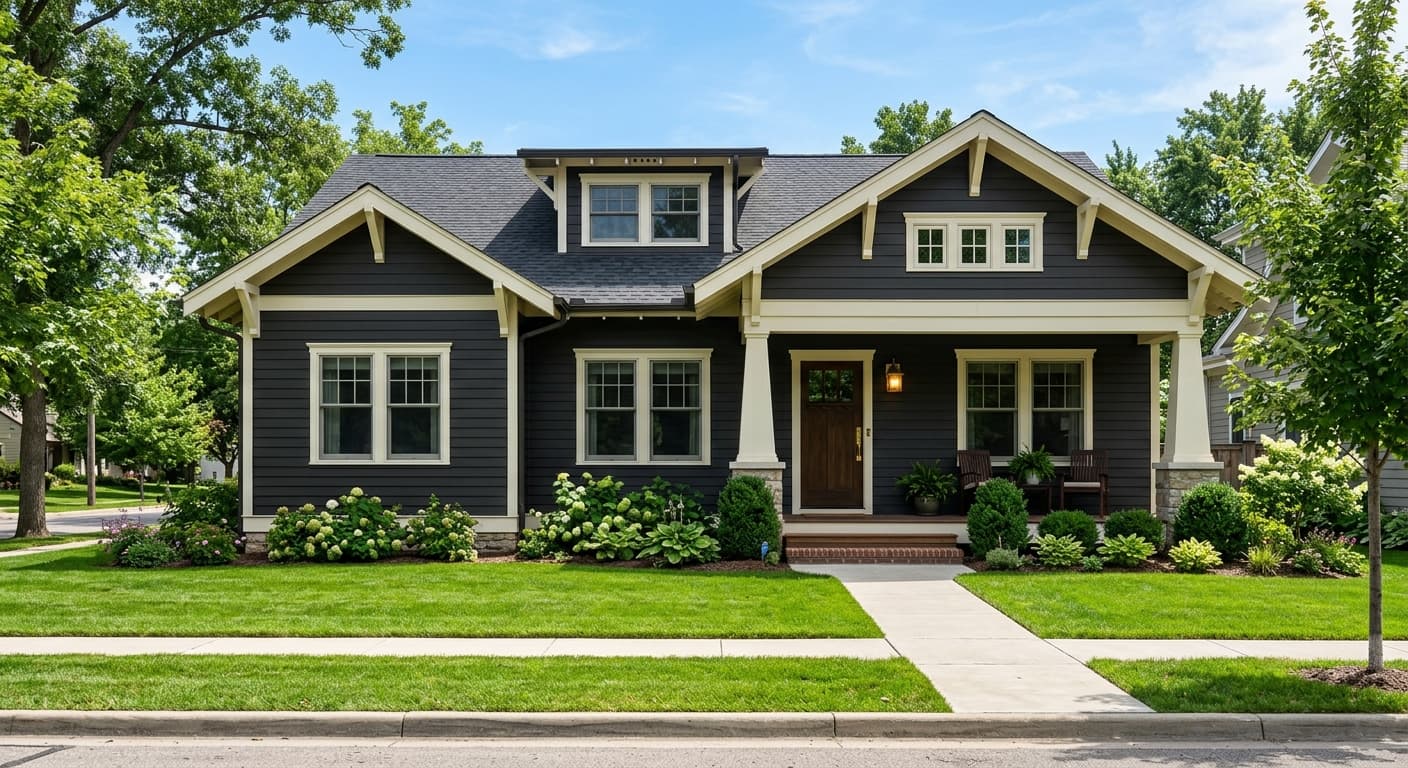
Black Swan earns its reputation most on exteriors. As a modern exterior body color it delivers real presence without the flatness of a pure neutral black. It works particularly well on craftsman, farmhouse, and contemporary architecture where a dark, grounded palette reads as intentional rather than severe. The warmth in the color softens the overall effect compared to cooler near-blacks, so an entire house facade does not look like a void.
Front doors are one of the most popular applications, and for good reason. At LRV 4 it creates a strong contrast against lighter siding or brick, and the subtle plum complexity gives it more visual interest than a standard black door. Cabinets are another strong use case, especially kitchen islands or lower cabinets paired with a warm cream upper. The color anchors the space without competing with countertop materials or hardware. On accent walls it functions as a dramatic backdrop, receding the wall and making furniture and art pop forward.
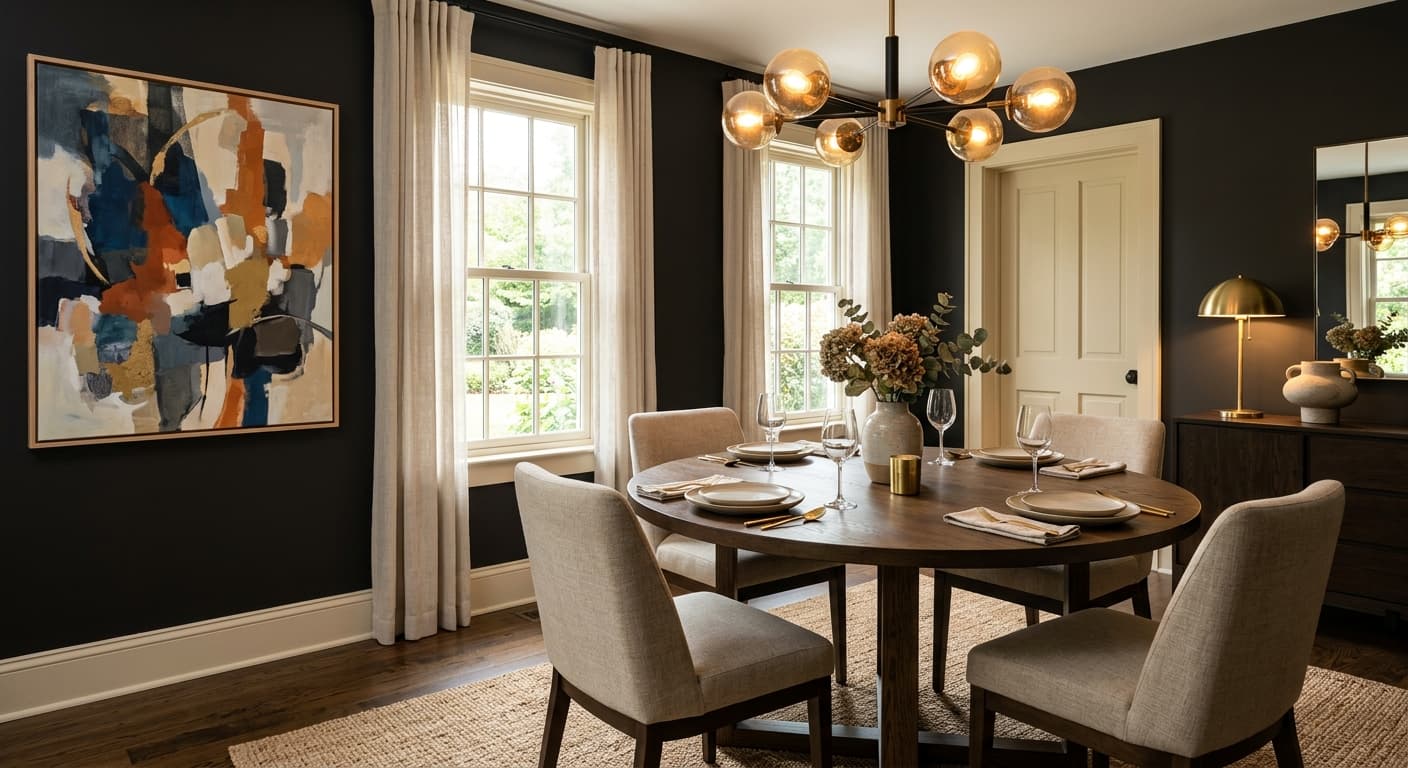
Inside, orientation and natural light should drive your decision. South and west facing rooms that get strong direct light are the best candidates because they will coax out the warmth and undertone complexity. In north-facing rooms or basements the color can flatten into a heavy, almost opaque black and may feel oppressive depending on room size. Smaller interior spaces work when the goal is a moody, intentional effect, but plan your lighting carefully and use warm-toned bulbs to keep the warmth alive after dark.
As a full exterior body color, Black Swan delivers a modern, grounded look that holds up at scale. Its LRV of 4 gives the facade real weight, and the warm undertone keeps it from reading as cold or flat. Pair it with warm white trim and aged brass or matte black fixtures for a cohesive result.
A front door in Black Swan makes an immediate impression. The low LRV creates strong contrast against most siding colors, and in direct sunlight the plum warmth surfaces and adds depth beyond a standard black. A satin or semi-gloss finish maximizes that complexity.
On lower cabinets or a kitchen island, Black Swan anchors the room and pairs well with warm cream uppers like Creamy (SW 7012). It reads as a rich, warm near-black alongside natural wood shelving and warm metal hardware. Keep the room well lit to prevent the low LRV from making the space feel smaller than it is.
An accent wall in Black Swan creates a dramatic backdrop that pushes furniture and art forward. It works best behind a sofa, bed, or fireplace where the concentration of dark color reads as intentional. Use warm-toned lighting to keep the warmth active in the evening.
Black Swan on trim and molding in a room with warm cream or off-white walls creates a graphic, tailored effect. The warmth in the color ties the trim to the wall rather than creating a jarring contrast. A semi-gloss or gloss finish keeps the detail crisp.
Black Swan pairs best with warm whites and creams that echo its own warmth and prevent the plum undertone from clashing with cool surroundings. Creamy (SW 7012) is a natural companion, its yellow-warm base reads as a soft contrast against the near-black without creating the stark bright-white opposition that can make very dark colors feel harsh. Original White (SW 7077) offers a slightly cleaner take while still staying warm enough to complement rather than fight the color.
For a softer, more earthy pairing, Dried Edamame (SW 9122) brings a muted, organic quality that works well alongside Black Swan on exteriors or in rooms where you want depth without high contrast. On the material side, warm-toned woods, aged brass and unlacquered brass hardware, terracotta, and natural linen all play well with the warmth in Black Swan. Cool-toned metals like chrome or polished nickel can push the plum undertone forward, so test those combinations on site before committing.
All comparisons are matched against Black Swan at LRV 4.0.
Pairing Black Swan with cool blue-gray walls, cool-toned stone, or cool white trim can pull the plum undertone forward in a way that reads as unintentional and clashing rather than layered.
Polished chrome, cool brushed nickel, and similarly cool-toned metals against Black Swan can emphasize the violet quality and feel discordant, particularly on cabinetry hardware or door fixtures.
In a room with Black Swan on an accent wall or cabinets, a bright, blue-white ceiling creates a sharp tonal gap that makes the plum undertone in the darker color more pronounced and harder to ignore.
Black Swan is a deep, near-black with an LRV of 4, placing it among the darkest colors in the Sherwin-Williams lineup. It reads as a very dark, warm black in most conditions, with hints of charcoal, smoky gray, and a soft plum or purple cast that emerge in strong natural light.
The undertone picture is a bit divided. The color is classified as a warm, near-neutral black, but many independent reviewers consistently report a plum or purple cast, especially in daylight or when surrounded by cool or white finishes. Both readings can be correct depending on your specific light conditions, so sampling on site is essential.
Black Swan leans warm. It does not have the cool, blue-gray quality of a neutral or cool-toned near-black. Its warmth is subtle at LRV 4 because so little light reflects, but in strong daylight the warm and plum-adjacent quality becomes visible, keeping the color from feeling cold or harsh.
Black Swan has an LRV of 4, which is very low. That means it reflects only about 4 percent of light and will appear as a near-solid black in most interior conditions, only showing its warm undertones in strong natural light.
Black Swan's Sherwin-Williams code is SW 6279. Its hex value is #3A373E and its RGB values are 58 red, 55 green, 62 blue.
Warm whites and creams are the most reliable pairings. Creamy (SW 7012) and Original White (SW 7077) both work well because their warmth complements Black Swan without clashing with its plum undertone. For a softer, earthier look, Dried Edamame (SW 9122) pairs naturally on both exteriors and interiors. On the materials side, aged brass hardware, warm-toned woods, and natural textiles all support the warmth in the color.
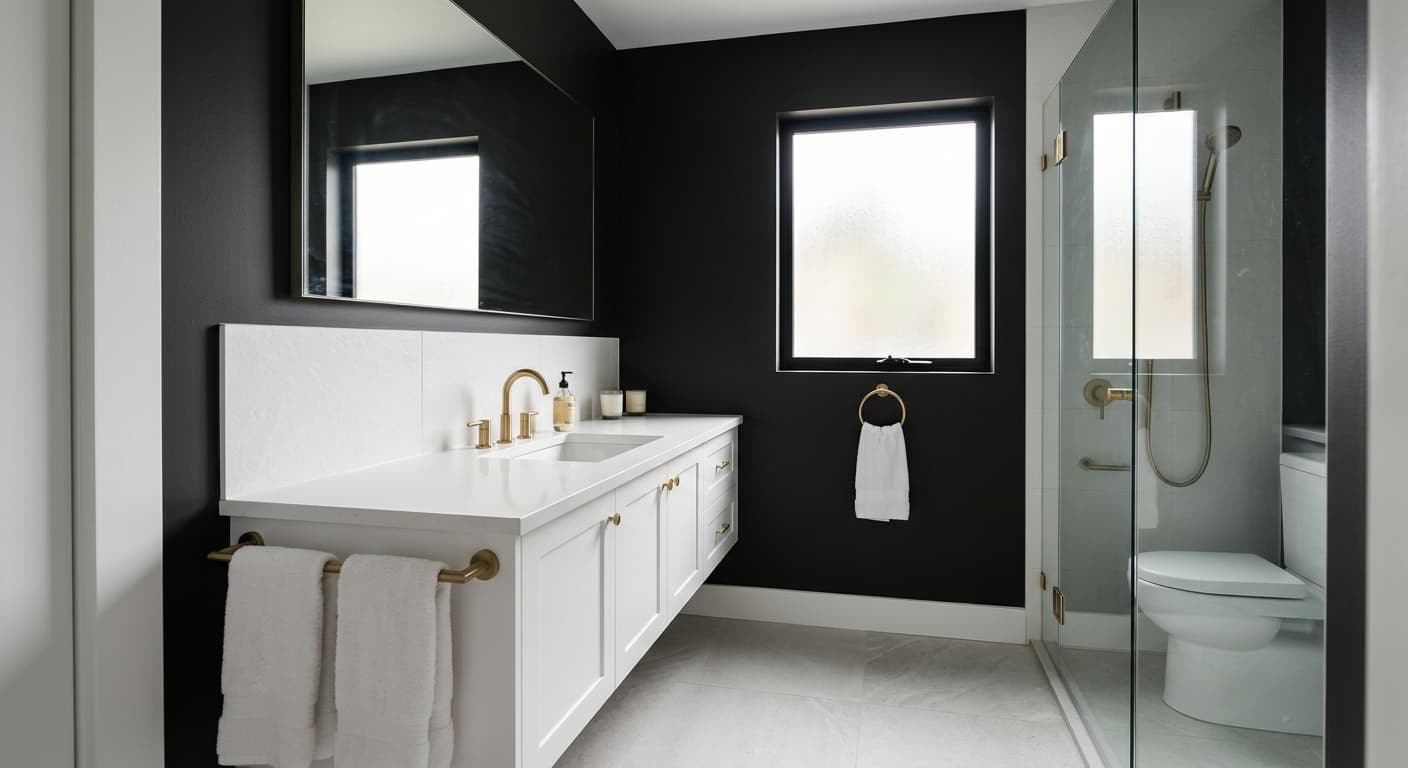
Yes to all three. Exteriors are one of its strongest applications, particularly on craftsman, farmhouse, and contemporary homes where a dark, grounded facade reads as intentional. Front doors in Black Swan create strong contrast and show the plum complexity nicely in sunlight, especially in a satin or semi-gloss finish. On cabinets it anchors kitchen and bath spaces effectively, particularly as a lower cabinet or island color paired with warm cream uppers.
