Network Gray reads as a confident mid-tone gray with enough saturation to hold its own across an entire room. Its LRV of 37.3 puts it firmly in medium territory, never so light that it flirts with white nor so deep that it feels heavy or cave-like. You get a real color here, not a gray that hedges.
In bright natural daylight, especially from a north- or east-facing window, the blue-gray character steps forward and the wall takes on a slightly contemporary, almost industrial edge. Some reviewers say it feels close enough to a blue-gray that they nicknamed it "Network Blue" when it sits next to a traditional warm gray. That is not a complaint; it gives the color a crisp, modern presence that holds up well in open-plan spaces and on exteriors.
As the light drops or warms, say in a room with incandescent bulbs or late afternoon sun, Network Gray shifts register. It grounds and softens, reading more like a neutral greige-gray rather than a cool blue. That range is a genuine asset. The color remains polished and inviting across lighting conditions rather than locking you into one mood.
This is where reviewers disagree the most, and the disagreement is worth taking seriously rather than glossing over. The dominant camp describes a clear blue undertone, strong enough that in cool light the color leans more blue than gray. If your room is north-facing or flooded with daylight from a cool sky, that blue cast will be visible and deliberate-feeling rather than accidental.
A second group of reviewers picks up faint green undertones, particularly in rooms with mixed light or near greenery outside. This gives the color an earthy, naturalistic quality that some find appealing and others find surprising. Our own database reads the undertone as gray and warm and balanced, reflecting a third perspective: that the color sits close enough to neutral that its warmth keeps it from going fully cool. These three readings are not mutually exclusive. The blue, the green hint, and the warm-balanced quality can all surface depending on your specific walls, finish, and surrounding colors.
The practical lesson is not to rely on a sample chip or a small brush-out. Paint a large swatch on the actual wall you are considering, leave it for a full day, and check it in morning light, afternoon light, and after dark with your fixtures on. What you see in a paint store under fluorescents is not what you will live with.
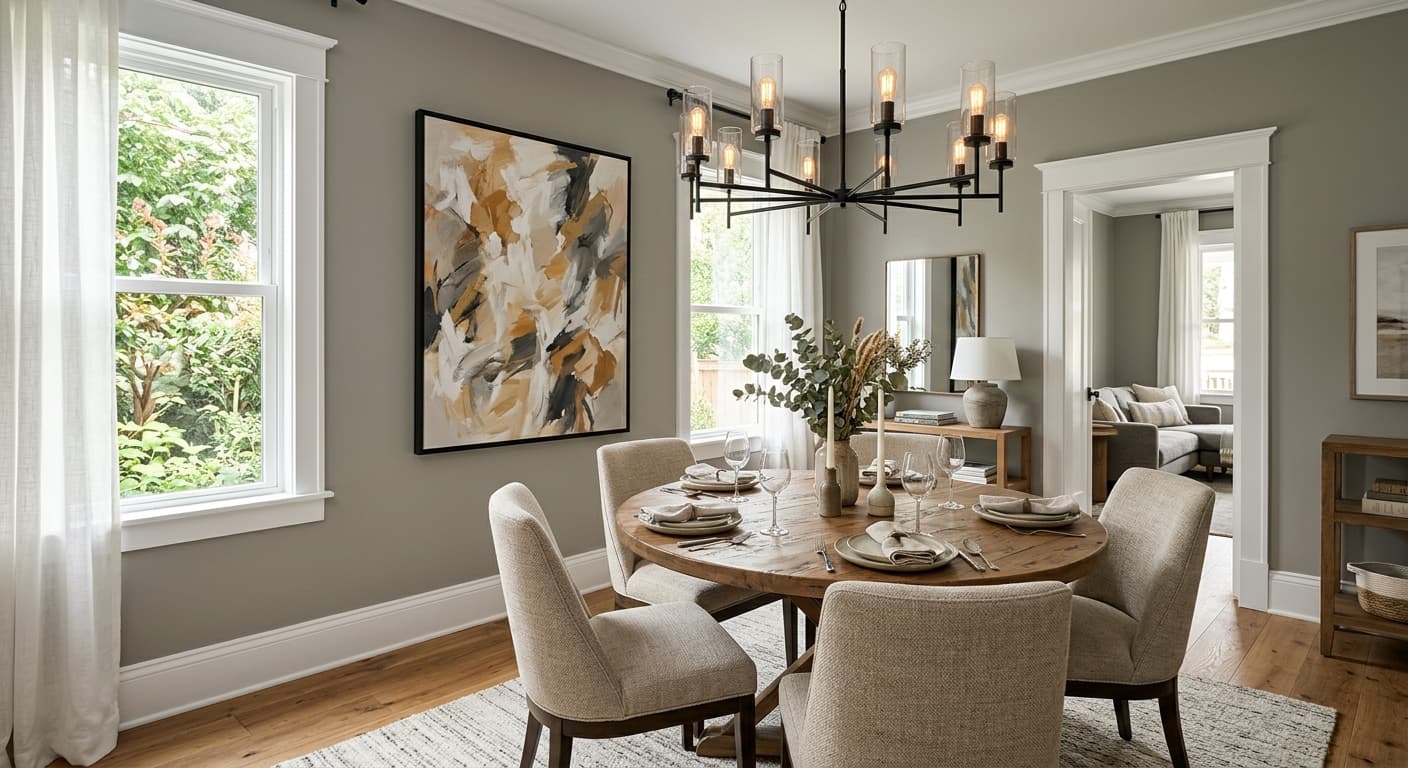
Network Gray is a natural fit for living rooms and open-plan common areas where you want a mid-tone gray that holds up without needing constant sunlight to feel alive. Its depth at LRV 37.3 keeps large walls from feeling washed out, and that slight blue-gray energy makes it feel contemporary without trending into anything too trendy.
Bedrooms are another strong application. The color is refined without being stark, and when paired with warm wood furniture, cream bedding, or brass hardware, the potential coolness is neutralized and you end up with a room that feels calm and grounded. Home offices and bathroom vanities also appear frequently in reviews, which makes sense: the color signals focus and clarity without the harshness of a bright cool gray.
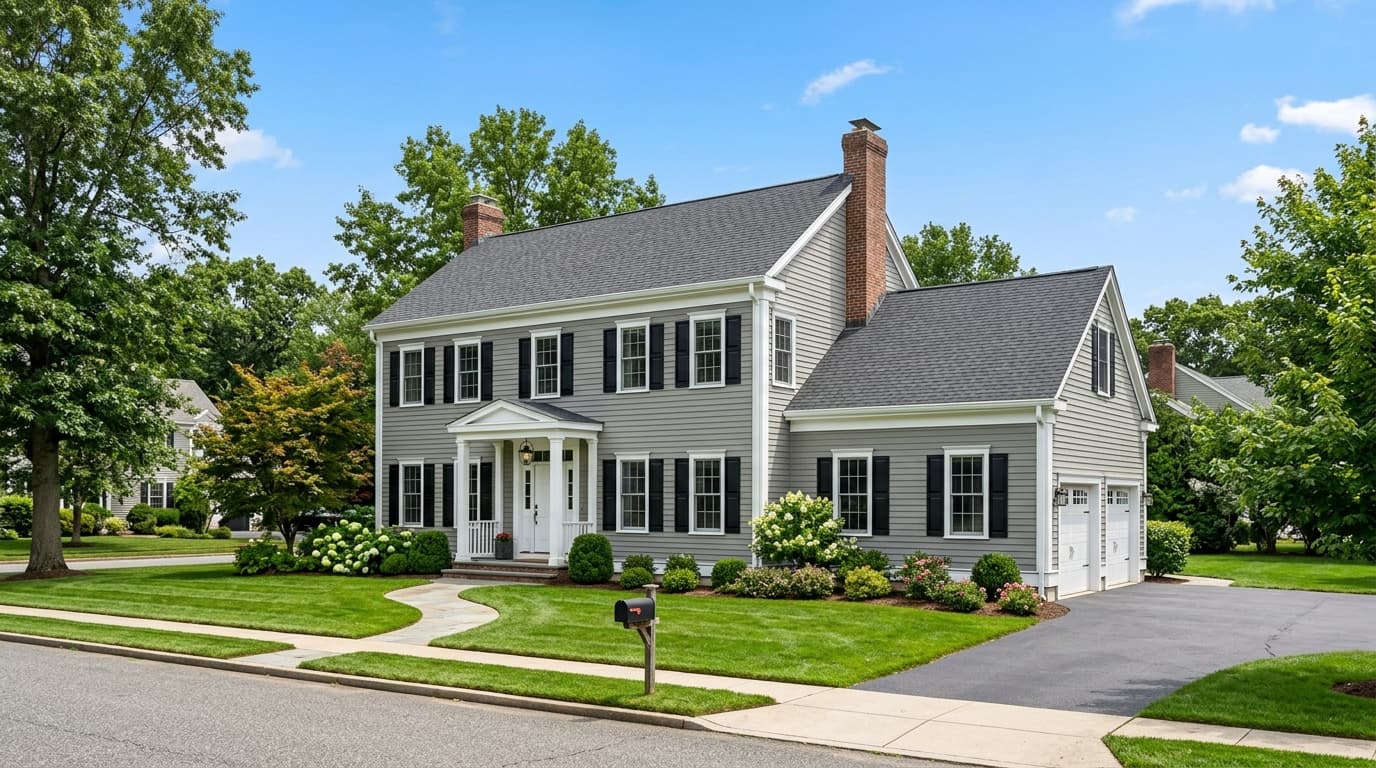
On the exterior, Network Gray earns its spot on Sherwin-Williams top exterior lists. Its saturation reads well at scale and its slight blue cast pairs cleanly with white or cream trim. It is a color that photographs well and reads as intentional from the street. For front doors, the deep charcoal contrast of Mineral Gray works strongly here. South- and west-facing facades will bring out warmth; north- and east-facing exposures will emphasize the blue, so factor your home's orientation into the decision.
Network Gray holds a living room without dominating it. Its LRV of 37.3 keeps the space from feeling dim while still providing enough color weight to make the walls feel intentional. Pair it with warm wood flooring and cream upholstery and the blue undertone recedes into a sophisticated neutral.
In a bedroom, especially one with warm artificial light in the evenings, Network Gray shifts toward a calming greige-gray quality. Brass or bronze fixtures and natural linen textiles balance any cool pull. North-facing bedrooms will read bluer, so add warm layers through wood and soft furnishings.
Network Gray earns its place on top exterior lists. The saturation holds at architectural scale and the slight blue-gray cast gives a home a clean, modern profile. White or cream trim is the standard companion, and darker accents on shutters or a front door sharpen the contrast.
The focused, slightly cool quality of Network Gray suits a home office well. It encourages clarity without being aggressive, and it photographs neutrally on video calls. Keep desk accessories and shelving in warm wood tones to prevent the room from feeling clinical.
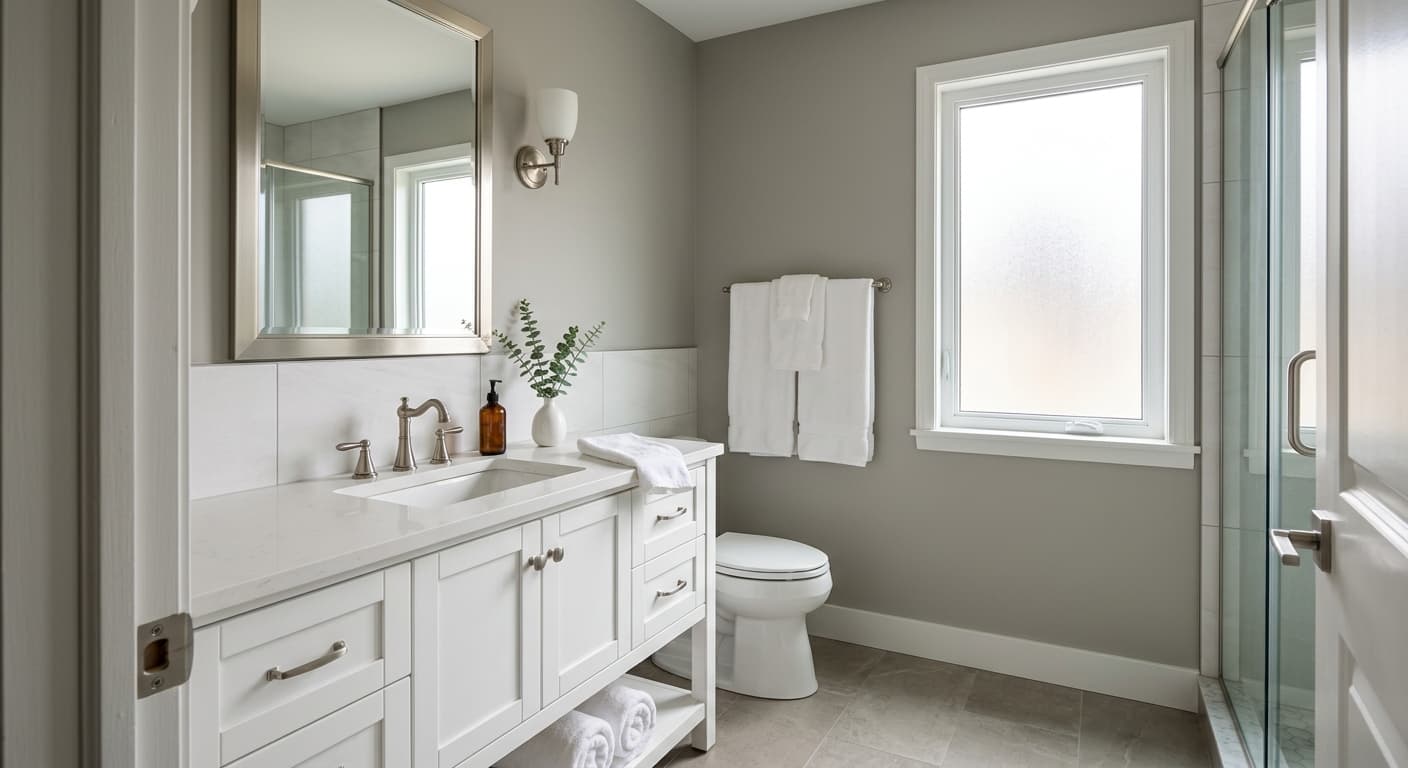
Network Gray on cabinetry delivers a polished mid-tone that sits between a true light gray and a statement dark cabinet. Brass or matte black hardware both work. In a bathroom vanity application, pair it with white marble or a warm stone countertop to balance the undertone.
Network Gray plays well with lighter, warmer neutrals that keep its cool tendencies in check. Site White SW 7070 is the go-to trim pairing, providing a crisp, clean contrast without going stark. Gossamer Veil SW 9165 works as a soft warm-adjacent companion on an adjacent wall or in a connected room, bridging the gap between the gray and any warm wood or fabric tones in the space.
For high-contrast moments like a front door, lower cabinet run, or a fireplace surround, Mineral Gray SW 2740 provides the kind of depth that makes Network Gray feel anchored rather than floating. Indoors, lean into warm wood tones, brass or bronze hardware, and cream or off-white textiles. These choices counteract the blue pull and keep the room from reading cold.
All comparisons are matched against Network Gray at LRV 37.3.
Network Gray's blue undertone can amplify when surrounded by cool-toned accessories, furniture, or rugs in blue, purple, or lavender. The cumulative effect can push the room into feeling cold and one-note rather than layered.
A very cold, blue-white trim against Network Gray can amplify the blue undertone and make both colors feel harsher than intended, particularly in rooms with cool north-facing light.
High-contrast warm orange wood tones, common in older pine or some oak floors with a red stain, can clash visually with Network Gray's blue lean, creating a competing tension that makes neither element look intentional.
Network Gray is a medium-depth gray with an LRV of 37.3 and a hex value of #A0A5A7 (RGB 160 / 165 / 167). It reads as a confident mid-tone: not pale, not dark, with enough saturation to feel like a real color choice rather than a near-white or off-white gray.
Reviewers disagree on this, which is useful information. The majority identify a blue undertone that is noticeable in cool or daylight conditions. A second group sees faint green undertones in mixed or indirect light. A third perspective, reflected in our database, reads the color as warm and balanced overall. All three can be accurate depending on your specific light, orientation, and surrounding colors. Test a large swatch on your own wall before committing.
It sits in the middle with a lean toward cool in daylight. In bright or north-facing light the blue-gray quality is prominent. In warmer or lower light, especially with incandescent bulbs, it settles into a more neutral, slightly warm gray. The surrounding palette matters: warm wood, brass, and cream pull it toward warmth, while cool accents and blue-white trim push it cooler.
Network Gray has an LRV of 37.3. That places it firmly in the medium range, darker than most popular light grays but well short of a deep charcoal. It will absorb some light in small spaces but holds up without making a room feel closed in.
Site White SW 7070 is the recommended trim pairing for a crisp, warm-leaning contrast. Gossamer Veil SW 9165 works as a warm companion on adjacent walls or in connected rooms. Mineral Gray SW 2740 provides a deeper charcoal anchor for doors, lower cabinets, or accent features. Beyond paint, warm wood tones, brass or bronze hardware, and cream textiles all help balance the color's cool tendencies.
Network Gray is Sherwin-Williams SW 7073. Its hex code is #A0A5A7 and its RGB values are 160 / 165 / 167. Its LRV is 37.3.
Yes on all three, with some nuance. On exteriors, its saturation holds well at scale and it appears on Sherwin-Williams top exterior color lists. Its blue-gray quality reads as clean and modern from the street, especially with white or cream trim. For a front door, pairing it with a deeper accent like Mineral Gray creates strong contrast. On cabinets and vanities, it sits in a practical middle range between light gray and a statement dark, and it works with both brass and matte black hardware.
