Nuance lands on the wall as a soft, light warm off-white with enough gray and beige in its base to read as a quiet greige rather than a true white. Its LRV of 74.3 means it reflects a generous amount of light and keeps rooms feeling open, but it never goes stark or clinical. There is a settled, grounded quality to it that separates it from brighter, crisper whites.
Up close and in person, you notice the color has real depth for something this light. The warm gray base carries a faint beige layer over it, and depending on the finish and the wall texture, a very subtle taupe quality can come forward. It does not shout any single undertone at you, which is a big part of why it works as a whole-house neutral. It simply reads as a calm, sophisticated light neutral that feels lived-in and easy.
The undertone picture for Nuance is genuinely layered and worth understanding before you commit. The core is warm gray with a beige component sitting on top, and a mild yellow warmth running through both. In most conditions that combination reads as a warm greige, which is exactly what most people want from it. But reviewers do not all land in the same place, and that is useful information rather than a red flag.
Some see the gray as the dominant driver, especially in north-facing rooms or under cooler artificial light, where Nuance can settle toward a pale, almost silvery gray. Others in the same rooms point to the beige and taupe qualities as what they notice most. A smaller group flags a faint green undertone that occasionally surfaces in rooms with cool natural light or against certain trim colors. It is not a green paint by any stretch, but that trace note can show up in the wrong conditions.
What all of this means practically is that Nuance is a mild chameleon. Warm southern light pulls the beige forward and makes the color feel lighter and creamier. Cooler northern or eastern light pushes the gray forward. The yellow warmth keeps it from ever going cold, but the balance between gray, beige, and that faint green trace can shift enough that sampling on your actual walls, in your actual light, is the one step you should not skip.
Nuance is a natural fit for living rooms and bedrooms where you want a backdrop that recedes rather than competes. Its LRV of 74.3 gives it enough reflectivity to work in modestly lit spaces without needing a sun-drenched room to look good. Bedrooms in particular benefit from its calm, unhurried quality. It does not buzz or feel cold at night under warm bulbs, which is a common complaint with grayer neutrals.
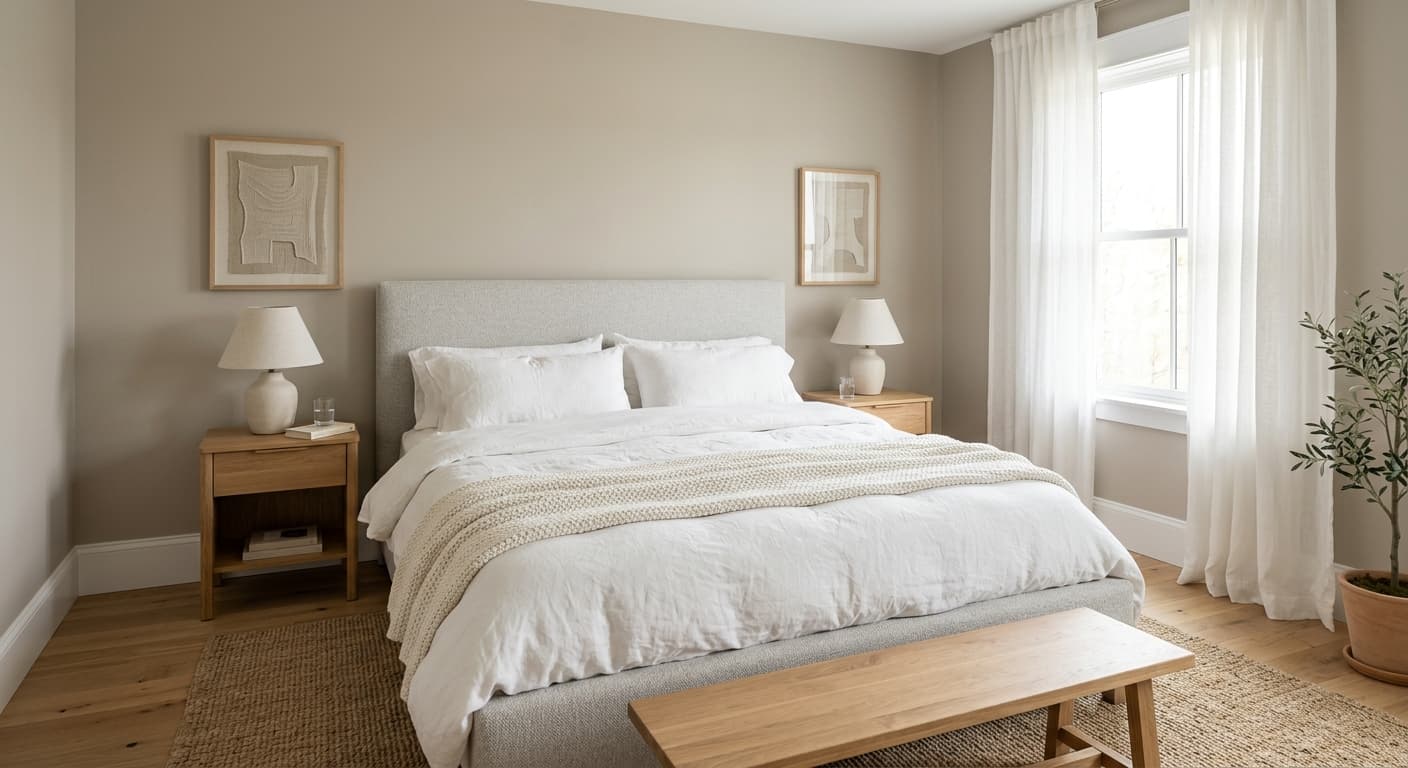
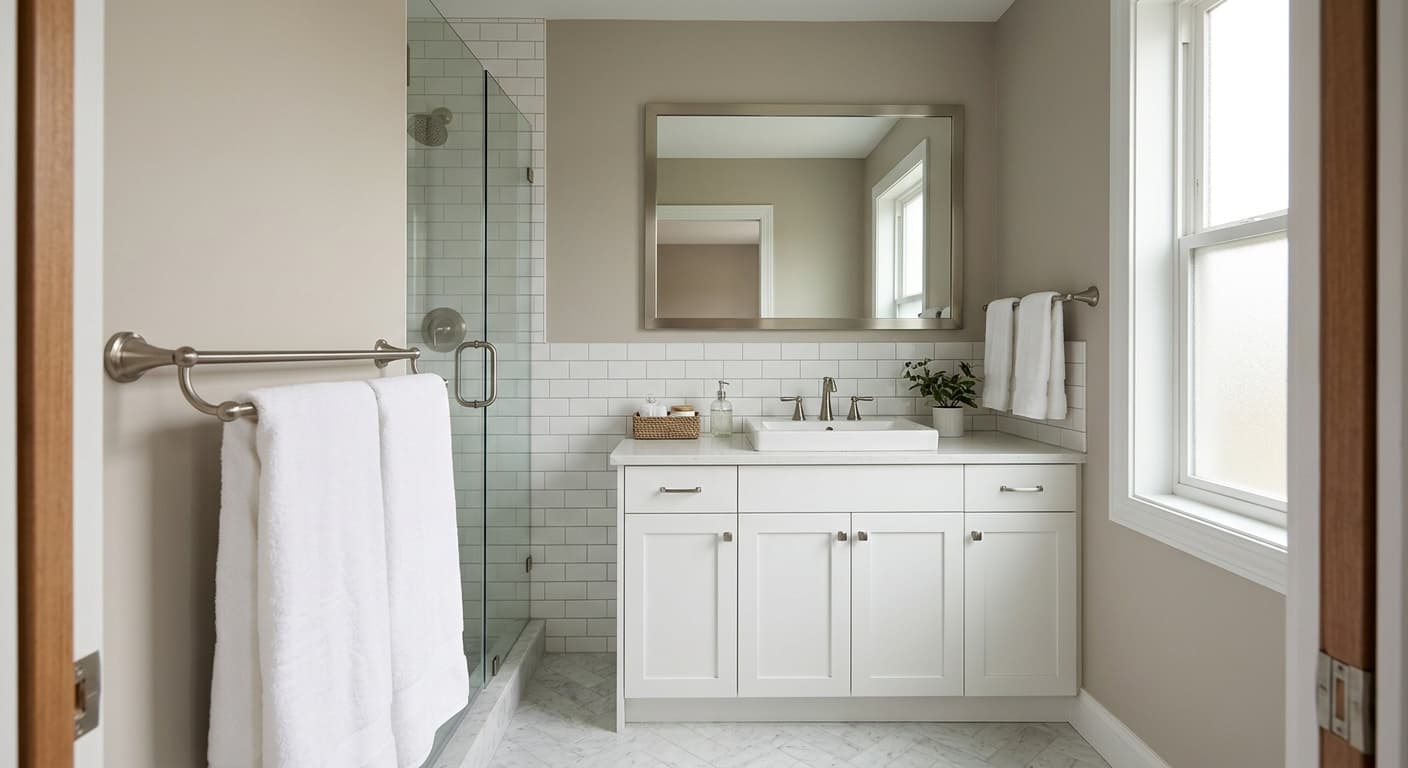
For whole-house use it is especially well suited because its undertone sits between warm and cool enough to read consistently from room to room without clashing with itself. Hallways, open-plan living and dining areas, and spaces that flow into each other tend to work well because Nuance does not fight itself as the light changes across the floor plan. Designers regularly reach for this kind of quiet warm greige precisely because it unifies a home without imposing a strong mood.
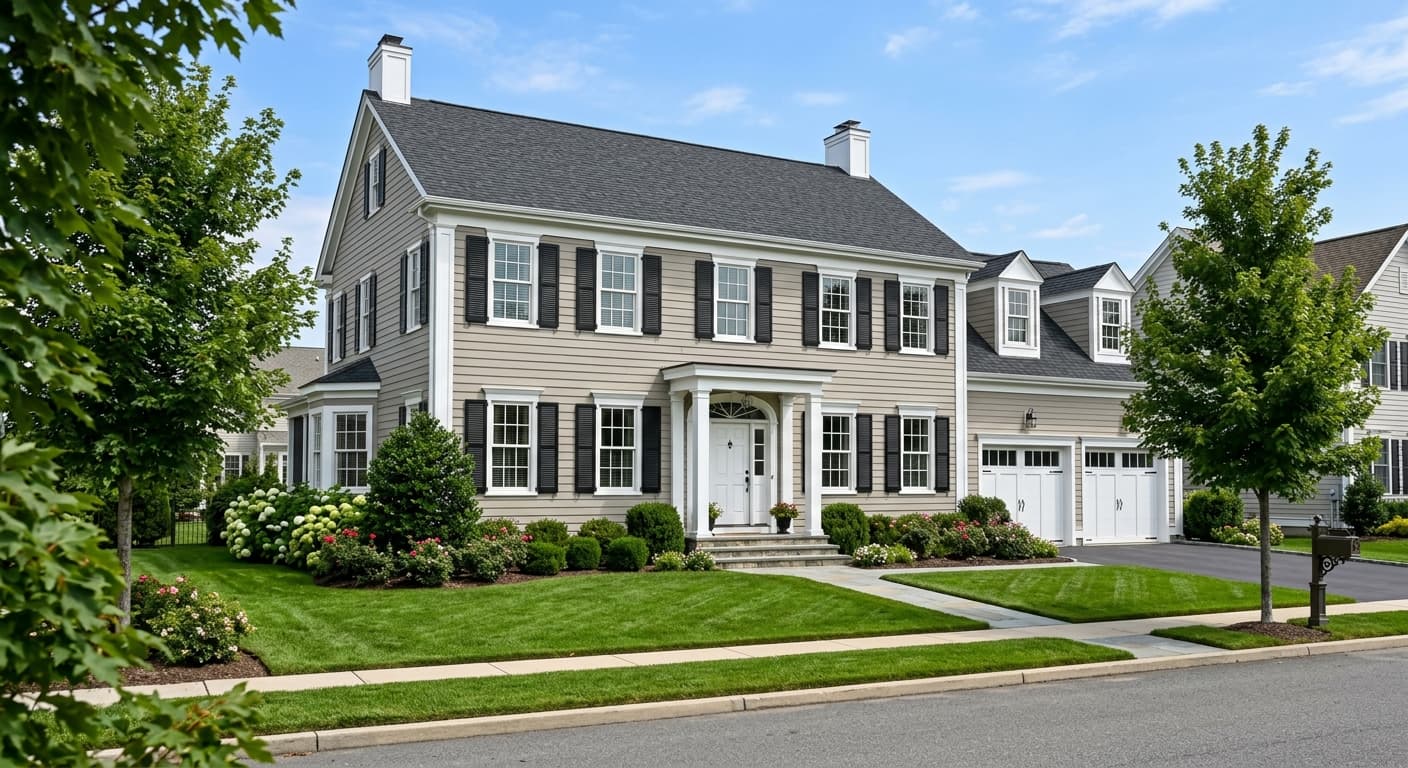
Orientation matters more than it does with a simpler neutral. South-facing rooms in warm climates can make it look quite creamy and warm, which many people love. North-facing rooms will shift it cooler and grayer, and if your room already skews dark or blue, the faint green undertone trace is more likely to surface. It is not a great choice for rooms with strong cool or blue-green light unless you have sampled it and confirmed it works. On exteriors it is available in both interior and exterior formulas and it reads as a soft, warm light greige that suits traditional and transitional architecture well.
In a living room Nuance provides a calm, sophisticated backdrop that works behind both lighter and darker furniture. Its LRV of 74.3 keeps the space feeling open without making it feel bare. Pair it with warm wood floors and Analytical Gray (SW 7051) on built-ins for a grounded, cohesive look.
Nuance is a strong bedroom choice because it stays warm and restful under evening lighting rather than pulling cold the way a grayer neutral can. It reads as a soft, barely-there greige that lets bedding and furniture do the work. North-facing bedrooms will see more of its gray side, so sample it in both daylight and lamplight before deciding.
As a whole-house color Nuance earns its place because it does not clash with itself as light shifts from room to room. It is warm enough to feel inviting in gathering spaces and quiet enough to feel restful in private ones. This consistency is what makes it a go-to for open floor plans and homes where visual flow matters.
In hallways and entryways Nuance works as a connector color that bridges rooms without drawing attention to itself. Its high LRV of 74.3 helps these often narrower, darker spaces feel more open. It reads as a light, warm greige here, which is welcoming without being loud.
On exteriors Nuance reads as a soft warm greige that suits traditional, craftsman, and transitional styles well. It is available in exterior formula. Bright white trim will give it a classic, clean contrast, while a slightly warmer off-white trim keeps the overall palette soft and cohesive.
Nuance pairs most naturally with whites and deeper neutrals that share its warm gray foundation rather than fighting it with cool or blue undertones. Pure White (SW 7005) is a reliable trim partner because it is clean and bright without going icy, so it gives Nuance a crisp edge without making the wall color look dingy by comparison. Analytical Gray (SW 7051) works well as a deeper accent in the same space, carrying the same warm gray family down into a more committed tone for an accent wall, cabinetry, or architectural detail.
For color, Coral Clay (SW 9005) is a warm, earthy accent that plays well against the beige component in Nuance without overwhelming its quiet quality. Warm wood tones, natural linen, and soft aged brass or matte black hardware all read well against it. Cool-toned metals or very blue-white trims can expose the grayer, and occasionally greenish, side of Nuance in a way that feels unintended, so lean warm when choosing finishes and accents.
All comparisons are matched against Nuance at LRV 74.3.
Bright white trims with a blue or violet undertone can make Nuance look yellower or expose its faint green trace, creating a tension that feels unintended rather than designed.
In north-facing spaces under cool LED or fluorescent lighting, Nuance can shift toward a flat pale gray with a subtle green cast, losing the warmth that makes it appealing in the first place.
Pairing Nuance with deep cool-toned blues or blue-grays on accent walls or furniture can amplify the gray in Nuance and push its undertone in an unintended direction, making the overall palette feel disconnected.
Nuance SW 7049 is a soft, light warm off-white that reads as a quiet greige in most conditions. It sits between pale gray and gentle beige depending on your light, with an LRV of 74.3 that makes it bright and open without ever going stark. Think of it as a warm, sophisticated whole-house neutral rather than a true white.
The undertones are a layered mix of warm gray, beige, and a mild yellow warmth. In warm or southern light the beige comes forward and the color reads creamier. In cooler or north-facing light the gray takes over and the color reads closer to a pale silvery neutral. A smaller number of reviewers also notice a faint green trace in cooler light, which is worth checking with a sample before committing.
It is warm overall. The warm gray and beige base with a gentle yellow warmth keeps it from ever reading cold, but it is not a strongly warm color either. It sits in that middle zone that gives it flexibility across orientations and design styles, though cooler light will nudge it grayer and warmer light will push it toward beige.
The LRV is 74.3, which puts it in the highly reflective range for a light neutral. It will brighten a room generously while still feeling grounded, and it works in modestly lit spaces without needing direct sun to look good.
The Sherwin-Williams paint code is SW 7049. The hex value is #E2E0D6 and the RGB is 226, 224, 214.
Nuance pairs well with warm whites for trim, deeper warm neutrals for accents, and earthy warm colors for pops of color. Pure White (SW 7005) is a reliable trim partner. Analytical Gray (SW 7051) works as a deeper accent in the same warm gray family. Coral Clay (SW 9005) brings a warm, earthy note that complements the beige in Nuance without overwhelming its quiet quality. Warm wood tones, natural textiles, and aged brass or matte black hardware all read well against it. Avoid cool-toned whites and blue-gray accents, which can expose its grayer, occasionally greenish, side.
For exteriors, yes. Nuance is available in exterior formula and reads as a soft warm greige that suits traditional, craftsman, and transitional architecture well. For cabinets it can work if you want a very light, understated greige rather than a true white, though its higher LRV of 74.3 means it will look quite pale at cabinet scale. Sample it on a door panel first to confirm it reads the way you want in your kitchen or bathroom light.
