Mountain Pass lands on your wall as a deep, quiet, cool neutral that sits right at the intersection of gray, green, and teal-blue. With an LRV of 13.5, it absorbs light rather than reflecting it, which means it pulls a room inward and creates an intimate, enveloping atmosphere. It is not vivid or saturated. The chroma is low enough that it reads more like a sophisticated, subdued gray-green with a cool cast than any kind of clear or bold color.
Light changes this color significantly. In bright natural light, the teal and green wavelengths come forward and the color feels clearer and more resolved. Move into shadow or a dimly lit corner and it deepens, sometimes picking up a muddier quality that reviewers variously describe as olive or even faintly purple. Under warm artificial light it tends to settle back into a dark, straightforward gray-green with the teal largely suppressed. This kind of behavior is characteristic of colors sitting at this depth and hue angle, and it is part of what makes Mountain Pass feel complex rather than flat.
The primary undertone debate around Mountain Pass is whether it reads gray-green or teal-blue, and the honest answer is that it does both depending on conditions. The hex #5C6A6A encodes equal parts blue and green against a modest gray base, so neither reading is wrong. In cooler north-facing or overcast light, the blue-teal side tends to dominate and the color can feel almost blue-gray. In warmer or more saturated natural light, the green component asserts itself and it reads as a clear gray-green.
A secondary disagreement in reviews concerns the darker shifts. Most observers agree that in low light Mountain Pass gets deeper and more complex, but they describe that complexity differently. Some call it olive, some call it muddy green, and a small number see a muted purple shift. That last reading is less common but not fabricated. It reflects how the human eye interprets this particular combination of gray, green, and blue when light is withdrawn. What nearly everyone agrees on is that the color remains cool throughout its range of shifts. There is no warmth lurking underneath it, no yellow or red undertone waiting to emerge, which places it firmly on the cool side of the gray-green family.
Because Mountain Pass has an LRV of 13.5, it functions best as a deliberate design choice rather than a default wall color. It works extremely well in rooms where you want drama and enclosure: a living room used in the evenings, a bedroom meant to feel restful and cave-like, or a bathroom where the low light and small scale actually amplify its richness. South-facing and west-facing rooms with strong afternoon sun handle it best among well-lit spaces, as the natural light keeps the color from going too dark and flat.
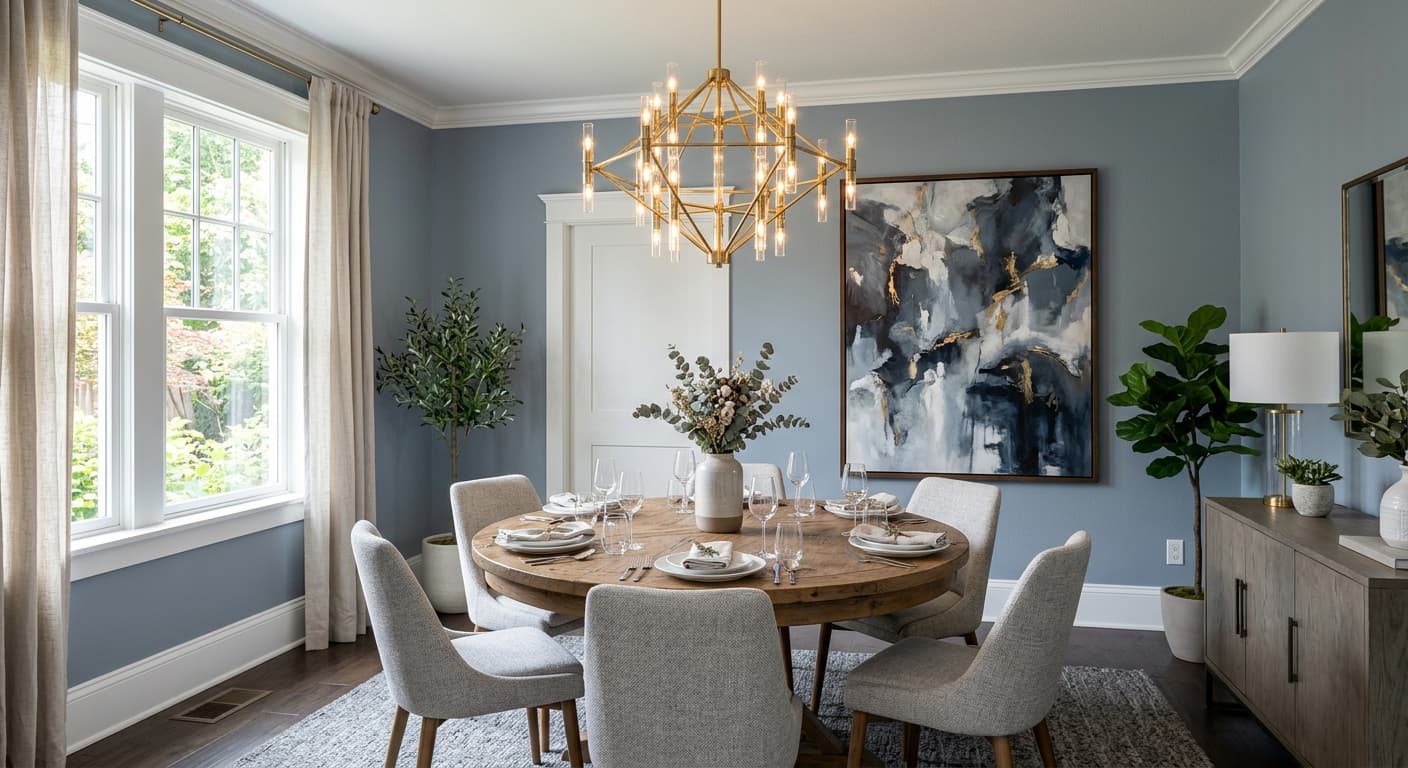
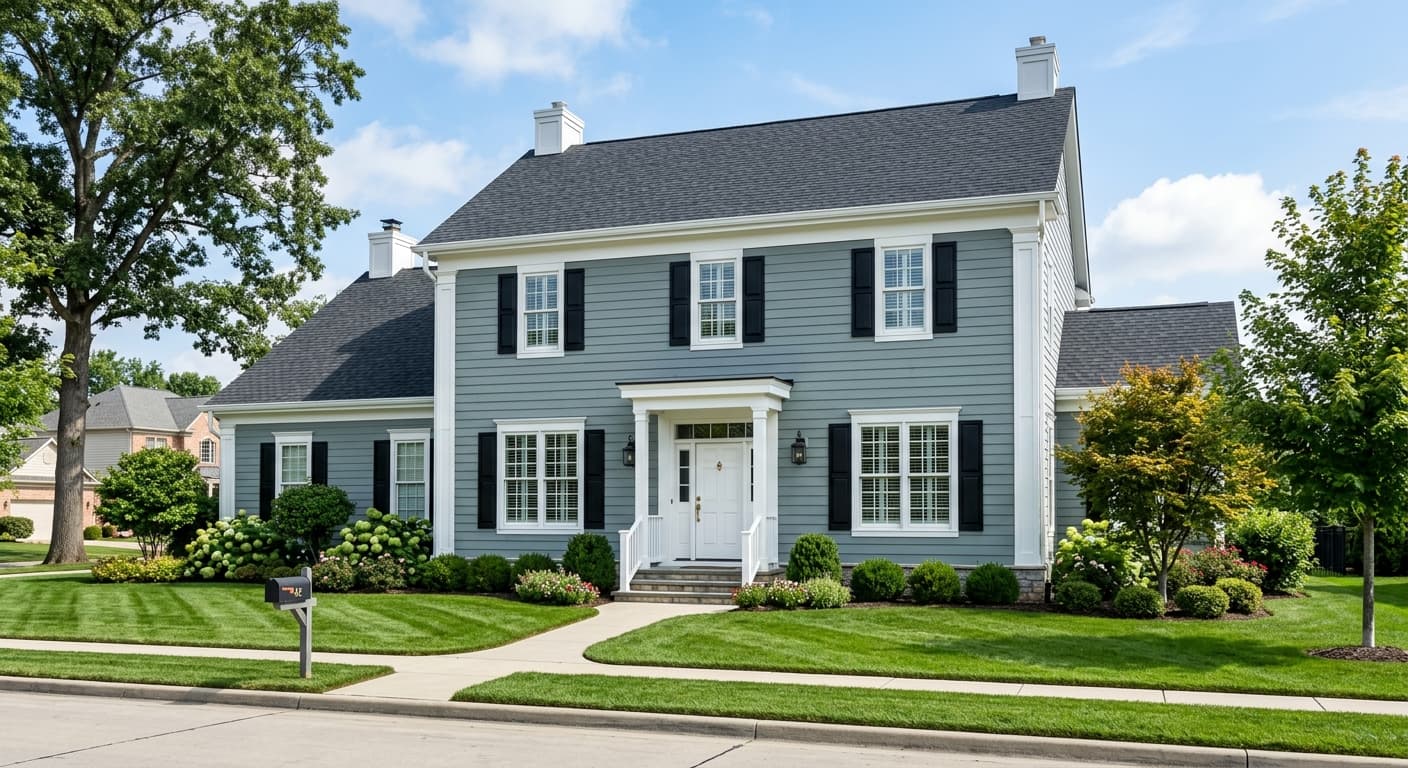
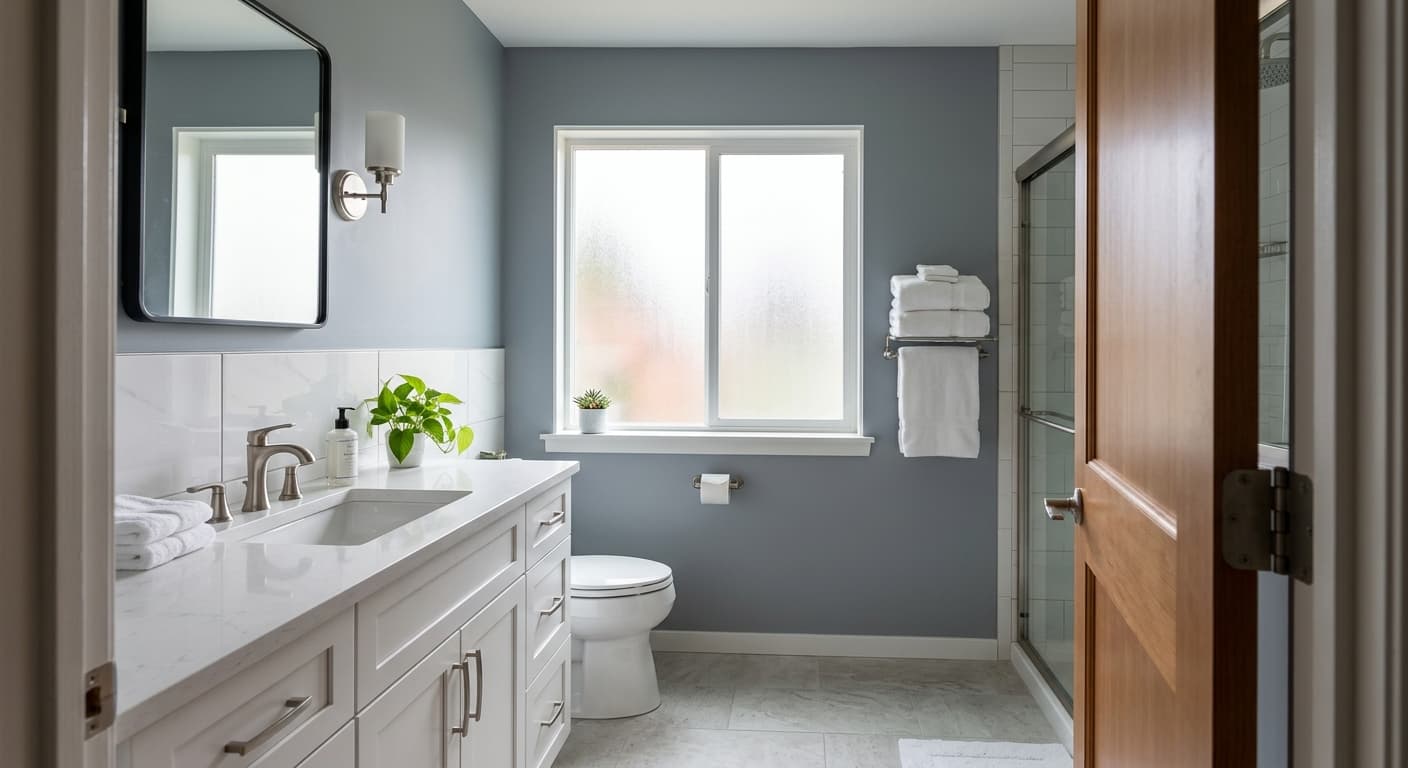
North-facing rooms can absolutely use Mountain Pass, but go in knowing the blue-teal undertone will read more prominently and the room will feel cooler. That is not always a problem, especially in contemporary spaces where a cold, composed aesthetic is the goal. East-facing rooms offer an interesting split: warmer and greener in the morning, cooler and grayer by afternoon. For accent walls, cabinetry, kitchen islands, built-ins, and front doors, Mountain Pass is especially well suited. Its depth reads as intentional and grounded in those applications, and on an exterior it brings a natural, mountain-adjacent quality that pairs easily with stone cladding, wood siding, and warm metal hardware.
In a living room, Mountain Pass creates a composed, moody backdrop that makes furniture and warm wood tones pop. Use it on all four walls in a south- or west-facing room to get the full enveloping effect. Pair with warm wool textiles and natural wood to offset its coolness.
Mountain Pass is one of the better deep colors for a bedroom because its low chroma keeps it restful rather than agitating. The depth and cool cast encourage a feeling of retreat. Keep bedding and soft goods in warm natural tones so the room does not feel cold when artificial light takes over at night.
In a bathroom, especially one with limited natural light, Mountain Pass turns the space into something intentional and spa-adjacent. The small scale amplifies the richness rather than working against it. Warm metal fixtures in brass or bronze are the right call here.
Mountain Pass on cabinetry or a kitchen island reads grounded and contemporary. It pairs naturally with stone countertops, particularly those with warm or gray veining. Keep upper cabinets and walls lighter so the base cabinetry does the visual work without making the kitchen feel closed in.
On a front door or as an exterior body or accent color, Mountain Pass has the depth and natural quality to look intentional rather than gimmicky. It suits homes with stone, wood, or fiber cement siding and performs well in both sun and shade on the exterior.
Mountain Pass is cool and deep, so its coordinating colors are deliberately warm and light to create balance. Cheviot (SW 9503) is a soft warm white that works as trim, ceilings, or millwork alongside Mountain Pass, preventing the room from feeling too heavy or monolithic. Arrowroote (SW 9502) is a warm straw-beige that functions well on adjacent walls or in connecting spaces, bridging the cool depth of Mountain Pass with organic warmth without clashing.
Sugared Almond (SW 9537), a mid-tone warm tan, is the most versatile companion for larger rooms or when you want a warm tone closer in value to Mountain Pass. It reads as a grounded, earthy counterpart and works on wood tones, upholstery, and area rugs as much as on walls. Beyond these three coordinating picks, warm metals like brass and bronze, natural wood in medium to warm tones, and stone with warm veining all do exactly what you need them to do: they offset the coolness without fighting the color.
All comparisons are matched against Mountain Pass at LRV 13.5.
Very warm, orange-toned or honey-yellow wood floors can fight Mountain Pass by pulling out the muted or muddy green undertone rather than the cleaner teal-gray you are aiming for. The contrast becomes uncomfortable rather than complementary.
Pairing Mountain Pass with a stark cool white on trim tends to amplify the coldness of both colors and can make the room feel clinical or flat, especially in north-facing spaces where the teal-blue undertone already dominates.
Bright, warm accent colors in the red-orange-yellow range fight against Mountain Pass rather than balancing it. The contrast is jarring rather than dynamic because the hue gap is too large and the saturation levels are mismatched.
Mountain Pass is a deep, cool gray-green with teal-blue undertones. It has an LRV of 13.5, which places it firmly in the dark range, and it reads quiet and enveloping rather than vivid or saturated. Think of it as a muted, sophisticated version of a teal-gray that shifts noticeably depending on how much light hits it.
The undertones are primarily cool: teal, blue-green, and gray. The main debate among reviewers is whether the blue-teal or the gray-green reads more prominently. In bright natural light the teal-green side comes forward. In dim or artificial light it settles back into a darker gray-green, and some observers also see a faint olive or even subtle purple shift in low-light conditions. There is no warm undertone present, so the color stays reliably cool across its shifts.
Mountain Pass is unambiguously cool. It sits in the cool gray family with teal and blue-green undertones and no underlying warmth. That makes it ideal for pairing with warm-toned materials like wood, stone, brass, and warm white trim, which provide contrast and balance rather than competing with the color.
The LRV of Mountain Pass is 13.5. That is a low number: the scale runs from 0 (pure black) to 100 (pure white), and anything under 20 absorbs significantly more light than it reflects. In practical terms, Mountain Pass will make a room feel smaller and more enveloping, which is a feature in the right context and a liability in very small or windowless spaces.
Warm neutrals do the most work alongside Mountain Pass. Cheviot (SW 9503) is a soft warm white suited to trim and ceilings. Arrowroote (SW 9502) is a warm straw-beige that pairs well on adjacent walls or in connecting rooms. Sugared Almond (SW 9537) is a mid-tone warm tan that works well as a companion tone in larger spaces. In terms of materials, warm-toned wood, natural stone, and metals like brass and bronze all balance the coolness of Mountain Pass effectively.
The Sherwin-Williams color code is SW 9655. The hex is #5C6A6A and the RGB values are 92 red, 106 green, 106 blue. The equal green and blue values in the RGB confirm the teal-gray character of the color, and the relatively close proximity of all three values reflects its low saturation and quiet, muted quality.
Yes to all three. Mountain Pass has the depth and natural quality to read intentional and grounded on an exterior, especially on homes with stone, wood, or neutral siding. On a front door it makes a strong, composed statement without being loud. On cabinetry or a kitchen island it brings a contemporary, earthy quality that pairs well with stone countertops and warm metal hardware. Sherwin-Williams lists it as available in both interior and exterior formulas.
