Downy lands on the wall as a soft, light off-white that manages to feel simultaneously clean and warm. Its LRV of 81.2 means it bounces a generous amount of light back into a room, keeping spaces open and airy without reading as a stark, blinding white. It sits comfortably between a true white and a creamy neutral, never fully committing to either camp, which is a big part of its appeal as a whole-room backdrop.
In person, the color has a gentle warmth to it that most reviewers describe as quiet and inviting. It avoids the chalky flatness that some bright whites carry, and it avoids the heaviness that deeper creams can bring. Under good natural light it reads clean and spacious. Under incandescent or warm artificial light it can inch warmer and softer, which tends to make rooms feel cozier in the evening.
The undertone picture for Downy is genuinely contested, and that disagreement is worth taking seriously before you commit. Most independent reviewers read it as a warm off-white, picking up subtle peach, beige, or yellow tones that give it its comfortable, inviting quality. Some observers go further and note a very faint pink or red cast, describing it as soft and cozy rather than stark. If your room has a lot of warm wood tones or terracotta accents, that warmth can amplify noticeably.
A smaller but consistent group of sources reads Downy as leaning cooler, picking up a soft blue-gray quality in certain lighting conditions. Our own editorial read places it in the blue and gray undertone camp. The honest answer is that both experiences are real and depend heavily on the specific room, orientation, and light source you are working with. A north-facing room with cool gray daylight may pull out the cooler side. A south-facing room flooded with warm sun may emphasize the peach and beige notes.
Because the undertone shifts this much in practice, sampling is genuinely necessary here. Paint a large swatch, at least twelve inches square, and look at it at different times of day and under your actual artificial lighting. Do not judge it by a small chip or a screen rendering. The subtlety that makes Downy versatile is the same quality that makes it unpredictable until you see it in context.
Downy is most commonly used in bedrooms, bathrooms, and nurseries, and the research backs that up consistently. In a bedroom it creates a calm, restful backdrop that works with soft linens, natural wood furniture, and muted textile colors. In a nursery the gentle warmth avoids the coldness of a stark white while staying light enough to keep the room feeling fresh and open. In a spa-style bathroom with good light it reads clean without feeling clinical.
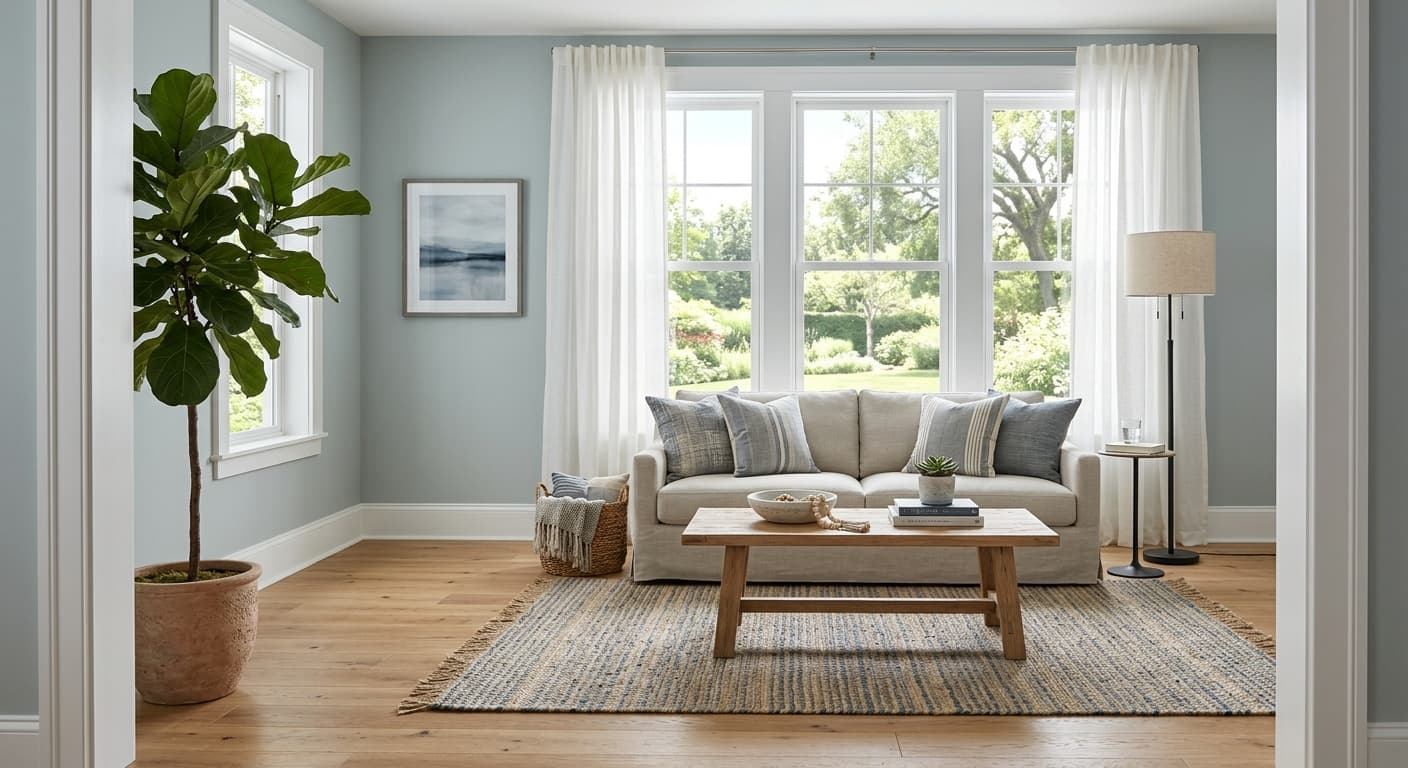
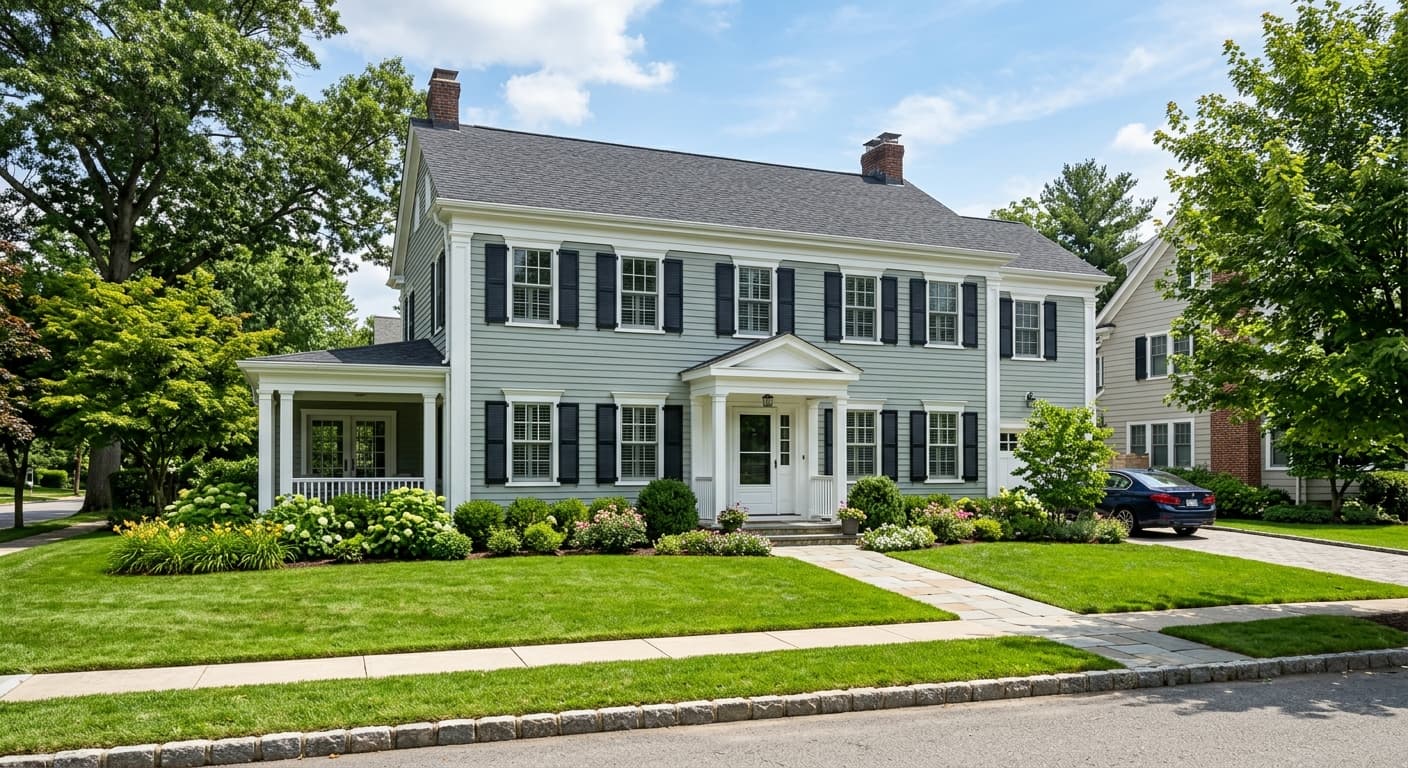
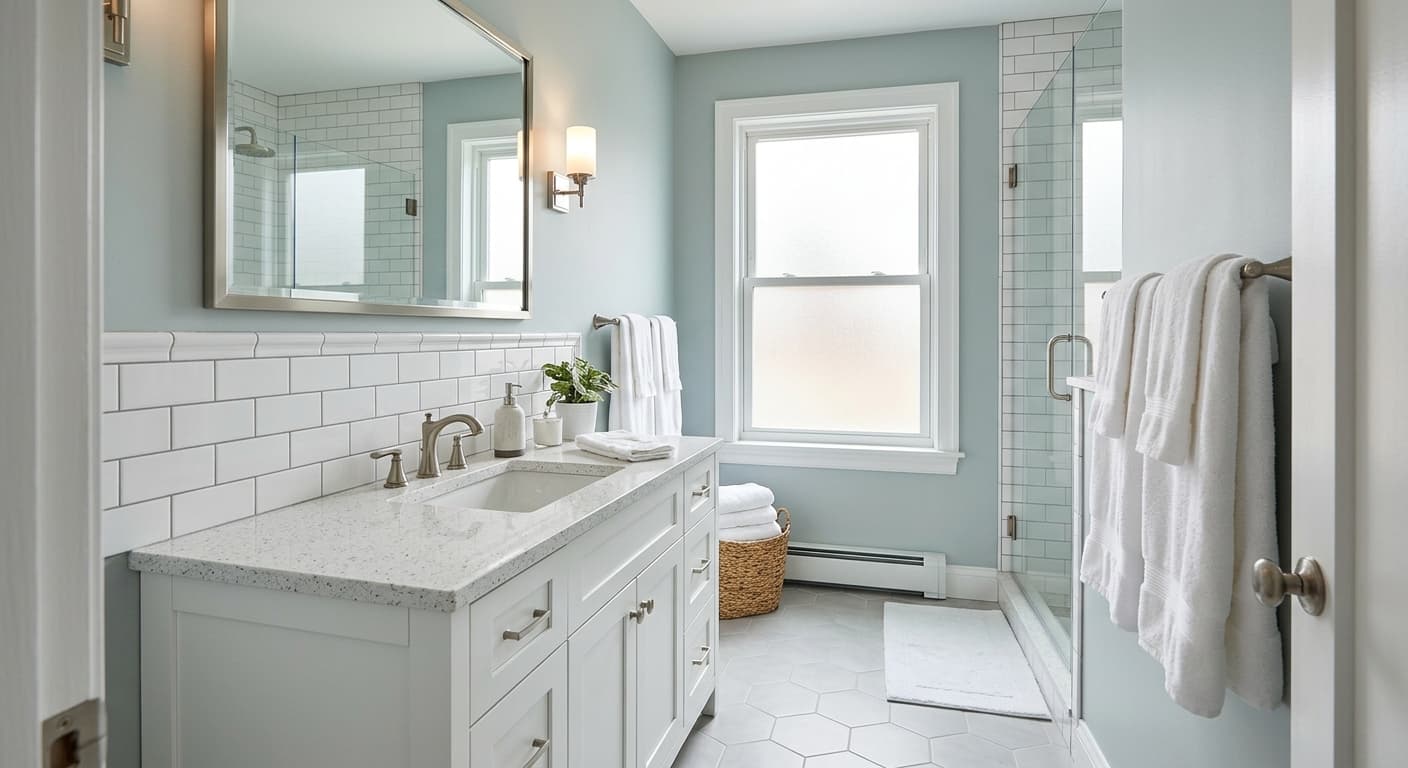
It also performs well as a whole-house neutral in open-plan spaces, particularly when you want a cohesive off-white that plays well with both warm and cooler accent colors. Designers have used it as a soft trim or ceiling white to add just a touch of warmth over a brighter white on walls. Its high LRV of 81.2 makes it a reasonable choice for smaller rooms where you need maximum light reflection without resorting to a pure white.
Light and orientation matter more here than with many whites. South and west-facing rooms with strong warm light will bring out the peach and beige notes. North and east-facing rooms with cooler, grayer light may push it toward the softer, cooler blue-gray read. If you are working with a room that gets little natural light, be aware that warm artificial bulbs can shift it noticeably warmer in the evenings, which may be exactly what you want in a bedroom but worth anticipating in a bathroom.
Downy is a natural fit for a bedroom, where its gentle warmth creates a restful, calming atmosphere without feeling heavy. The LRV of 81.2 keeps the room light even in lower-light conditions, and the subtle warmth pairs well with soft textiles and natural wood. Use Extra White on trim for a clean finish that does not compete.
In a nursery, Downy threads the line between soft and bright in a way that works well for young children. It avoids the sterility of a bright white and the sweetness of a true pastel, reading instead as a gentle, neutral backdrop. It coordinates easily with soft greens, blues, and natural wood nursery furniture.
A well-lit bathroom is one of the stronger rooms for Downy, where it reads clean and spa-like without the coldness of a bright white. In a north-facing bathroom with cool light it may pull slightly blue-gray, which can actually work well with chrome fixtures and cool tile. In warmer light the peach notes come forward, softening the space.
As a living room backdrop, Downy serves as a warm neutral that holds up well against a range of furniture and accent colors. Its high LRV keeps the space feeling open in rooms with moderate natural light. Pair it with warm wood tones and muted textiles for a cohesive, quiet look.
Downy works as a soft trim or ceiling white when you want just a step of warmth above a brighter wall color. Its LRV of 81.2 is high enough to read light while staying warmer than a true white. It pairs particularly well on ceilings in rooms where you want to reduce the contrast between walls and ceiling.
Downy coordinates naturally with Extra White (SW 7006) as a crisp trim option. The contrast is subtle but effective, giving you a clean edge without the warmth gap feeling jarring. Extra White pulls just bright enough to define woodwork and ceilings without making the Downy walls look dingy by comparison. For a softer, more nature-forward pairing, Herbal Wash (SW 7739) brings a muted botanical quality that works particularly well in bedrooms and nurseries where the goal is a calm, layered palette.
Beyond those coordinates, Downy plays well with soft warm accents including natural linens, unbleached cottons, and light wood tones. On the cooler side, pale blue-grays and dusty sage greens work well if you want to lean into the quieter, cooler undertone that some rooms pull out. Keep metals in warm brass or matte nickel ranges and avoid anything too saturated, since the subtlety of Downy is most effective when the palette around it stays restrained.
All comparisons are matched against Downy at LRV 81.2.
If Downy is used in a room adjacent to a cooler medium gray or blue-gray, the cooler undertone in Downy can get amplified by visual contrast, making it read muddier or slightly dingy rather than clean and warm.
Cool LED bulbs with a high color temperature can push Downy's cooler blue-gray undertone forward in the evening, making it feel flat and less inviting than its daytime appearance suggests.
Pairing Downy with a very bright cool white on trim can make the Downy walls look slightly dirty or yellowed by comparison, especially in rooms where the trim catches a lot of direct light.
Downy SW 7002 is a soft, light off-white with an LRV of 81.2. It sits between a true white and a creamy neutral, with a warmth that most people read as subtle peach, beige, or yellow, though some rooms and light conditions bring out a cooler blue-gray quality. It reads airy and open without feeling stark.
Downy's undertones are genuinely debated. Most independent reviewers pick up warm peach, beige, and subtle yellow notes. Some see a faint pink or red cast. A smaller group reads it as cooler, with a soft blue-gray lean. Which undertone dominates depends heavily on your room's orientation, natural light, and artificial lighting. This is a color that requires a real in-room sample rather than a judgment from a chip or screen.
It leans warm for most people in most rooms, but it is not a committed warm white. The warmth is subtle enough that cooler light conditions, particularly in north or east-facing rooms, can push it toward a softer, cooler blue-gray read. Think of it as a warm-leaning neutral with enough flexibility to go either way depending on context.
Downy's LRV is exactly 81.2, which puts it firmly in the high-reflectivity range. It bounces a lot of light and keeps rooms feeling open and spacious, making it a practical choice for smaller rooms or spaces with moderate natural light.
Downy's Sherwin-Williams code is SW 7002. Its hex value is #EFE8DD and its RGB values are 239 red, 232 green, 221 blue.
Extra White (SW 7006) works well as a trim and ceiling color, giving a clean edge without a harsh contrast. Herbal Wash (SW 7739) pairs well in bedrooms and nurseries for a calm, nature-forward palette. Beyond those coordinates, soft warm textiles, natural linens, light woods, warm brass or matte nickel hardware, and muted blue-gray or dusty sage accents all work well with Downy's flexible warmth.
Downy can work as a soft trim or ceiling white when you want a warmer alternative to a bright white, particularly in rooms where you want to reduce the visual gap between wall and ceiling colors. For cabinets, its warmth and high LRV can work in kitchens or bathrooms where you want a soft, non-stark finish, but sample carefully in your specific cabinet material and lighting, since the undertone shift can be more noticeable on a flat cabinet face than on a large wall.
