Urban Jungle SW 9117 lands in a middle zone that resists easy labeling. At LRV 30.7, it carries real color weight without going cavernous, so walls feel richly saturated rather than dark. Most people reading it for the first time call it a warm taupe or greige, but spend some time with it and the olive quality starts to surface, giving it a grounded, organic character that straight taupes lack.
Light changes the story considerably. In direct natural light or a south-facing room, the color reads more alive and green-leaning, with a faint khaki vitality that earns the name. Move it into a north-facing room or lower-light interior and it settles into a quieter, moodier taupe. Neither reading is wrong. That shape-shifting quality is exactly what makes it useful, but it also means a small paint chip on the wall will not tell you much. You need a large sample, ideally a few square feet, observed across morning and afternoon light before you commit.
The undertone picture here is genuinely contested, and you should know that going in. Sherwin-Williams officially classifies Urban Jungle in the yellow family, which surprises most people holding the chip. The hex value (#A4947E) reads to most eyes as warm taupe or greige, and many reviewers land there and stay there. Our own editorial read picks up dark olive and green undertones, and a meaningful portion of independent reviewers agree, describing the color as a muted, earthy olive with organic depth rather than a straightforward neutral.
The honest synthesis is that all three reads, yellow, warm tan, and olive-green, are simultaneously present, which is what gives Urban Jungle its complexity. Which one dominates depends on your light source, your flooring, and whatever else is already in the room. Warm wood tones and terracotta accents will pull the tan side forward. Cooler natural light and green or botanical elements in the space push the olive quality to the surface. If you need a color that stays predictably in one lane, this is not it. If you want a color that feels layered and shifts organically through the day, that complexity is the point.
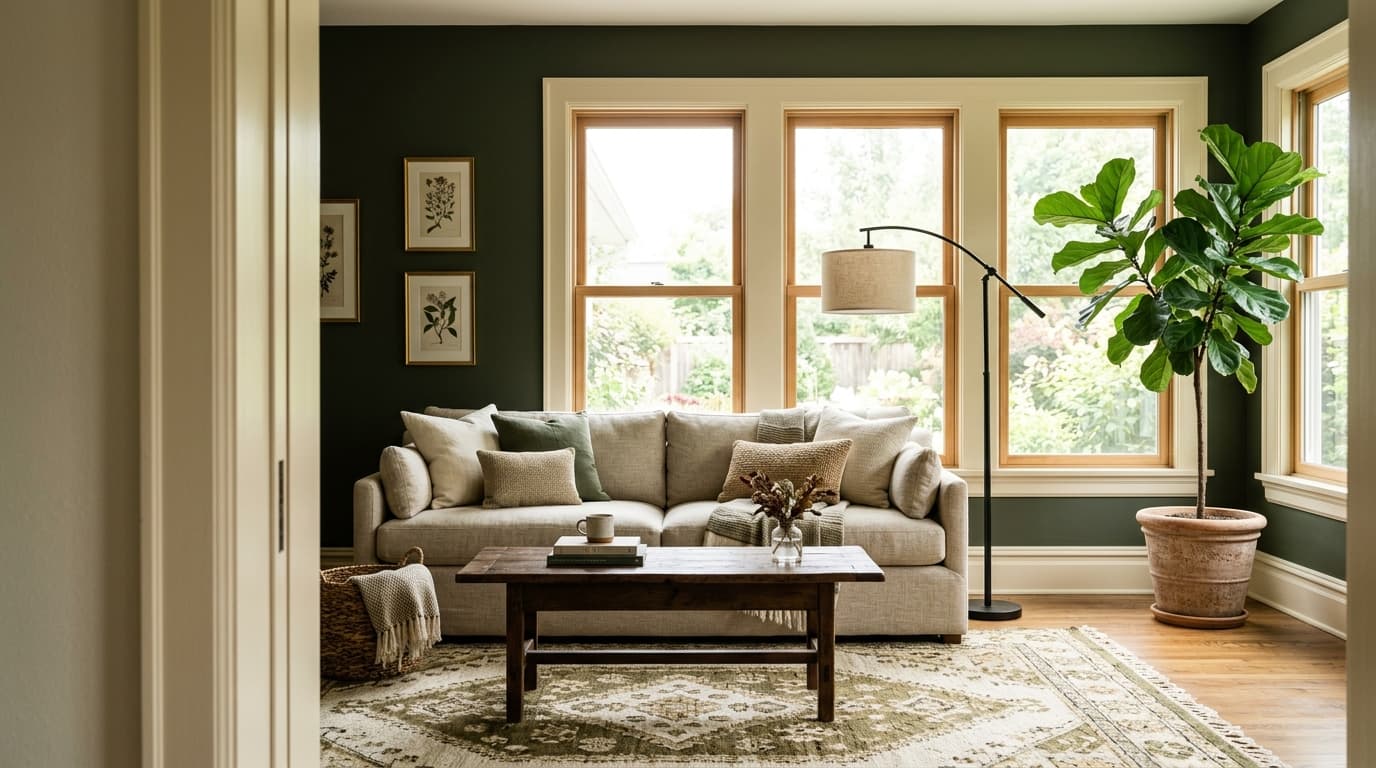
Urban Jungle is built for spaces where you want presence without drama. Living rooms and bedrooms benefit from its immersive, enveloping quality at LRV 30.7, warm enough to feel inviting rather than somber. A study or home library is a natural fit: the color creates a focused, grounded atmosphere that reads intentional rather than trendy. It also works as an accent wall in otherwise lighter rooms, where its weight reads as a deliberate anchor rather than an accident.
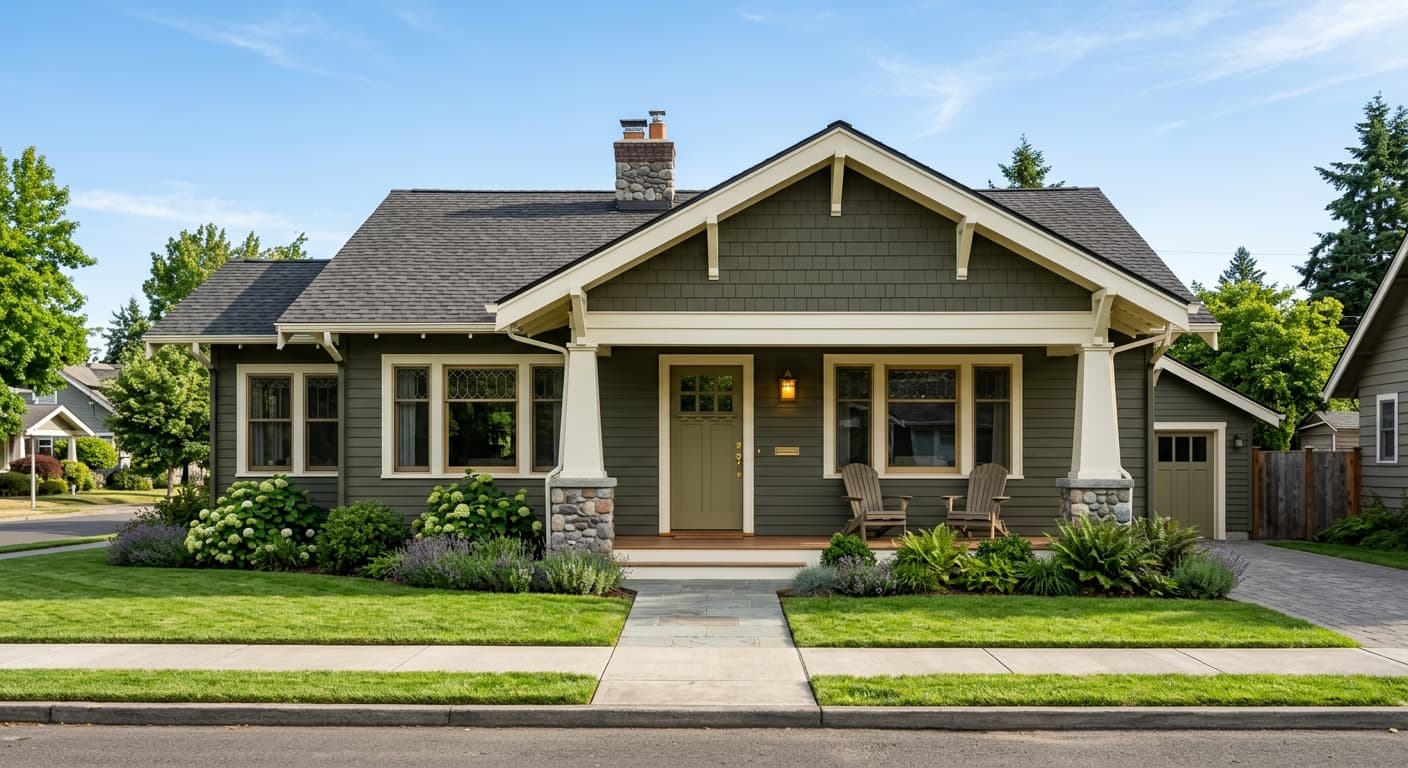
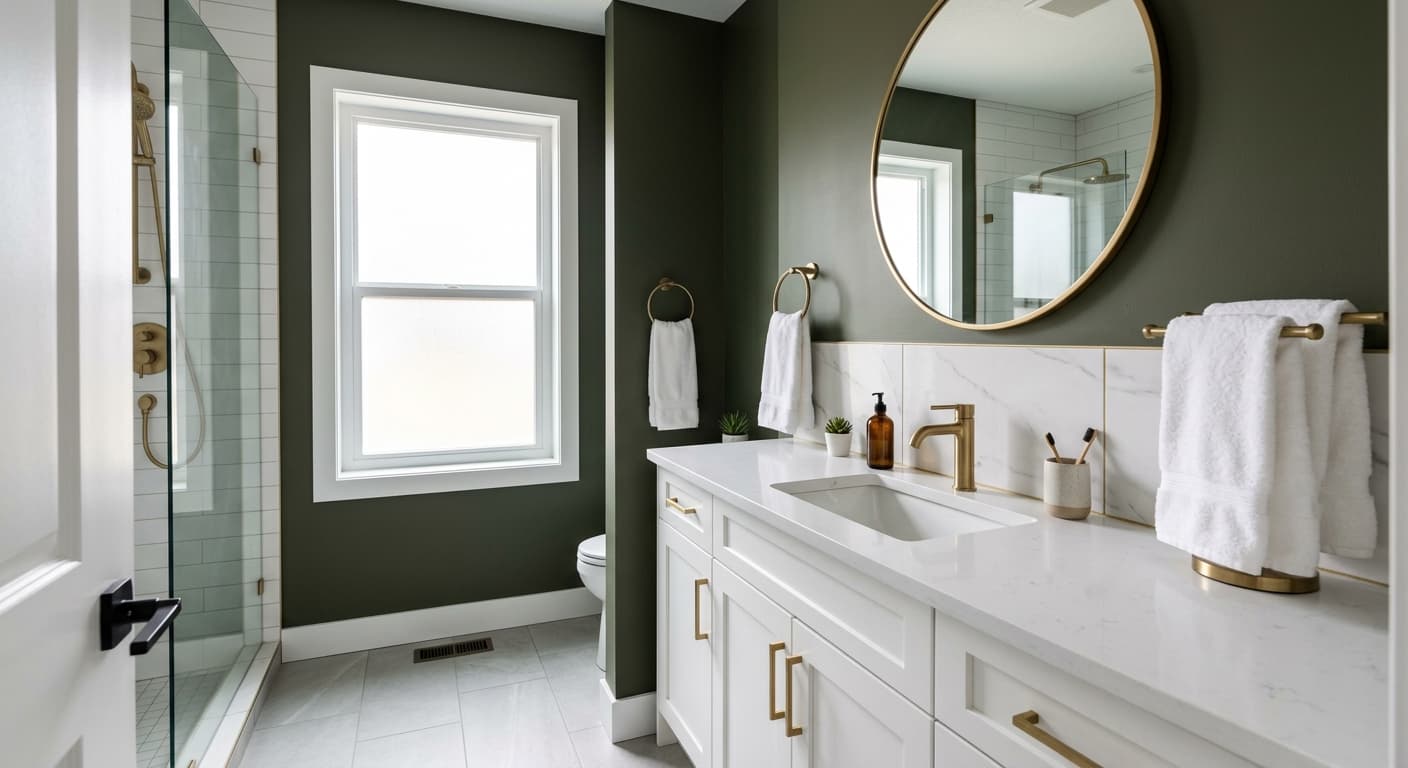
Kitchen cabinets are where Urban Jungle gets particularly interesting. Earthy, non-primary cabinet colors have stayed in heavy rotation with designers and reviewers alike, and this one delivers an organic, natural tone that avoids the ubiquity of sage and the predictability of navy. Pair it with warm brass or unlacquered bronze hardware and a stone or butcher-block countertop and the result feels considered. On exteriors, it performs well as a body color, especially on homes with natural wood trim, stone, or warm brick, where the olive-taupe character ties everything together rather than competing with it.
Urban Jungle is a serious cabinet color. The LRV 30.7 is deep enough to read as a proper statement but not so dark that a kitchen feels closed in. Warm metal hardware in brass or bronze locks in the earthy tone and keeps the whole look cohesive.
The color's weight and olive complexity create a focused, settled atmosphere that works well in a room where you want to think. Pair it with warm wood furniture and plenty of task lighting to prevent the mid-tone from going muddy in a room without great natural light.
Used on all four walls, Urban Jungle delivers an immersive, nature-forward feel without reading as a novelty. Natural fiber rugs, linen upholstery, and warm wood accents keep the room grounded rather than precious.
In a lighter room, one wall of Urban Jungle reads as an intentional anchor rather than an experiment. It works especially well behind a sofa or bed, where the color frames the space without overwhelming it.
On exteriors, Urban Jungle holds up well in full light, where the green-olive quality reads clearly and gives the house a natural, organic presence. It pairs well with warm-toned stone, natural wood detailing, and off-white trim.
Urban Jungle's earthiness responds well to warm, soft whites for trim and ceilings. Creamy (SW 7012) is the most natural partner: its warm, almost buttery quality keeps the contrast from feeling stark and reinforces the organic side of the color. Panda White (SW 6147) is a cleaner option that still reads warm enough to stay friendly with Urban Jungle's undertones without pulling the combination cool.
For accent colors, Baked Clay (SW 6340) is the strongest move if you want to lean into the natural, earthy palette fully. The terracotta warmth sits in the same tonal family and brings out the tan and olive qualities in Urban Jungle simultaneously. Beyond paint, think about textiles and materials: raw linen, jute, warm-toned wood, and matte ceramic in earthy neutrals all reinforce what this color is already doing.
All comparisons are matched against Urban Jungle at LRV 30.7.
Urban Jungle's warm olive-taupe undertones fight hard against cool gray or blue-toned trim. The combination reads muddy and unresolved rather than sophisticated.
A stark, cool bright white ceiling above Urban Jungle creates a jarring contrast that emphasizes any cool shift in the wall color and makes the room feel unfinished rather than grounded.
Gray tile, cool gray-washed wood, or blue-toned slate underfoot will suppress the warm and olive qualities in Urban Jungle and make it read as a flat, unremarkable greige.
Urban Jungle is a medium-depth earthy color with an LRV of 30.7. Most people read it as a warm taupe or greige at first, but it carries genuine olive and green undertones that emerge depending on your light. It sits in a complex middle ground between warm tan, khaki, and muted olive-green.
The undertones are genuinely debated. Sherwin-Williams classifies it in the yellow family. Many independent reviewers call it a warm taupe or greige. Our editorial read picks up dark olive and green undertones. All three reads are plausible because the color is complex and shifts with light. In bright natural light the olive quality surfaces; in lower or softer light it settles toward warm taupe.
Urban Jungle reads warm overall. Its base is a warm taupe-greige, and the olive undertones sit on the warm-to-neutral spectrum rather than pulling cool or blue. That said, it is not a straightforwardly warm color. The olive complexity keeps it from reading as simply cozy or beige.
Urban Jungle has an LRV of 30.7, which puts it solidly in the mid-range. It holds real color weight and will read as a saturated, grounded tone rather than a light or near-neutral, but it is not so dark that it becomes oppressive in a reasonably sized room with good light.
The Sherwin-Williams code is SW 9117. The hex value is #A4947E and the RGB breakdown is 164 / 148 / 126.
Warm soft whites work best for trim and ceilings. Creamy (SW 7012) and Panda White (SW 6147) are the coordinating picks from Sherwin-Williams and both stay warm enough to complement rather than fight the wall color. For accents, Baked Clay (SW 6340) in a terracotta direction leans into the natural, organic palette strongly. In terms of materials, warm wood, raw linen, jute, brass or bronze metal, and matte earthy ceramics all reinforce what Urban Jungle is doing.
Yes to all three, with a few notes. On exteriors it performs well as a body color, especially with warm-toned stone, natural wood, or warm brick. It needs warm-toned trim rather than bright white to stay coherent. For kitchen cabinets, it is a strong choice: deep enough to read as a real statement, earthy enough to feel current, and distinctive without being a trend color. On a front door it delivers a grounded, nature-forward look that works particularly well on homes with natural materials in the facade.
