Midnight Oil
What Midnight Oil Actually Looks Like
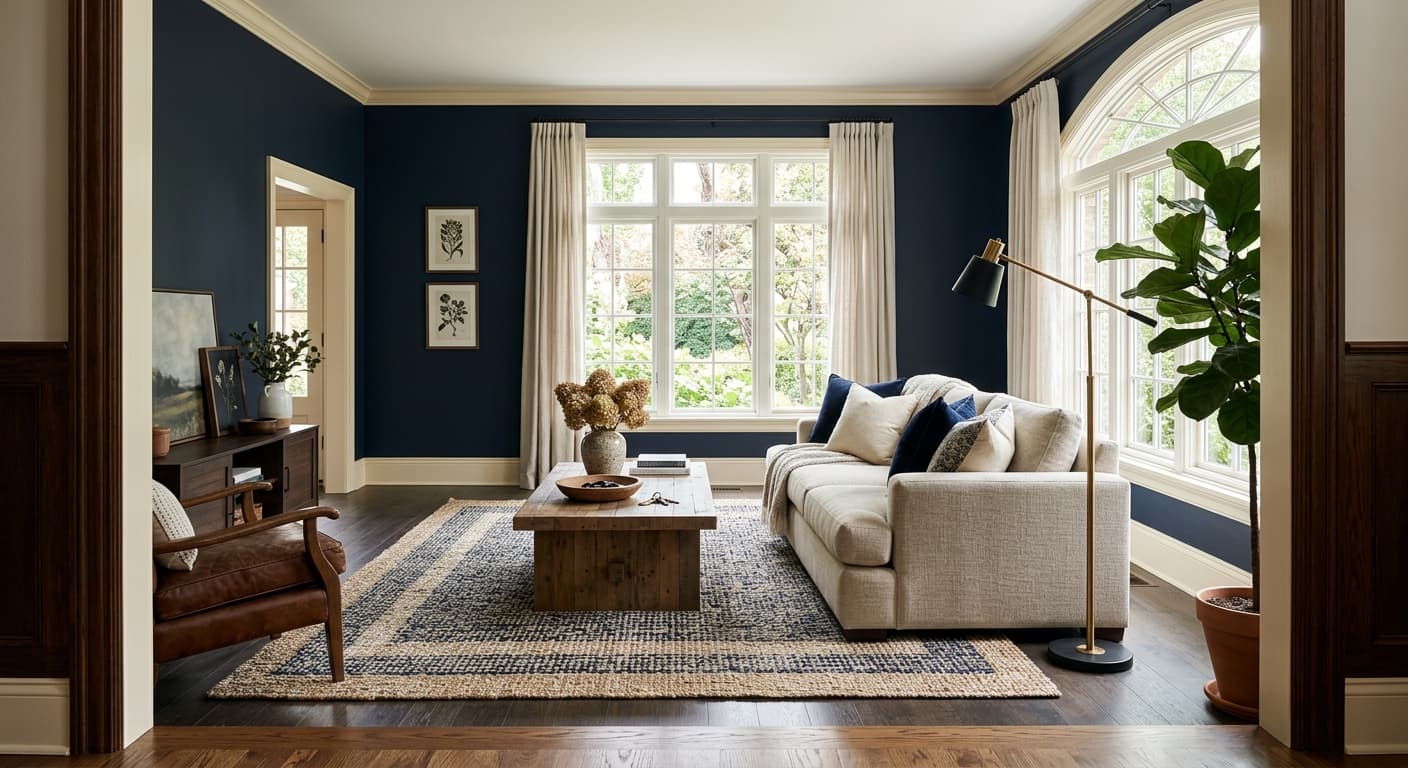
Midnight Oil reads as black from across the room. Step closer and you'll catch the blue-violet hiding underneath, which is what keeps this color from going flat and lifeless the way a true black can. It's the kind of dark that has depth to it.
Lighting changes everything here. In bright daylight, the violet warmth surfaces and softens the whole thing. Under warm incandescent or LED bulbs in the evening, it pulls toward inky blue-black and gets genuinely moody. North light flattens it and pushes the cool side forward, so the room can feel a touch heavier than you expected.
What makes Midnight Oil distinctive is that balance between drama and restraint. It's saturated enough to make a statement but not so cold it feels clinical. You get richness without the harshness of a flat charcoal or a pure black.
Midnight Oil Undertones
The undertone here is blue-violet, and you need to respect it. Hold a swatch against a true black and the purple-blue cast becomes obvious. That's why this color can clash with anything carrying a green or yellow undertone. Warm grays and beige-y whites tend to fight it.
Pay attention to your fixed elements before committing. Flooring, stone, and existing trim all interact with that violet base. If your space already has warm undertones running through it, Midnight Oil can look slightly off until you adjust the surrounding palette to meet it.
Where Midnight Oil Works Best
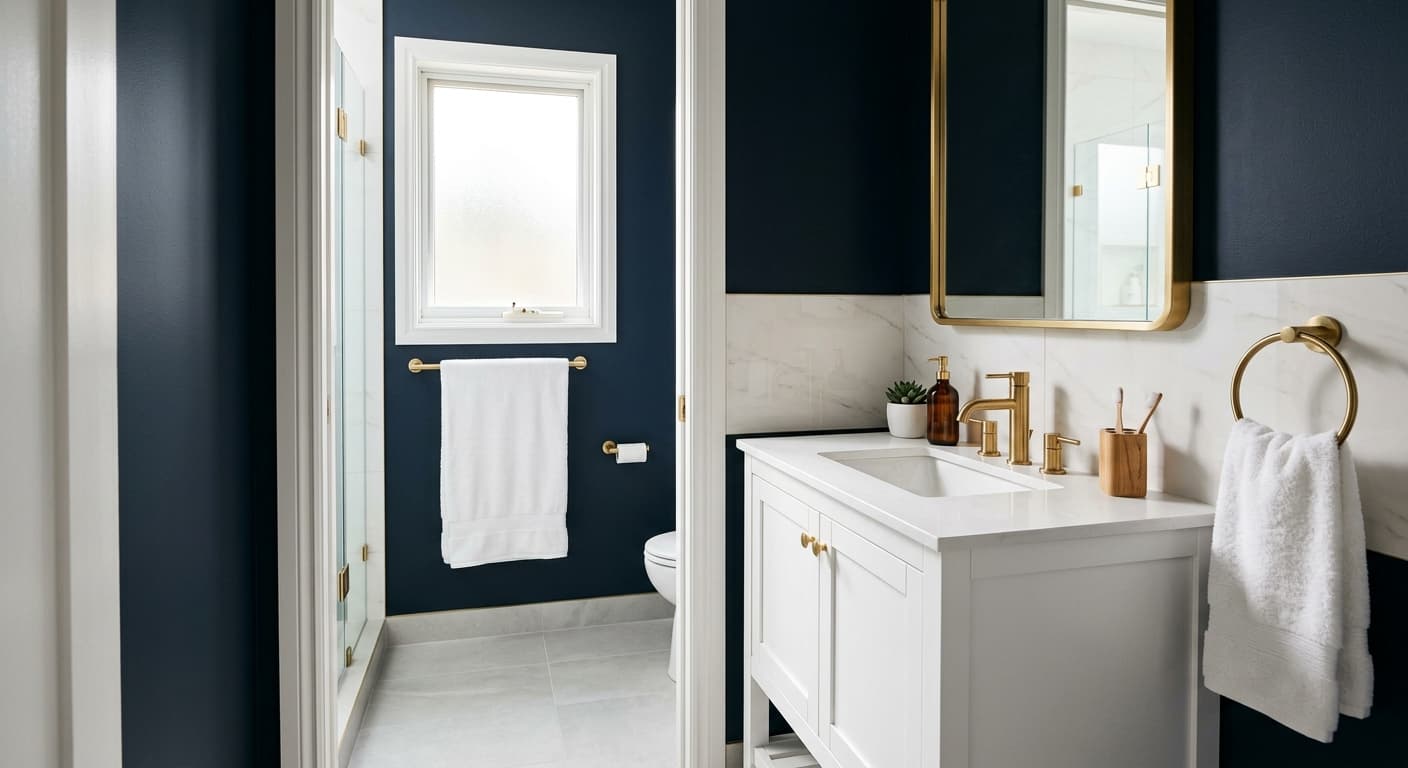
This color thrives in rooms where you want intimacy and contrast. Think dining rooms, powder rooms, studies, and bedrooms. It's a strong choice for cabinetry and built-ins, where the depth gives millwork real presence. Accent walls behind a bed or a fireplace let it do its job without swallowing the whole space.
South-facing rooms handle it best because the warm light keeps it from feeling cold. North-facing spaces can work too, but you'll want plenty of artificial light layered in to bring out the violet. Small rooms aren't off limits, despite what people assume about dark colors. A small powder room painted top to bottom in Midnight Oil feels like a jewel box rather than a closet.
What to Pair With Midnight Oil
For trim, a crisp white keeps things sharp. Try Chantilly Lace (OC-65) for a clean modern contrast, or Simply White (OC-117) if you want a hair more warmth. Both let the dark walls breathe. For a softer, more enveloping look, paint the trim the same color and let the whole room go monochromatic.
Furniture in warm wood tones, walnut especially, looks great against it. Brass and aged bronze hardware bring out the richness. For flooring, mid-tone to dark wood grounds the room nicely, while a pale oak creates striking contrast. If you're building a palette, pair it with soft blues like Quiet Moments (1563) or a warm greige like Revere Pewter (HC-172) for adjacent rooms that flow without competing.
Colors That Clash With Midnight Oil
Skip pairing it with stark cool grays or anything with a green undertone, which makes the violet read muddy. Don't drown it in cheap, flat lighting. A single overhead fixture in a dark room is a recipe for a cave. Avoid pure bright white trim in a flat finish next to it as well, because the contrast can feel jarring rather than intentional. And resist using it on every wall of a large, low-light room unless you genuinely want that cocooning effect.