Revere Pewter
What Revere Pewter Actually Looks Like
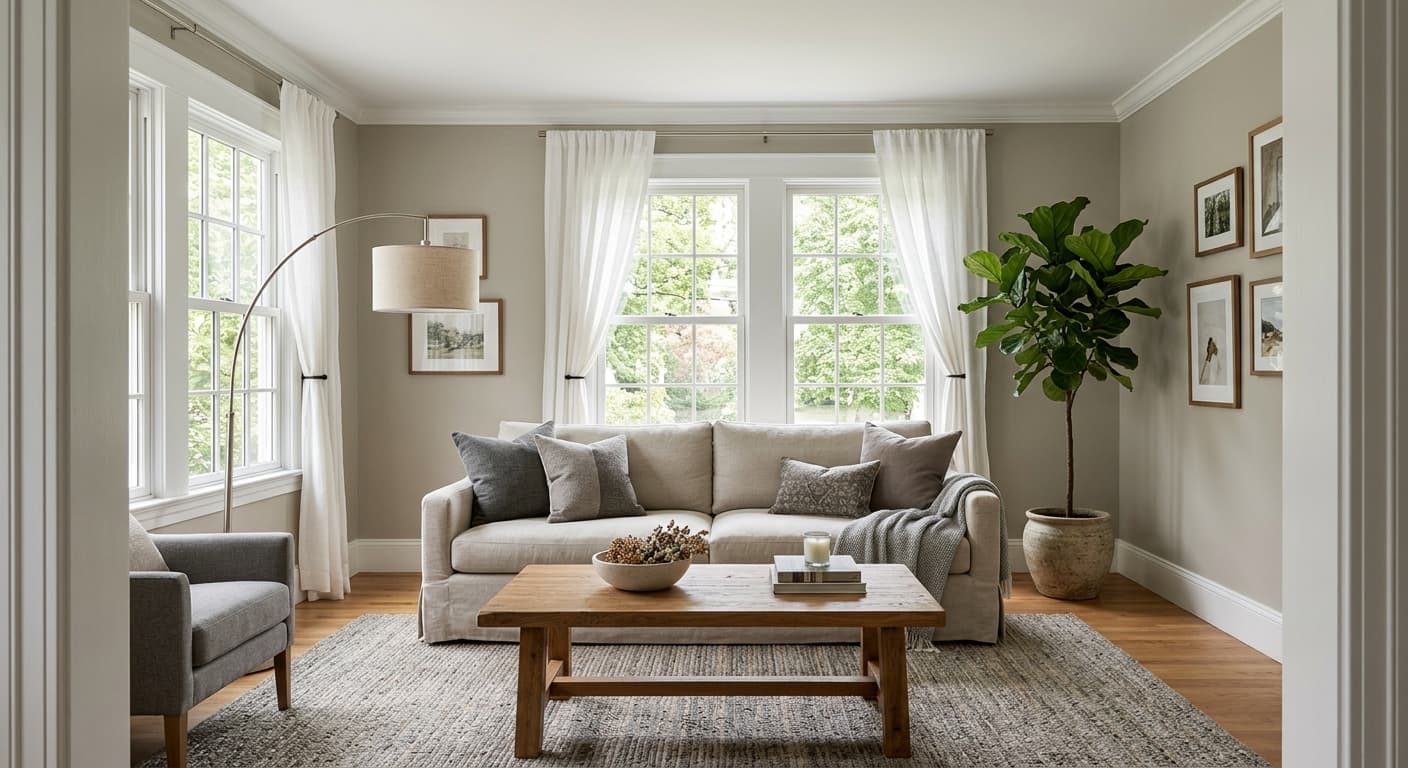
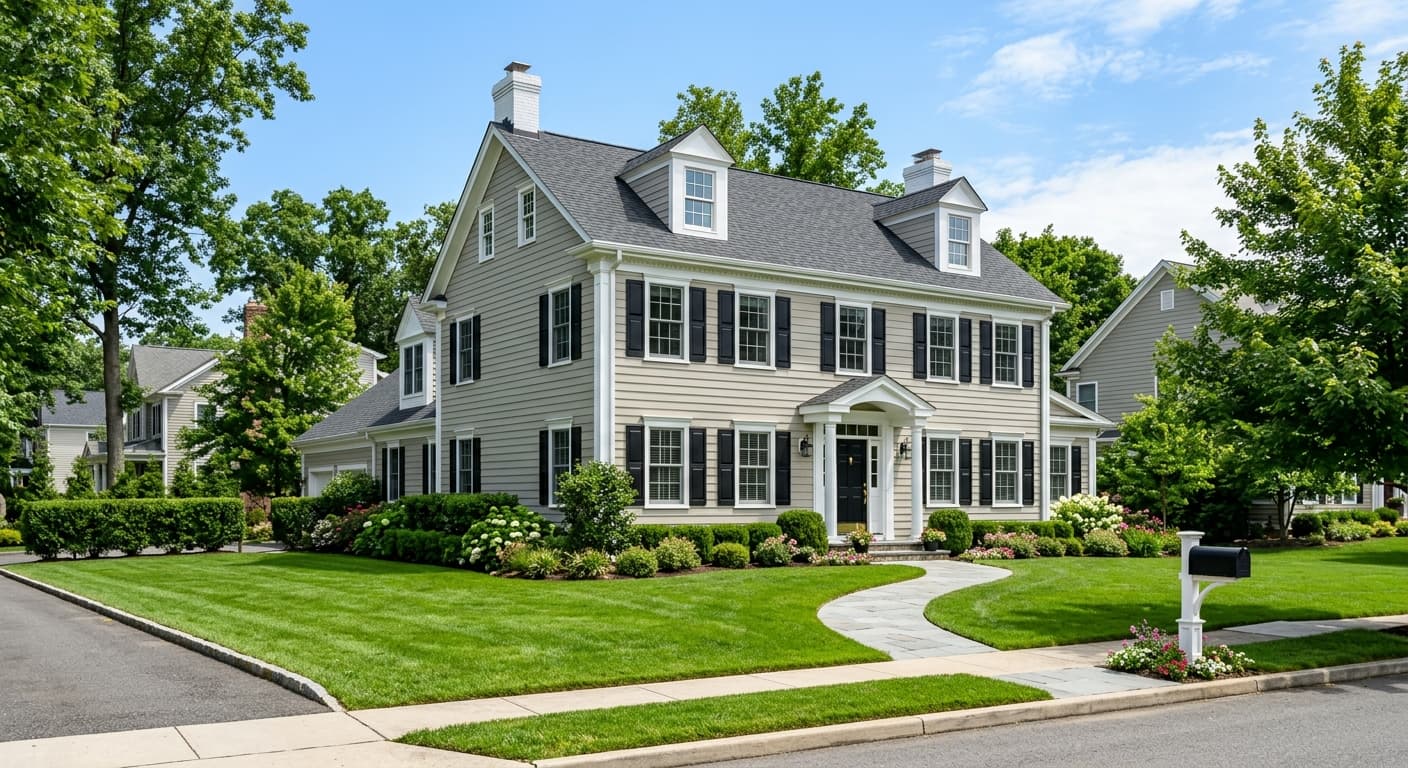
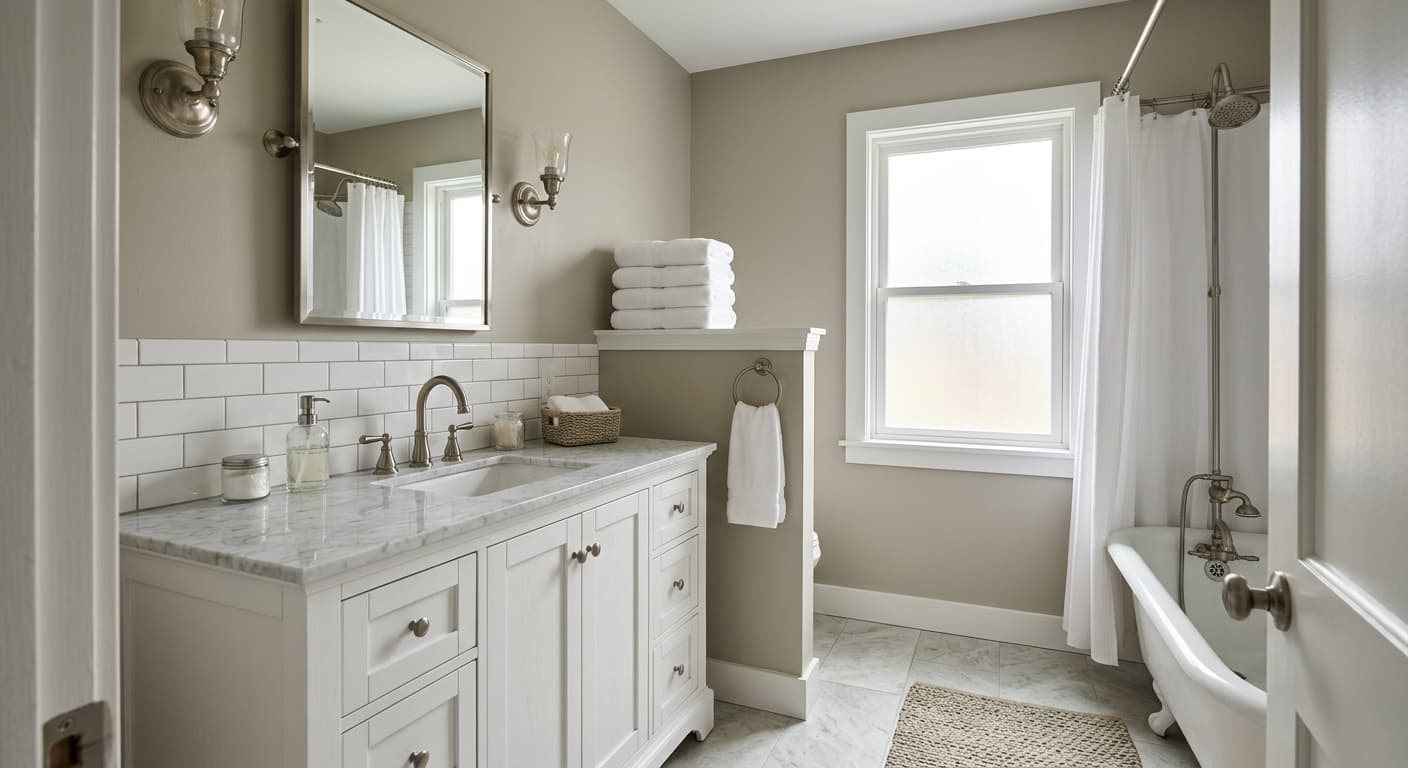
Revere Pewter sits in that space between gray and beige that people call greige. On your walls it reads as a warm, soft neutral. Not cold. Not creamy. Something that holds its ground without demanding attention.
The color shifts more than you might expect. In bright midday sun it leans lighter and warmer, pulling toward a soft taupe. As the light fades in the evening, it deepens and the gray comes forward. Under warm artificial light it can look almost beige, and under cool LED bulbs it tightens up and reads more gray. You will notice these changes most on large unbroken walls, so test it before you commit.
What makes it distinctive is its balance. Plenty of greiges tip too far one way and end up looking muddy or pink or green. Revere Pewter stays steady across most rooms, which is a big part of why it became one of the most used neutrals of the last fifteen years.
Revere Pewter Undertones
The dominant undertone here is a soft green-gray, with a touch of warmth underneath. That green is subtle, but it shows up when you put the color next to something that competes. Place it beside a pink-based beige and the green gets stronger. Set it near a true gray and Revere Pewter suddenly looks warm and almost tan.
This matters for everything you put against it. Cool blue-grays can fight the warmth and make the wall look dingy. Warm woods and creamy whites flatter it. Before you choose trim or buy a sofa, hold the samples directly against a painted area, because the undertone only reveals itself in context.
Where Revere Pewter Works Best
This is a flexible color, but it performs best in rooms with decent natural light. In south-facing and west-facing rooms the warmth comes alive and the green undertone stays balanced. North-facing rooms pull the color cooler and grayer, which can work if that is what you want, but watch for it reading flat or slightly dull on overcast days.
It suits open-plan main floors, living rooms, hallways, and bedrooms. Because it is a mid-tone, it does not make small rooms feel especially open, so in a tight north-facing space you may prefer something lighter. In larger rooms with good light, it adds grounding without going dark.
What to Pair With Revere Pewter
For trim, White Dove (OC-17) is the standard partner and for good reason. Its soft warmth matches Revere Pewter without going stark. Simply White (OC-117) works if you want a touch more brightness. Avoid bright cool whites, which make the walls look muddy by comparison.
For a coordinated palette, Edgecomb Gray (HC-173) gives you a lighter step in the same family, and Kendall Charcoal (HC-166) makes a strong darker accent. Wood tones in oak, walnut, and warm medium browns look natural against it. For flooring, warm and neutral woods are a safe bet, while very cool gray floors can pull against the warmth. Black hardware and fixtures give you contrast that keeps the room from feeling washed out.
Colors That Clash With Revere Pewter
Do not pair it with cool blue-gray accents or stark white trim, since both will expose the warmth and make the walls look dirty rather than soft. Skip pink-based beiges nearby, which drag out the green undertone in an unflattering way. And do not rely on it in a dim north-facing room without testing, because in poor light it can lose its character and read as a flat, lifeless gray.