Morning at Sea
What Morning at Sea Actually Looks Like
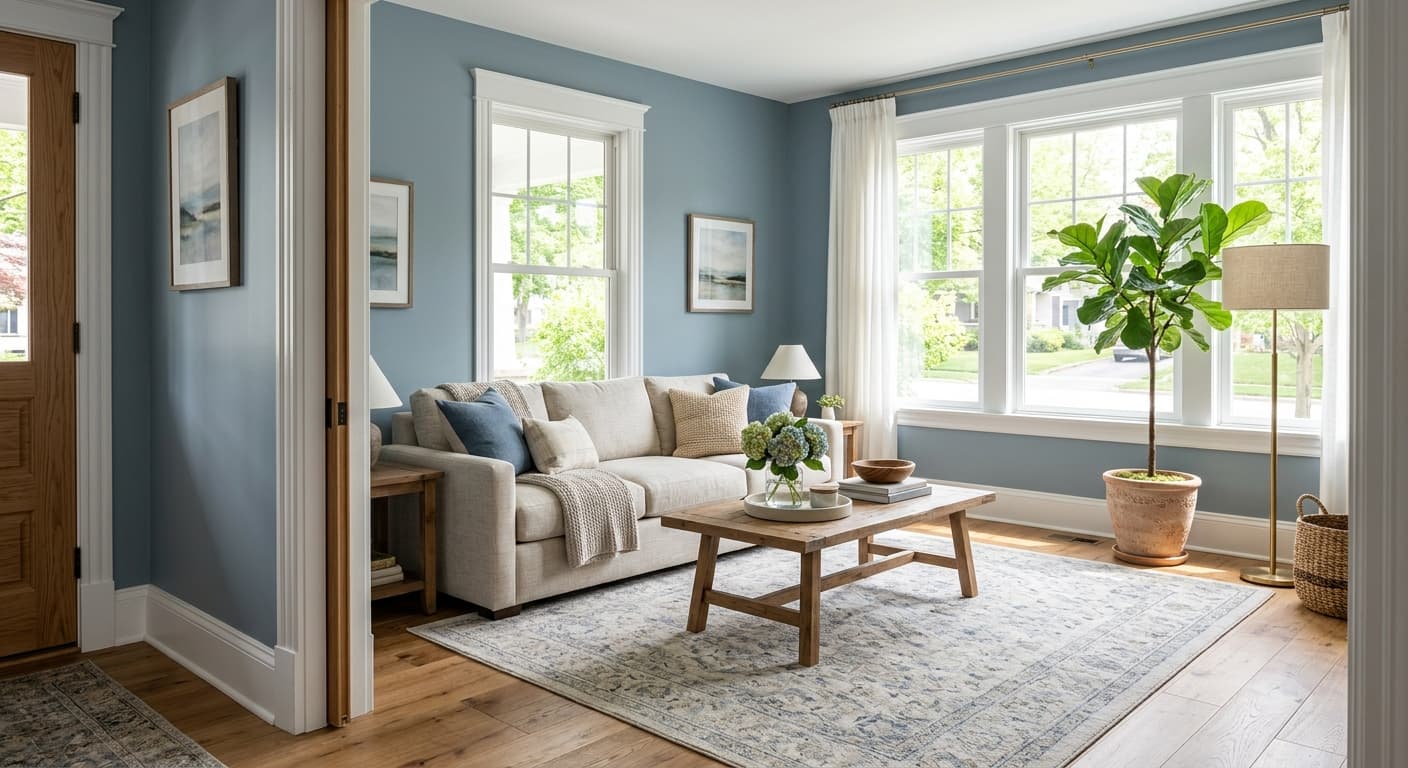
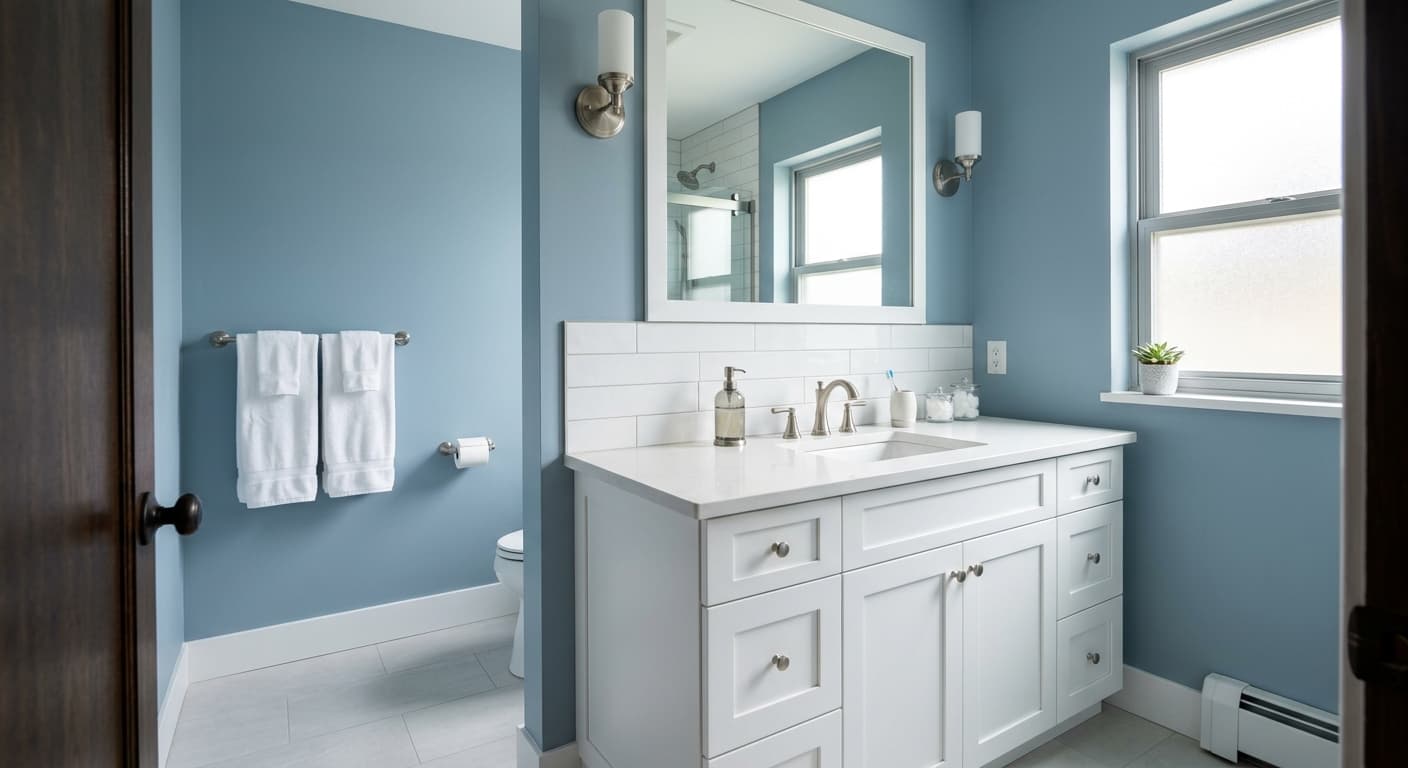
Morning at Sea is a soft, grayed blue-green that lands somewhere between a coastal fog and a slate tidepool. It reads more blue in some rooms and more green in others, which is part of what makes it interesting to live with. You will not get a punchy, saturated color here. This is a muted, dusty shade with enough gray in it to keep things grounded.
In bright daylight, the color opens up and shows its green side. The walls feel airy and a little watery, like the surface of calm water before the sun fully clears the horizon. As the light drops in the afternoon and evening, it pulls toward a deeper, moodier blue-gray. Under warm incandescent bulbs, expect it to soften and warm slightly. Under cool LED light, the gray and blue get sharper.
What makes it distinctive is that restraint. Plenty of blue-greens shout. This one murmurs. It works as a quiet backdrop rather than a focal point, which gives you room to layer texture and tone without the wall competing for attention.
Morning at Sea Undertones
The dominant undertone is green, but there is a strong gray component holding it back from going coastal-cute. Depending on your light and your neighboring finishes, you may also catch a faint blue lean. This matters because undertones decide whether your trim, furniture, and adjacent colors look intentional or slightly off.
If you put Morning at Sea next to a stark, blue-white trim, the green undertone gets exaggerated and the wall can look chalky. Pair it with a softer, warmer white and the gray settles down and the color feels balanced. Always test it against the actual whites and woods you plan to use. The undertone shift is real, and a sample on the wall tells you more than any swatch will.
Where Morning at Sea Works Best
This color shines in bedrooms, bathrooms, and home offices where you want a calm, low-key atmosphere. It also does well in a north-facing room, where the cooler natural light leans into the blue-gray and gives the space a serene, even feel. South-facing rooms warm it up and bring out the green, which works if that is the read you want.
Small spaces benefit from how soft and recessive it is. The color does not crowd a room. In larger, open spaces, use it on a feature area or across all walls if you are going for a quiet, enveloping mood. Just know that low-light rooms will push it darker, so judge it across a full day before committing.
What to Pair With Morning at Sea
For trim, reach for a warm, soft white like Alabaster (SW 7008) or Greek Villa (SW 7551). These keep the gray undertone honest without making the wall look cold. If you want more contrast, a deeper charcoal or a muted navy on doors or built-ins gives you definition.
For flooring, natural oak and walnut both work well. The warmth of the wood balances the cool wall. Avoid very orange or red-toned woods, which can clash with the green. For furnishings, lean into linen, raw wood, brass, and brushed nickel. Complementary SW colors include Accessible Beige (SW 7036) for a warm neutral pairing, or Sea Salt (SW 6204) if you want to stay in the same soft blue-green family with a lighter step.
Colors That Clash With Morning at Sea
Skip the cool, bright whites and the high-gloss finishes. A stark white trim fights the gray and makes the wall look dirty. Heavy, warm-yellow lighting can also muddy the color and pull it toward a swampy green you did not sign up for. And do not pair it with strong terracotta or warm orange tones unless you are deliberately building a contrast scheme. The undertones tend to argue.