Forged Steel lands in that territory between a true charcoal and a near-black gray. With an LRV of 10.5, it reflects very little light, so on the wall it reads as a deep, grounding color that commands attention without quite tipping into flat black. In a well-lit room, you get the full richness of the charcoal, with a slight complexity that keeps it from looking like a paint chip approximation of dark gray. In low light or a north-facing space, it can push close to black and lose some of that nuance entirely.
What separates Forged Steel from many competitors in its class is that it does not read cold. Plenty of deep charcoals carry a blue cast that makes a room feel stark or industrial in an unwelcoming way. Forged Steel avoids that. Most people who have lived with it on a wall or a cabinet face describe a color that feels settled and warm, even at this depth. It fits comfortably in rooms that lean modern and restrained, but it does not feel like it belongs only to one design era.
The research points clearly toward a warm-neutral undertone, but there is real disagreement worth knowing about before you commit a gallon to your cabinets. The consensus reading is a subtle warmth, sometimes described as a hint of brown mixed into the charcoal base. That keeps it from the blue-gray family most people associate with cool, corporate grays. On warm-toned wood floors or beside a warm white trim, that soft warmth becomes more visible and the color reads as a true warm charcoal.
A smaller group of reviewers sees something different, picking up a faint yellow quality in certain natural light conditions. A few others, particularly in rooms with northern exposure or heavy shade, report catching a trace of blue. Neither of these readings is the majority view, but they are credible enough to take seriously. The practical takeaway is that Forged Steel's undertone can shift depending on your light source and what surrounds it, more so than a mid-tone gray would. Paired with a bright cool white, the warmer side recedes and the gray reads crisper. Against a warm greige or a wood element, the warmth comes forward and the color softens slightly. Sample it large on your actual wall, and check it both in daylight and under your evening artificial lighting before deciding.
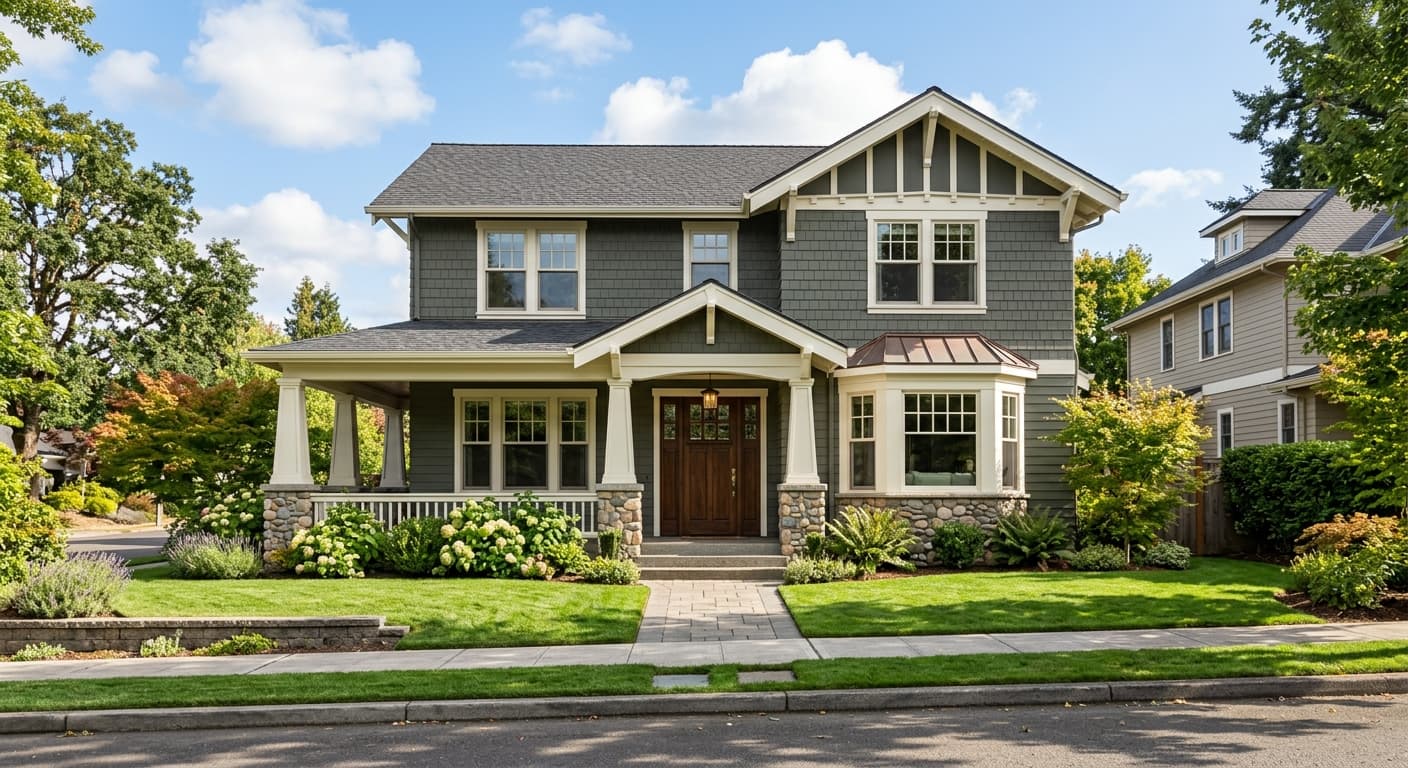
Forged Steel earns most of its real-world enthusiasm on exteriors. As siding, it reads as a sophisticated deep charcoal that holds up well against both bright trim and natural wood accents. On a front door it creates strong curb appeal through sheer contrast, working especially well with a white or light stone facade. Because it leans warm-neutral rather than cool, it tends to harmonize with a wider range of exterior materials, brick, cedar, concrete, without fighting any of them.
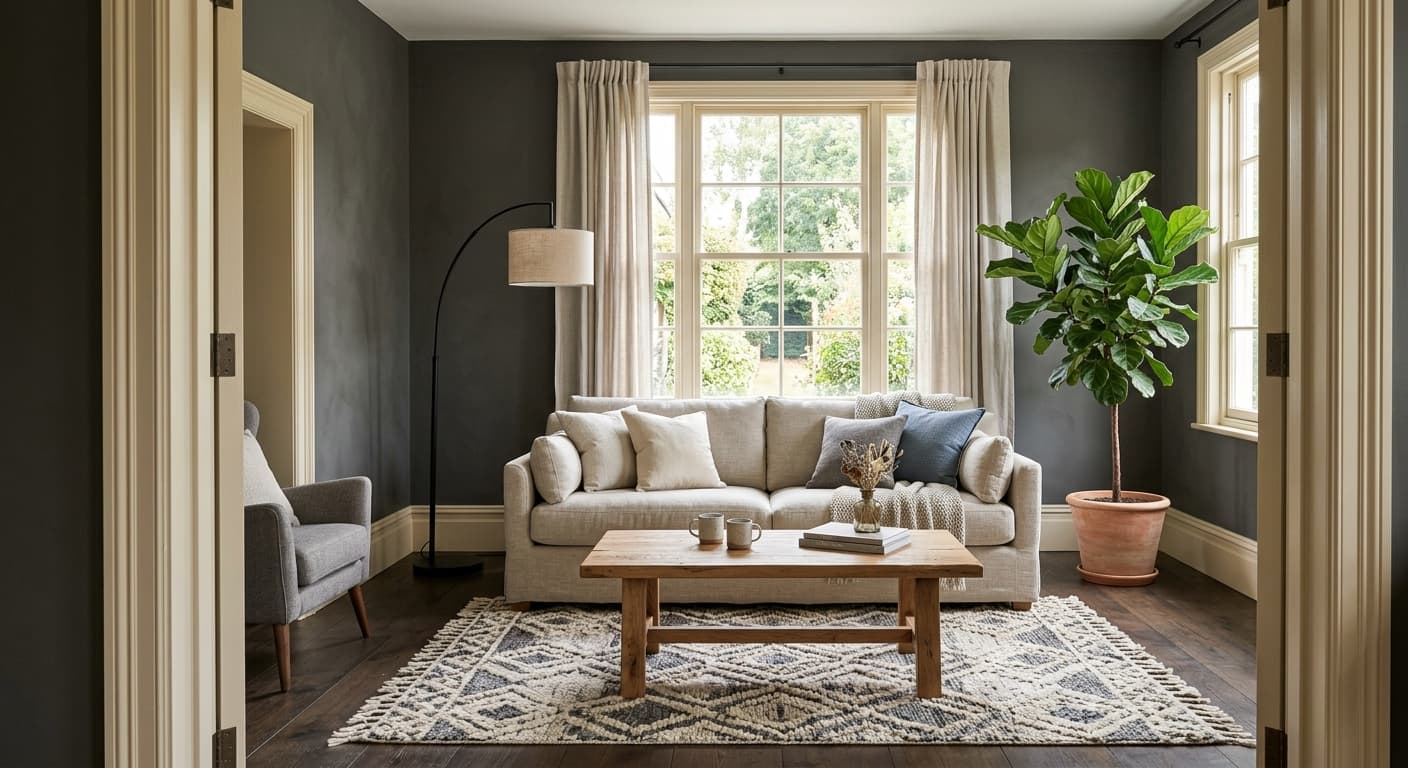
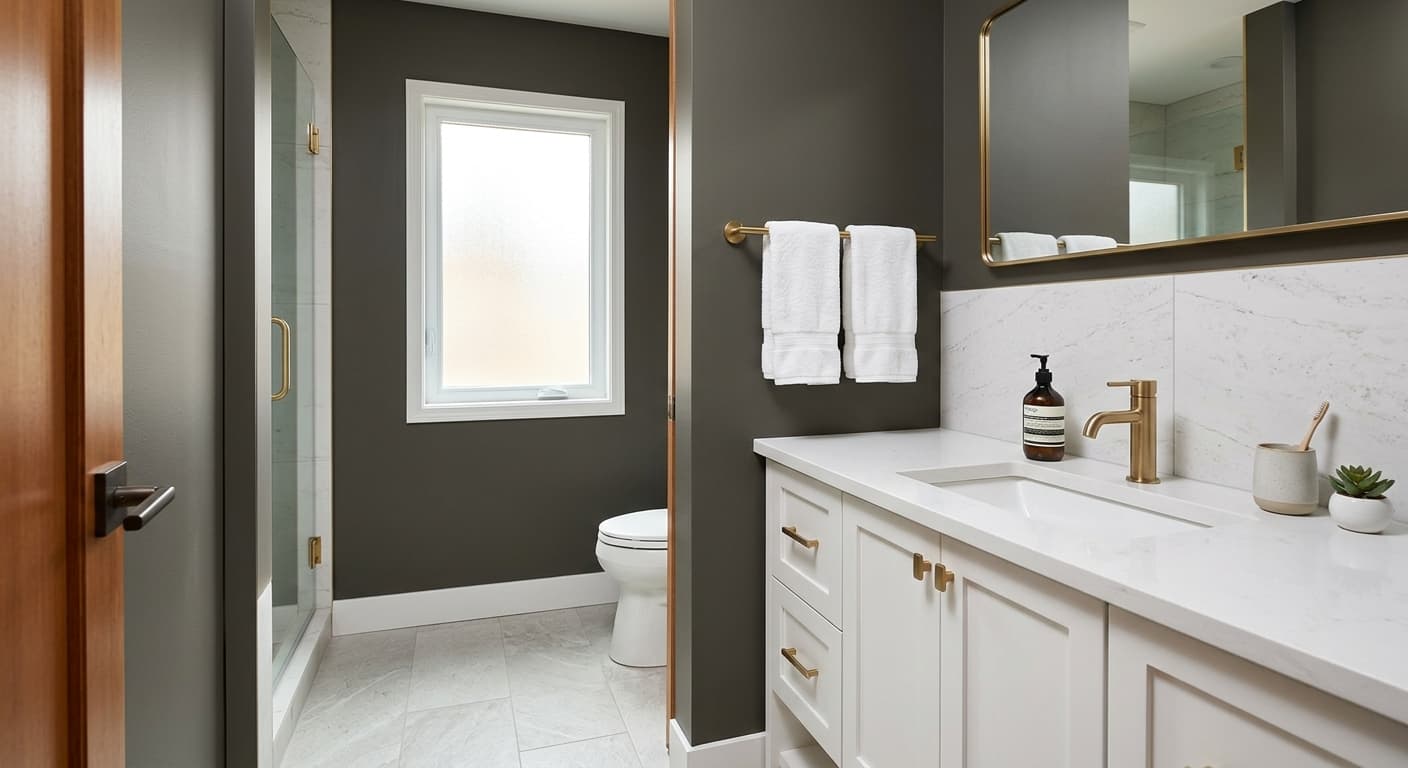
Indoors, the most common and most successful applications are accent walls and kitchen or bathroom cabinetry. As an accent wall in a living room or bedroom, it grounds a space and adds depth that a lighter neutral simply cannot. On kitchen cabinets, the depth gives a high-contrast, modern look against white counters or light uppers, and the slight warmth keeps the kitchen from feeling cold or clinical. Bathroom vanities are another strong application, particularly in bathrooms that have natural light and lighter tile to balance the drama.
Because the LRV is 10.5, this color is not well suited to small, poorly lit rooms used as the dominant wall color. It will absorb most of the available light and make the space feel compressed. If you have a dim room you want to use it in, limit it to cabinetry or one accent wall and keep the remaining surfaces light. South- and west-facing rooms with good natural light show the color at its most nuanced. East-facing rooms work in the morning but shift in the afternoon. North-facing rooms carry a real risk of the color reading flat and very close to black.
Forged Steel is one of its strongest performers as a whole-house or partial exterior siding color. The LRV of 10.5 gives it real depth that reads well from the street, and the warm-neutral base keeps it from clashing with natural materials like wood, stone, or brick. Pair it with white trim for a crisp, modern contrast or with a darker trim for a more tonal, cohesive look.
On a front door, Forged Steel creates a confident focal point without being theatrical. It works particularly well against light siding, where the contrast does the heavy lifting. The warm undertone makes it approachable rather than severe, which matters on the entry point of a home.
Deep charcoal cabinets in Forged Steel pair well with white or light quartz countertops for a high-contrast kitchen that feels current and well-considered. The slight warmth keeps the kitchen from reading cold, which is a common complaint with cooler dark cabinet colors. Use it on lowers only for a two-tone effect, or on all cabinets if your kitchen has strong natural light.
In a living room or primary bedroom, a single Forged Steel accent wall adds depth and drama while the remaining lighter walls keep the space balanced. At LRV 10.5 it anchors the room and makes lighter furnishings and art stand out. Make sure the wall receives some natural or direct artificial light so the color shows its charcoal quality rather than reading as flat black.
A bathroom vanity in Forged Steel stands out against white tile and light walls without requiring you to commit the whole room to such a dark value. The depth of the color makes hardware, whether brass, chrome, or matte black, look intentional and considered. Best in bathrooms that have a window or good overhead lighting.
Because Forged Steel is so dark, its pairings do the most work in establishing whether the overall palette feels bold and graphic or grounded and livable. Crisp, bright whites give you maximum contrast and a sharp modern look. Softer warm whites and greiges close the contrast gap and let the warmth in Forged Steel come forward, creating a palette that feels more collected and less stark. Sherwin-Williams coordinates Forged Steel with Winsome Grey, Fortitude, and Valleyview. Winsome Grey offers a lighter gray that bridges the gap between the deep charcoal and a white without jumping the contrast too dramatically. Fortitude, sitting closer in value to Forged Steel, works well as a companion color on adjacent surfaces when you want a tonal, layered look. Valleyview brings a different quality to the palette, useful when you want to introduce a softer or more varied note into what would otherwise be an all-neutral scheme.
All comparisons are matched against Forged Steel at LRV 10.5.
Pairing Forged Steel with a bright white that carries a blue or violet undertone can push the charcoal toward looking colder and slightly discordant, since the contrast between the warm gray and a cool white creates a visual tension that neither color wins.
At LRV 10.5, Forged Steel absorbs most available light. In a room that already lacks natural light, using it on all four walls will make the space feel compressed and drain any sense of dimension from the color itself.
Highly orange or red-toned wood floors can create a difficult tension with Forged Steel, where the warmth in the wood reads as clashing rather than complementary against the deep charcoal, particularly if there is no transitional element between them.
Forged Steel is a deep, dark charcoal gray with a warm-neutral base. At LRV 10.5 it reads as a medium-dark to near-black gray on the wall, sitting in the charcoal family without the cold blue cast that many dark grays carry.
The dominant undertone is warm-neutral, which most reviewers describe as a subtle warmth or a hint of brown within the charcoal gray base. A smaller number of reviewers have noted a faint yellow quality in certain natural light conditions, and a few see a trace of blue in low-light or north-facing rooms. The warm-neutral reading is the strong consensus, but the color can shift depending on your light source and surroundings, so large samples viewed across multiple lighting conditions are important.
Forged Steel leans warm-neutral. It is not a cool gray and does not carry the blue cast associated with many charcoals in its depth range. That said, it is not overtly warm either, and its exact warmth reading can vary with your room's light and the colors around it.
The LRV of Forged Steel SW 9565 is 10.5. That is a low value, which means the color reflects very little light and reads as deep and dramatic on the wall. It can approach near-black in dim conditions.
The Sherwin-Williams paint code is SW 9565. The hex value is #5b5b59 and the RGB values are 91, 91, 89.
Crisp warm whites provide strong contrast and a sharp, modern pairing. Warmer greiges soften the drama and let the warm side of the charcoal come forward. Sherwin-Williams coordinates Forged Steel with Winsome Grey, Fortitude, and Valleyview, which offer a range of lighter and mid-tone neutral companions. Natural wood tones and brass or warm-metal hardware also pair well, adding warmth that complements rather than competes with the deep gray.
Yes, all three are strong applications. On exteriors, the LRV of 10.5 gives it real presence and the warm-neutral base keeps it compatible with a wide range of materials including wood, stone, and brick. On a front door, it creates confident contrast against lighter siding without reading as harsh. On kitchen or bathroom cabinets, the depth delivers a high-contrast modern look and the subtle warmth prevents the space from feeling cold or clinical.
Benjamin Moore Kendall Charcoal HC-166 is frequently cited as the closest cross-brand comparison, sharing Forged Steel's warm-leaning charcoal quality and balanced, non-blue base. Always sample both side by side in your actual space, since even similar colors can read differently depending on finish, sheen, and lighting.
