Stained Glass
What Stained Glass Actually Looks Like
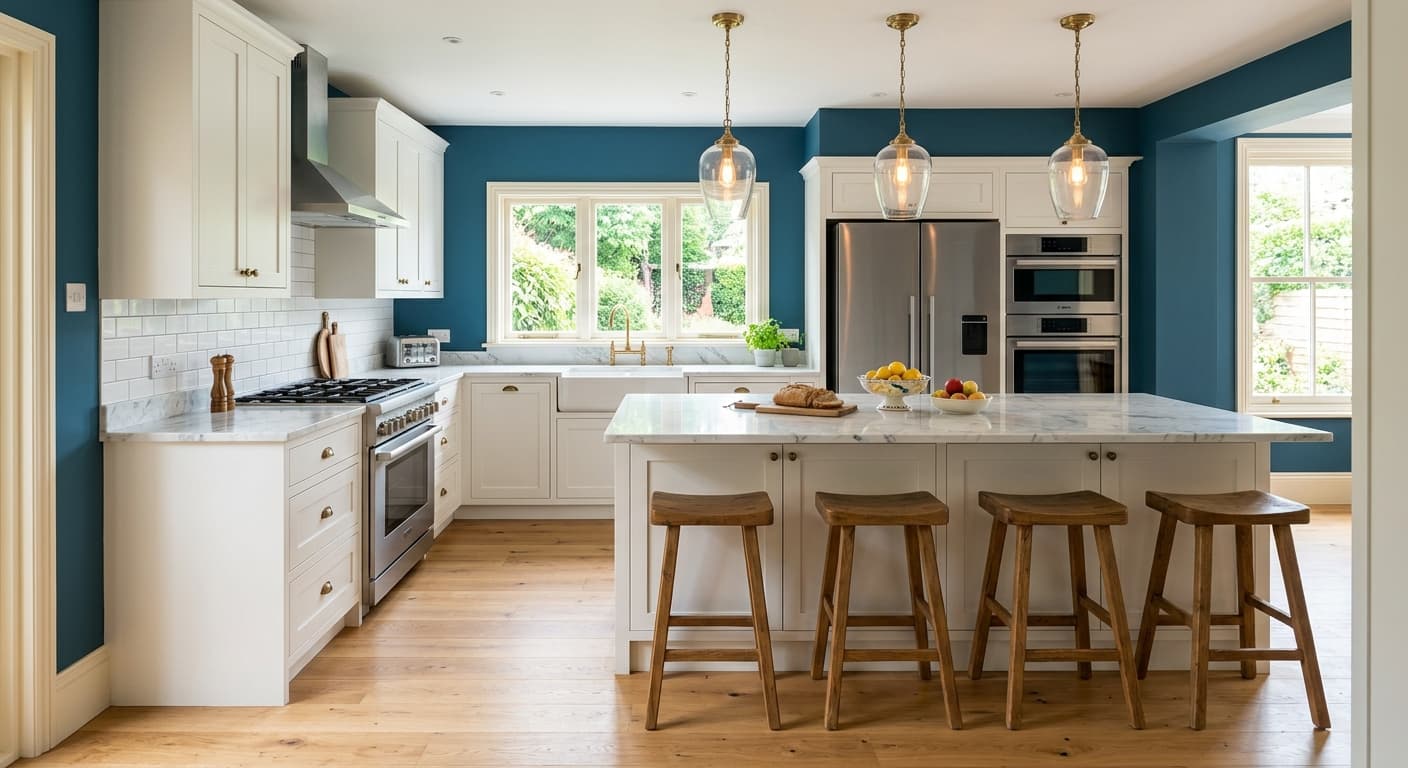
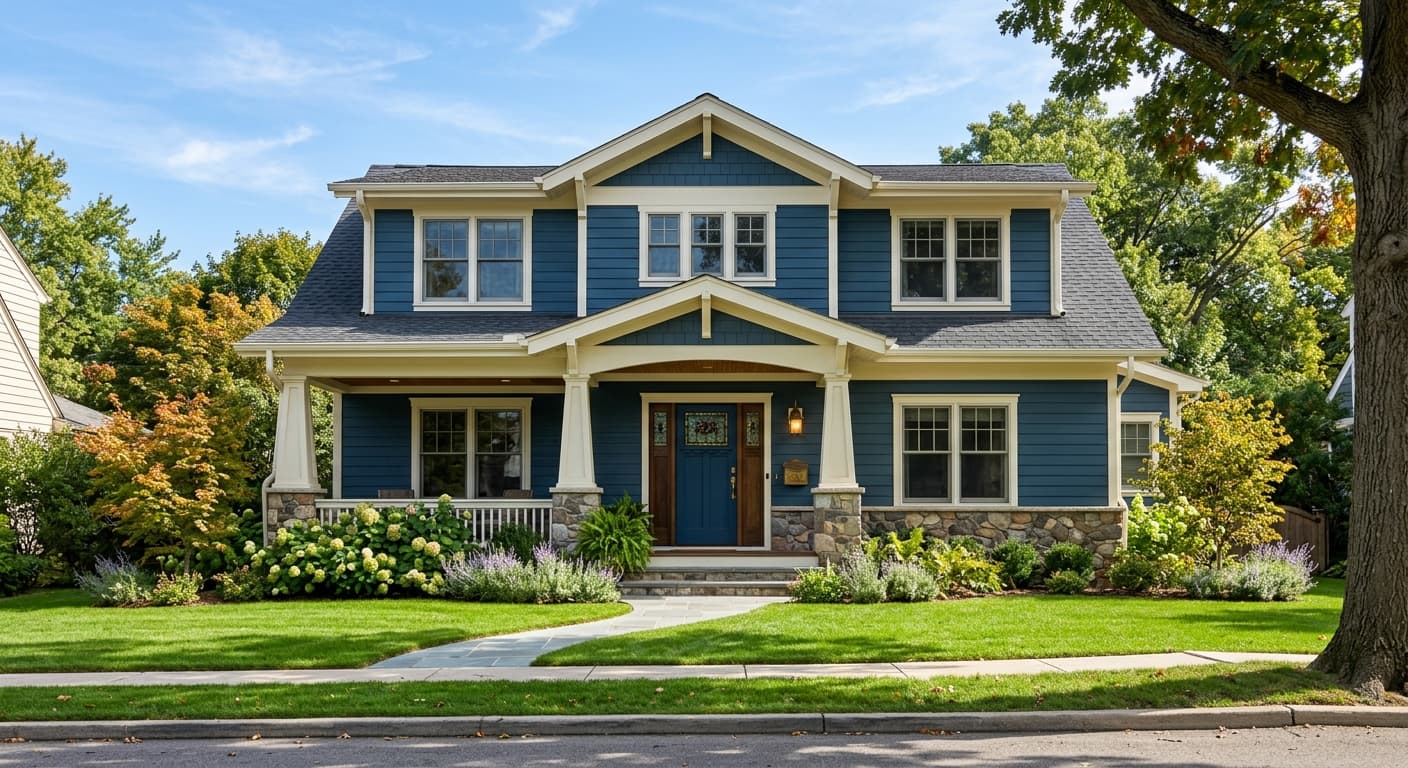
Stained Glass (759) is a deep, moody teal that sits somewhere between blue and green without committing fully to either. In a paint chip, it reads almost like a dark peacock. On the wall, across a full room, it gets richer and more complex. You'll notice it pulls more blue in cooler light and leans green when warm light hits it.
This is a saturated, low-light color. It drinks up illumination rather than bouncing it back, which gives a room that enveloping, jewel-box quality some people love and others find too intense. In a sunlit room at midday, the teal stays vivid and clear. By evening, under lamplight, it deepens toward something close to ink with a green pulse underneath.
What makes it distinctive is that depth. Most blue-greens at the store either go flat and chalky or veer too bright. Stained Glass holds onto its complexity. It never looks cheap, and it never looks like a single flat note.
Stained Glass Undertones
The dominant undertone here is green, even though your eye registers it as blue first. That matters more than you'd think. When you put it next to a true navy, Stained Glass suddenly looks teal. Next to a warm sage, it reads bluer. The color shifts based on what surrounds it, so test your trim and adjacent walls together, not in isolation.
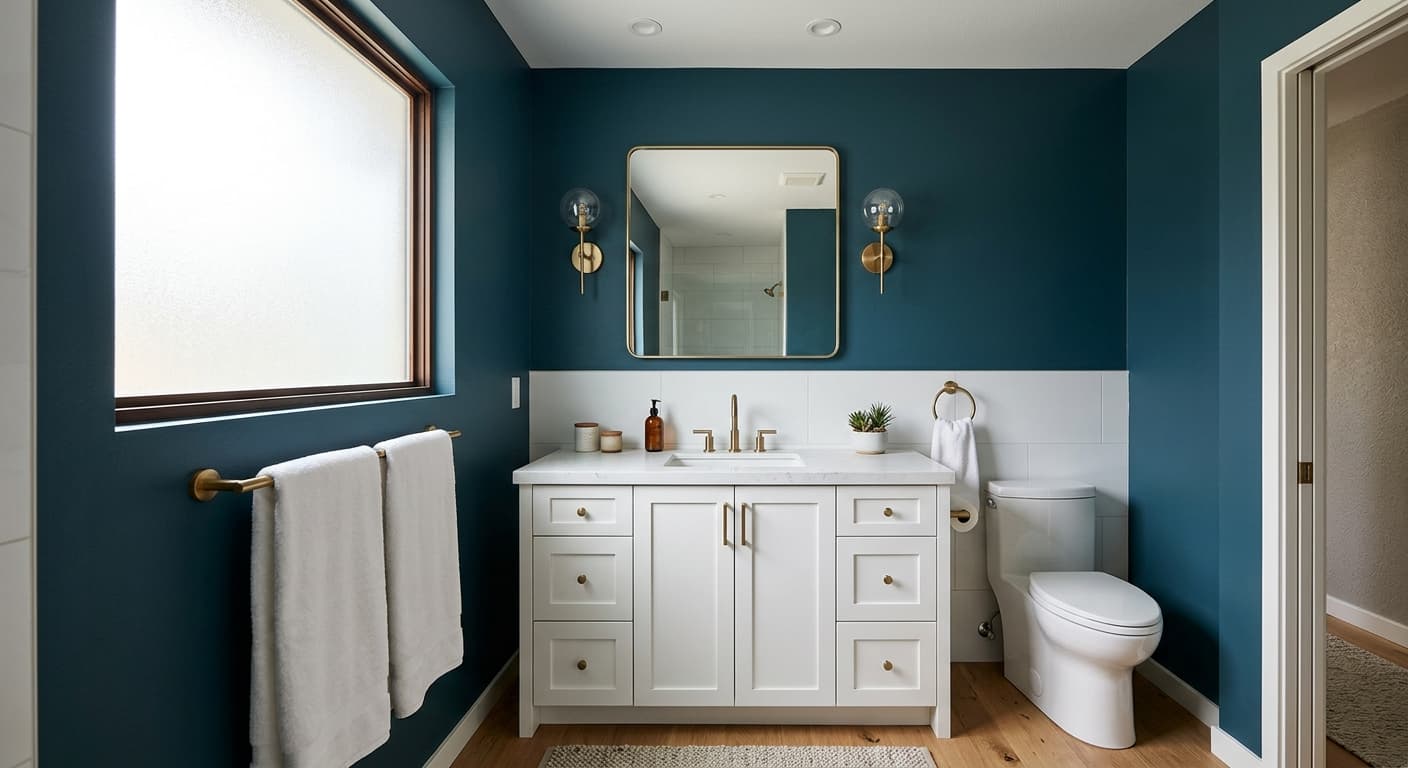
Because of that green base, warm wood tones and brass play beautifully against it, while cool chrome can feel a touch clinical. Keep the undertone in mind when you choose furnishings. A sofa with a gray-green or caramel tone will settle in nicely. A stark cool gray will fight it.
Where Stained Glass Works Best
This color rewards rooms where you want drama and intimacy. Dining rooms are a natural fit, especially ones you use mostly at night. Powder rooms, libraries, studies, and bedrooms also wear it well. The darkness becomes an asset in spaces meant for retreat rather than productivity.
South-facing rooms with strong natural light handle the full saturation best, keeping the teal lively. North-facing rooms will push it darker and cooler, which can be gorgeous if that is your intent but worth previewing first. In small spaces, lean into the depth rather than fighting it. A tiny powder room painted Stained Glass feels deliberate and confident, not cramped.
What to Pair With Stained Glass
For trim, a crisp warm white like Benjamin Moore White Dove (OC-17) keeps things grounded without going stark. If you want less contrast, Simply White (OC-117) softens the edges. Brass hardware, aged bronze, and natural oak or walnut flooring all complement that green undertone.
For adjacent walls or connecting spaces, consider Pale Oak (OC-20) or Revere Pewter (HC-172) to give the eye somewhere soft to land. If you want a tonal, layered scheme, Newburyport Blue (HC-155) sits in the same family and creates depth without clashing. Velvet, leather, and rattan textures all read well against this color. Stick with warm metals and natural materials.
Colors That Clash With Stained Glass
Skip the cool grays and icy whites for trim. They make Stained Glass look murky and drain its warmth. Avoid pairing it with other heavily saturated jewel tones in the same sightline, since two dominant colors competing will exhaust the eye. And do not use it in a room you need to feel bright and energizing, like a home office where you work all day. The darkness that flatters a dining room will weigh on you in a space built for focus.