Halo
What Halo Actually Looks Like
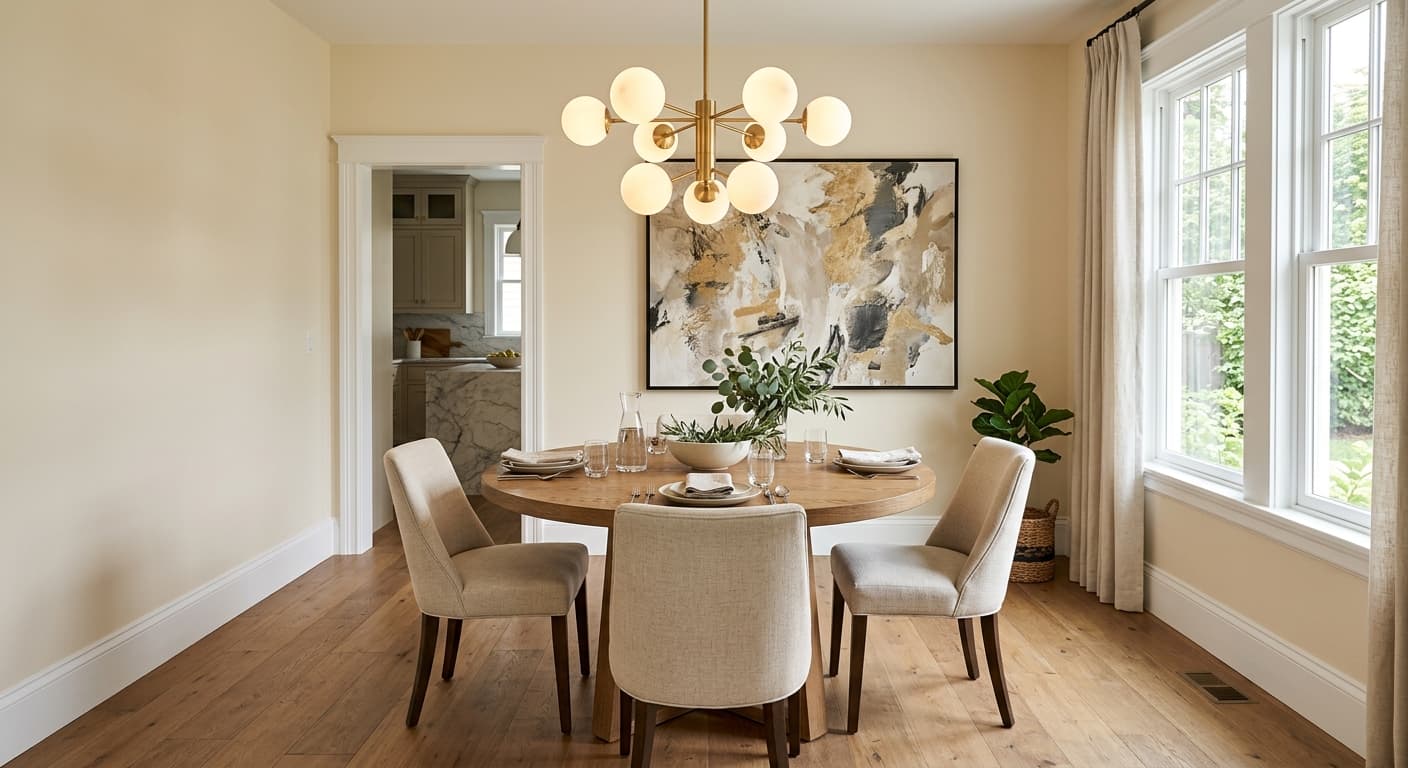
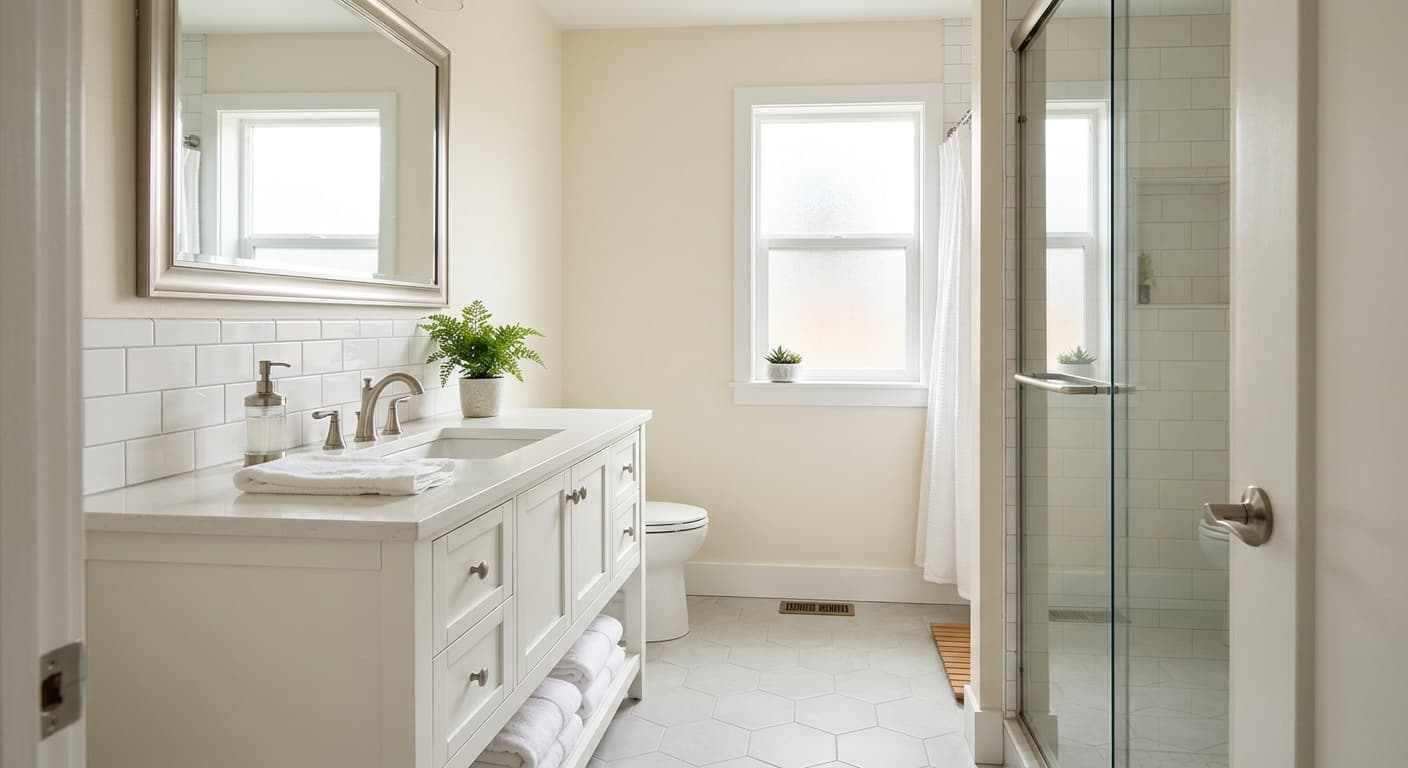
Halo is a warm off-white, but it never tips into cream or beige the way some warm whites do. Think of it as a white that's been softened just enough to feel gentle on the eyes. In a freshly painted room, your first reaction is usually relief. Stark white can feel clinical. Halo doesn't.
The color shifts more than you'd expect for something this pale. In bright midday sun, it reads almost clean white, with just a whisper of warmth keeping it from feeling cold. As the light fades toward evening, that warmth comes forward and the walls take on a soft, slightly putty-like quality. Under warm artificial lighting, expect it to glow a touch more golden.
What makes Halo distinctive is its balance. It's warm without being yellow, soft without being muddy. A lot of off-whites force you to choose between cozy and crisp. Halo gives you a bit of both, which is exactly why so many designers keep it in their back pocket.
Halo Undertones
Halo carries a subtle warm undertone that leans gray-green in some lights and faintly taupe in others. This matters because undertones are what your eye picks up even when you can't name them. Put Halo next to a cool blue-gray and it will suddenly look warmer and creamier. Set it against a true cream and it looks crisper by comparison.
When you're choosing trim, adjacent walls, or fabrics, hold them up against Halo before committing. The undertone is mild enough that it plays well with most things, but it can clash with very cool, blue-based whites that make it look dingy. Always test in the actual room.
Where Halo Works Best
Halo earns its keep in north-facing rooms, where cooler natural light can make many whites feel flat and gray. The warmth here adds just enough life to keep the space from feeling chilly. It also performs beautifully in south-facing rooms, where strong light won't blow it out into a harsh glare the way a pure white might.
Use it anywhere you want a calm, open backdrop. Bedrooms feel restful. Living rooms feel airy without going cold. It works in small spaces because the high light reflectance keeps things feeling open, and it holds up in large rooms because it has enough character to avoid looking like primer. Hallways and connecting spaces benefit too, since Halo bridges warm and cool rooms without a jarring transition.
What to Pair With Halo
For trim, Benjamin Moore Simply White or Chantilly Lace gives you a clean, slightly brighter contrast that lets Halo read as the softer tone. If you want a more seamless look, paint the trim in Halo itself at a higher sheen. For a deeper anchor, pair it with Pale Oak or Edgecomb Gray on adjacent walls for a layered neutral scheme.
Halo loves natural materials. Light oak and white oak flooring feel organic next to it. Warmer wood tones like walnut bring out its cozier side. For furnishings, lean into linen, oatmeal, soft taupe, and muted greens. Black accents in hardware or lighting give it some backbone and keep the room from feeling too soft. Brass and aged bronze warm it up nicely.
Colors That Clash With Halo
Don't pair Halo with cool, stark whites on the same plane, like a bright blue-white ceiling against Halo walls. The contrast makes Halo look dirty rather than warm. Avoid heavy gray-blue color schemes too, since they fight the undertone and drain the warmth out. And resist the urge to use it in a room that gets almost no natural light without testing first, because in very dim conditions the warmth can read slightly murky.