Serenely lands on the wall as a soft, muted blue-gray, light enough to keep a room feeling open without going stark white or icy. Its LRV of 66.3 puts it well above the midpoint of the scale, so it holds onto airiness while still reading as a real color with presence. It is not a whisper of a tint. You notice it, but it never crowds a space.
In the middle of the day under neutral light, most people see a composed gray-blue, calm and slightly coastal. It does not shout any single hue. What shifts is the secondary character: some rooms show a clear blue-green quality that makes it feel almost like a gentle sea glass, while others let a faint softness come forward that reads less crisp than a straight gray. That dual nature is what makes it interesting and also what makes sampling non-negotiable.
Because the LRV sits at 66.3 rather than pushing into the low 70s or above, it does carry a bit more color saturation than the palest blue-grays on the market. It will not wash out a moderately lit room, but in a very bright, south-facing space flooded with direct sun it can lose some of its personality and edge toward a bleached-out version of itself.
The undertone picture for Serenely is genuinely layered, and reviewers do not all see the same thing, which is worth knowing before you commit. The most consistent read across independent sources is blue-gray with a secondary note of green. That green keeps it from feeling purely cool or clinical, and it is the quality that some designers describe as coastal or spa-like. When you stand back in a room with white or warm-neutral trim, that blue-green character tends to surface most clearly.
A separate line of review, however, pulls out a subtle lavender note sitting over the gray base. Lavender and green are not the same thing, and this disagreement is real, not a rounding error. What it tells you is that the color sits in a zone where the warmth of your light source, the color temperature of your bulbs, and the specific undertones in your flooring and furnishings can tip it in noticeably different directions. Warm incandescent or 3000K bulbs soften and warm it, making the blue-green read more inviting. Cooler 4000K and higher LED bulbs suit the color on paper but can sharpen it toward a cooler, grayer tone and may bring out that lavender quality more.
The brand places Serenely in the Warms and Neutrals family, which surprises some people given how blue-cool it photographs. What that classification likely reflects is that the green undertone prevents it from reading as a true cold blue. It is not warm the way a beige or greige is warm, but it avoids the hard chill of a straight blue-gray. Whether you ultimately land on the green-read or the lavender-read camp, test a large sample in your actual room under your actual lighting before you paint.
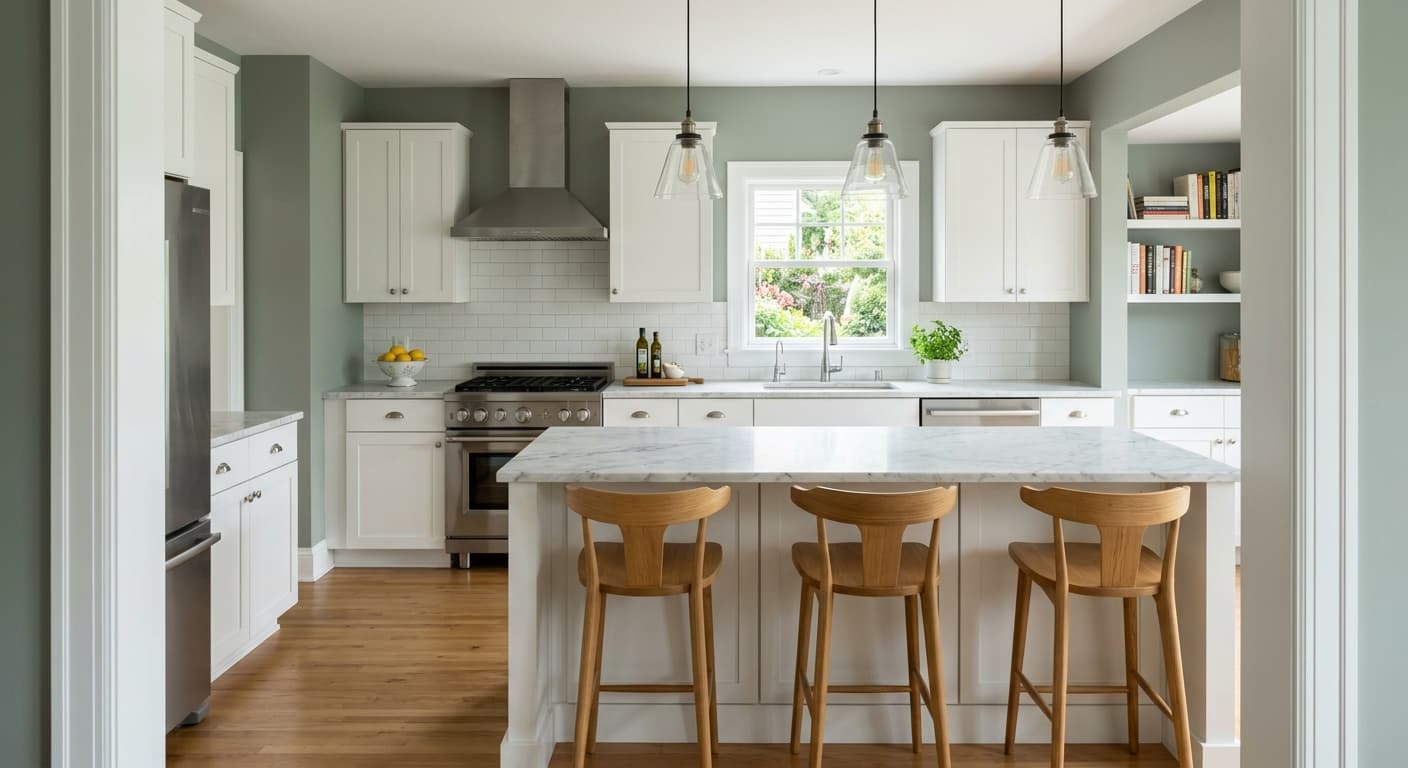
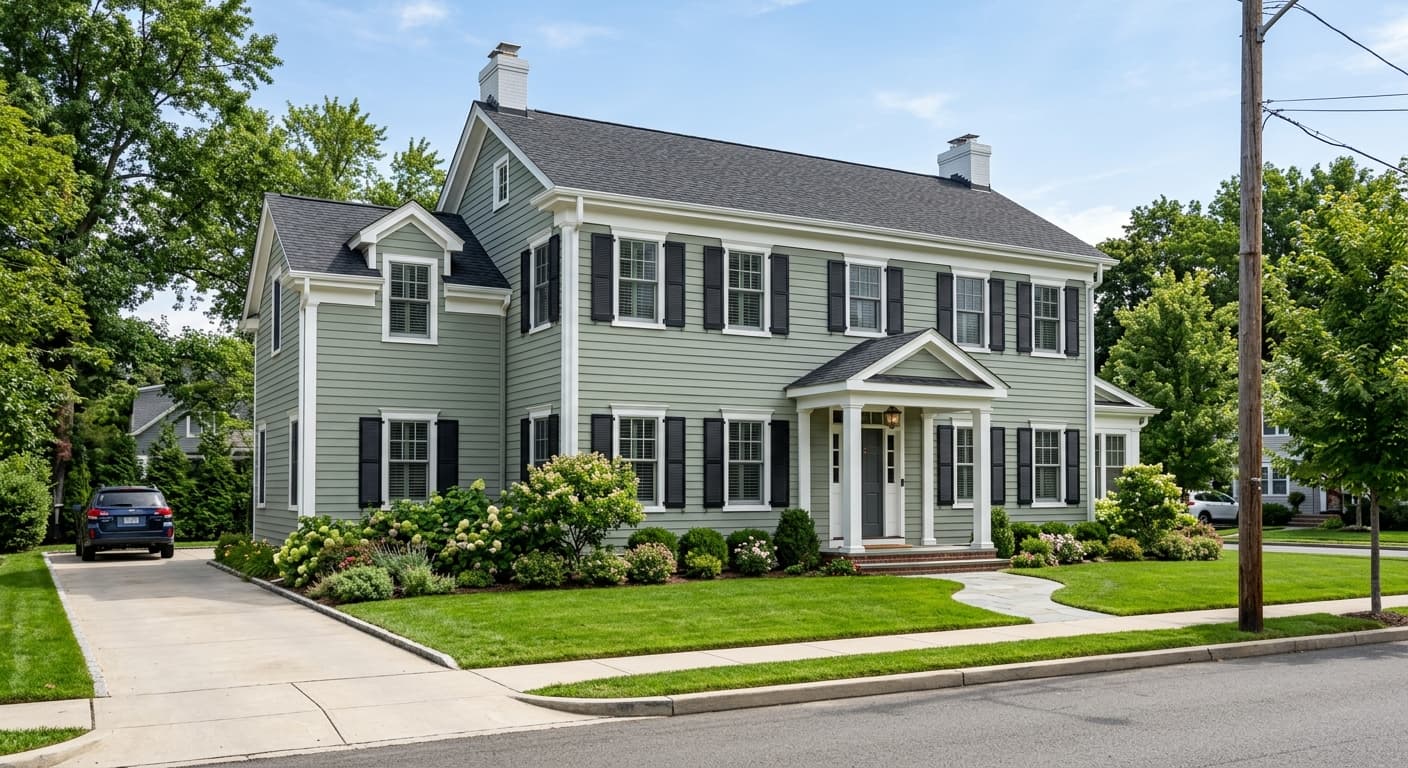
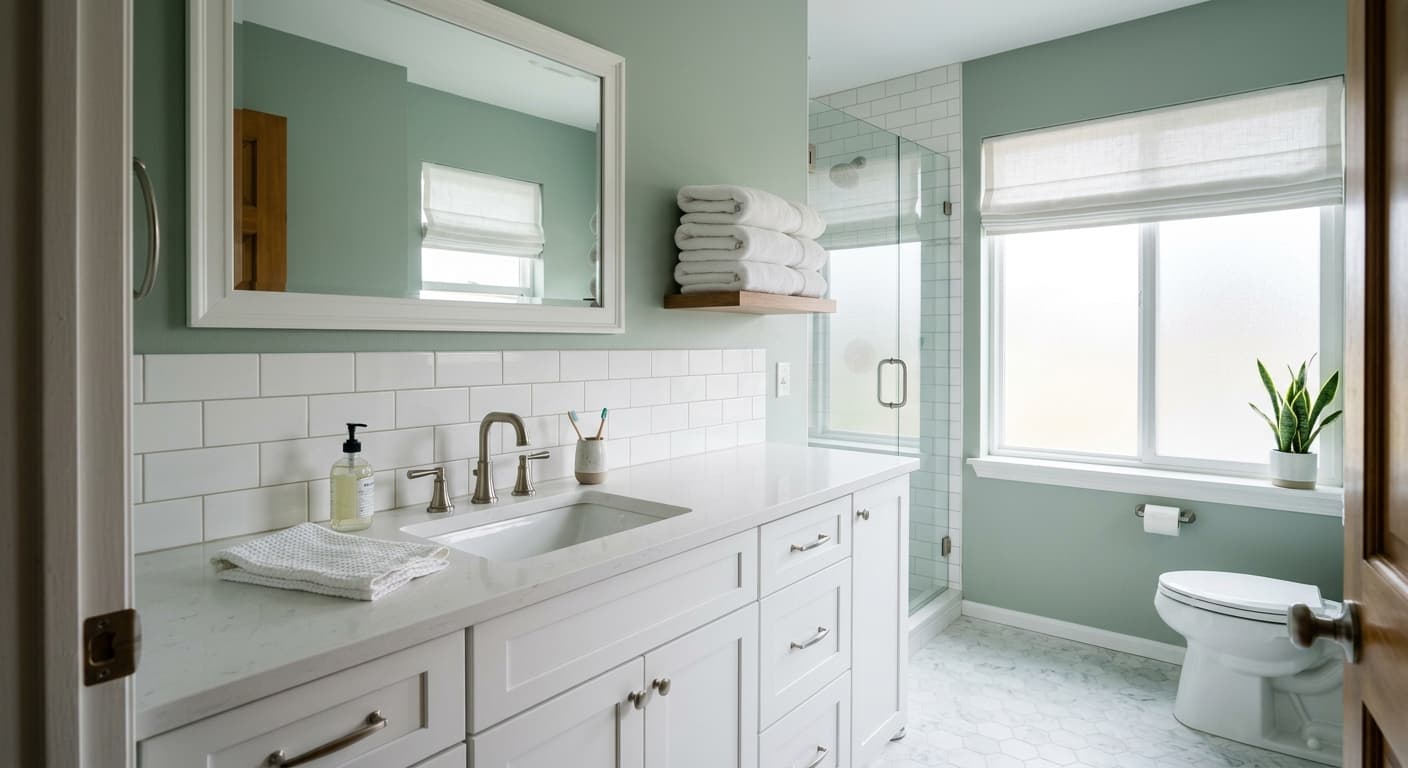
Bedrooms are where Serenely earns its name most literally. The soft, retreating quality of a cool blue-gray at 66.3 LRV reads as restful without feeling hospital-white or sterile. It gives a room a grounded calm that is especially useful in spaces where you want to visually lower a high ceiling or create a cocooning feel without going dark. Pair it with natural linen, warm wood tones, and soft lighting and the room settles into something genuinely peaceful.
Bathrooms are another strong match. The spa-like association that reviewers attach to Serenely comes directly from its cool blue-green character, and a bathroom with white fixtures, light stone or tile, and good natural or warm artificial light is exactly the setting where that quality performs. North-facing bathrooms may pull it grayer and cooler, which can still work well with chrome or brushed nickel hardware, though you may want a warmer bulb to keep it from feeling flat.
Living rooms, home offices, and kitchens round out the strongest use cases. In a living room it makes a versatile backdrop for contemporary, coastal, Scandinavian, or minimalist interiors without locking you into a single style. South-facing living rooms and breakfast nooks are particularly good fits because that warmer, brighter light brings out its soft blue-green side and keeps it from reading washed out. In a north-facing office it can skew a touch grayer and cooler, which works well for focus but may need warm textile accents to feel inviting over long hours.
Serenely's 66.3 LRV keeps a bedroom light and open while the blue-gray tone does quiet, restful work on the walls. It pairs well with warm wood furniture and soft linen bedding, which balance the cool undertone and keep the room from feeling clinical. North-facing bedrooms may pull it slightly grayer, so lean toward warmer bulbs and textiles to compensate.
The blue-green character that many reviewers describe makes Serenely a natural fit for bathrooms where you want a spa-like feel without going full aqua or teal. White fixtures and light stone or ceramic tile let the color breathe, and a warm 3000K bulb keeps it from reading flat. It works in both small powder rooms and larger primary baths.
In a living room, Serenely functions as a calm, versatile backdrop that suits contemporary, coastal, and Scandinavian interiors equally well. South-facing rooms get the most out of it, as warmer afternoon light softens the color and brings out its blue-green side. Use Mortar (SW 9584) as an accent or in built-ins to give the palette some grounding depth.
Serenely's coordinating lineup balances its cool base with both crisp whites and warmer, grounding tones. White Sail gives you a clean, slightly warm white for trim and ceilings that keeps the blue-gray from feeling cold without killing the contrast. Mortar (SW 9584) anchors the palette at the other end, bringing in a deeper, earthier tone that adds weight and warmth without clashing with the cool lead color. Wild Poppy brings in a muted, warm accent that pops gently against the gray-blue and keeps the overall palette from reading too monochromatic or cool. Together these three options cover the range from airy and soft to grounded and layered.
Beyond the official coordinates, the research points toward warm neutrals, natural wood finishes, and soft textiles as reliable companions. Muted corals and soft beiges in pillows, rugs, or furniture upholstery work because they sit across the temperature dial from Serenely without fighting it. If you want to keep the palette tonal and restrained, pulling in other soft cool neutrals in your textiles and layering warm wood tones in furniture does the most to keep the room feeling comfortable rather than cold.
All comparisons are matched against Serenely at LRV 66.3.
Strong yellow undertones in oak or pine flooring can clash with Serenely's cool blue-gray base, making the wall read grayer and more washed out while the floor looks garish by contrast.
A bright, blue-white trim can amplify the cool side of Serenely and push it toward feeling cold and flat, especially in north-facing rooms where the color already trends grayer.
Deeply saturated oranges, rusts, or terracotta in large upholstery pieces or statement rugs can feel jarring against Serenely's restrained, cool base, as the temperature contrast becomes too abrupt.
Serenely is a soft, muted blue-gray with a secondary green note that gives it a coastal, spa-like quality. It is light in value, with an LRV of 66.3, so it reads as a real color with presence without feeling heavy or dark on the wall.
The primary undertone most reviewers land on is blue-gray with a dash of green. A separate group of reviewers reads a faint lavender quality over the gray base instead. Both reads are legitimate, and which one surfaces in your space depends on your light direction, bulb temperature, and surrounding finishes. Test a large sample in your actual room before committing.
Serenely reads as cool overall, but it is not icy or harsh. The green note in its undertone prevents it from feeling like a pure, cold blue-gray. Sherwin-Williams places it in the Warms and Neutrals family, which reflects that soft, slightly tempered quality. Warmer light sources and warm-toned furnishings can make it feel more balanced and livable.
Serenely has an LRV of 66.3, which puts it on the lighter side of the scale. It will keep a room feeling open and bright without reading as a near-white. In very sunny, south-facing rooms it can lose some of its color saturation, so it performs best in moderately to softly lit spaces.
Serenely's Sherwin-Williams code is SW 9632. Its hex value is #ced7d5 and its RGB values are 206, 215, 213. It is available in both interior and exterior formulations.
Sherwin-Williams coordinates it with White Sail for a clean, slightly warm trim white, Mortar (SW 9584) as a deeper, grounding earthy tone, and Wild Poppy as a muted warm accent. Beyond those, warm whites for trim and ceilings, natural wood finishes, soft linen textiles, and muted corals or dusty beige accents all work well with its cool blue-gray base.
Serenely is available in an exterior formulation, so exterior use is possible. Reviewers mention it most in the context of interior rooms, particularly bedrooms and bathrooms, but its soft blue-gray quality can translate well to exterior siding or shutters in climates and exposures where a cool, coastal tone fits the surroundings. For front doors or cabinets, its lighter value of 66.3 will read as a soft accent rather than a bold statement color.
