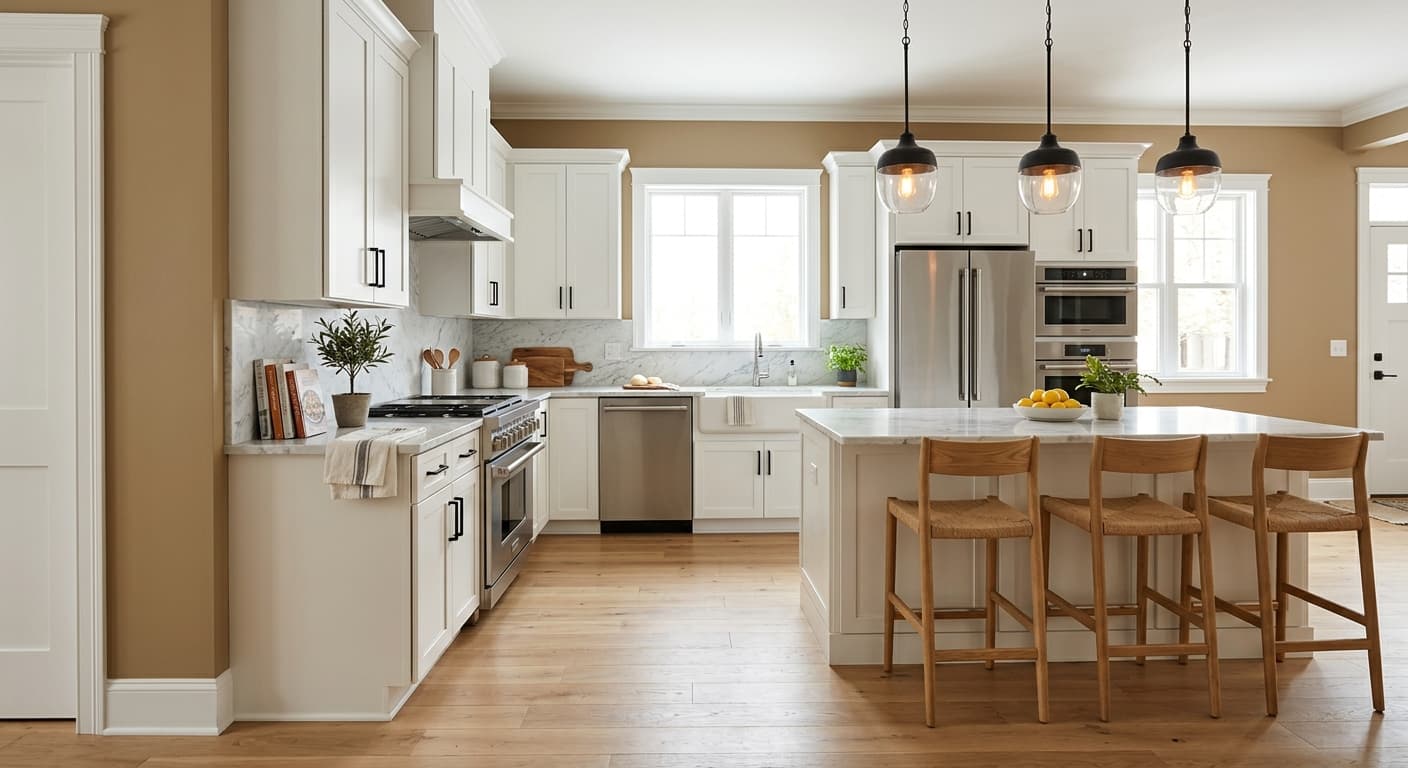
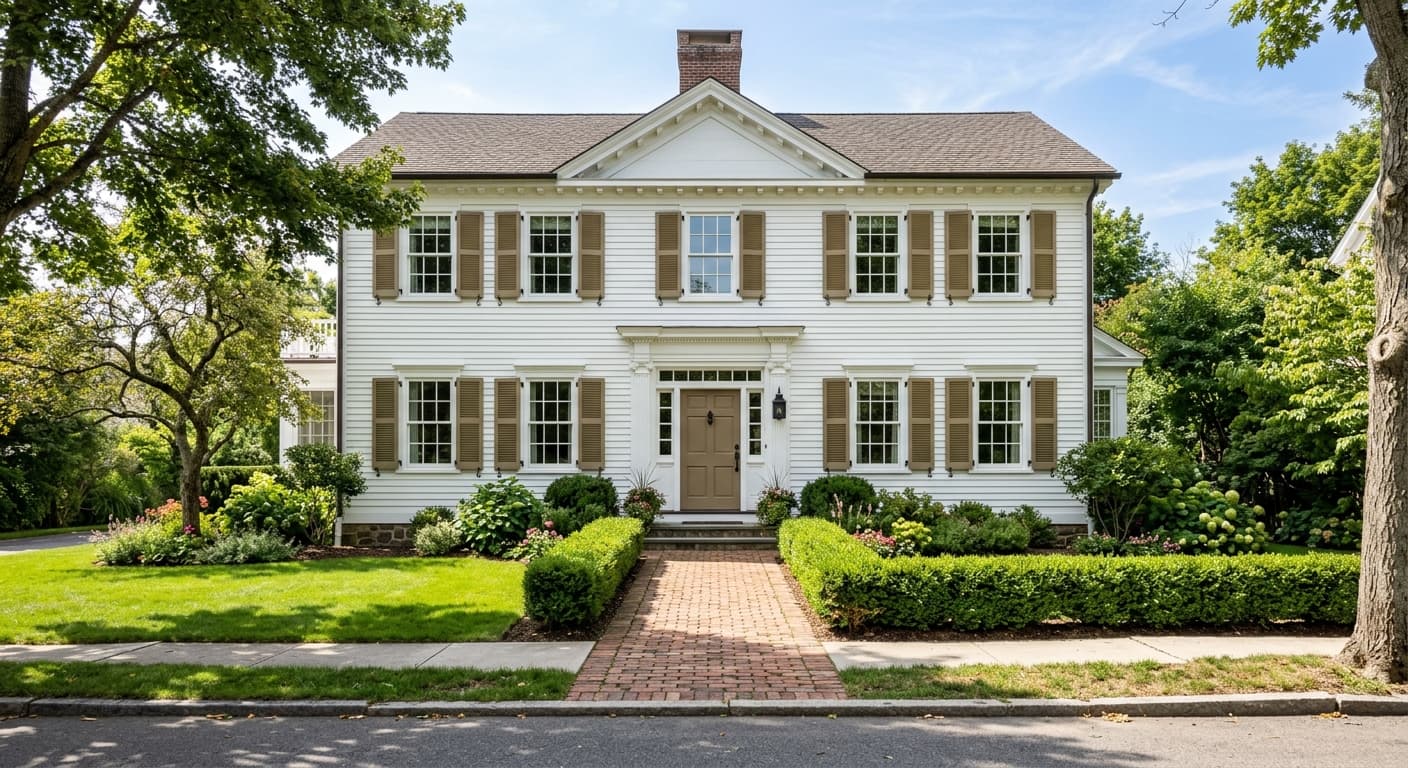
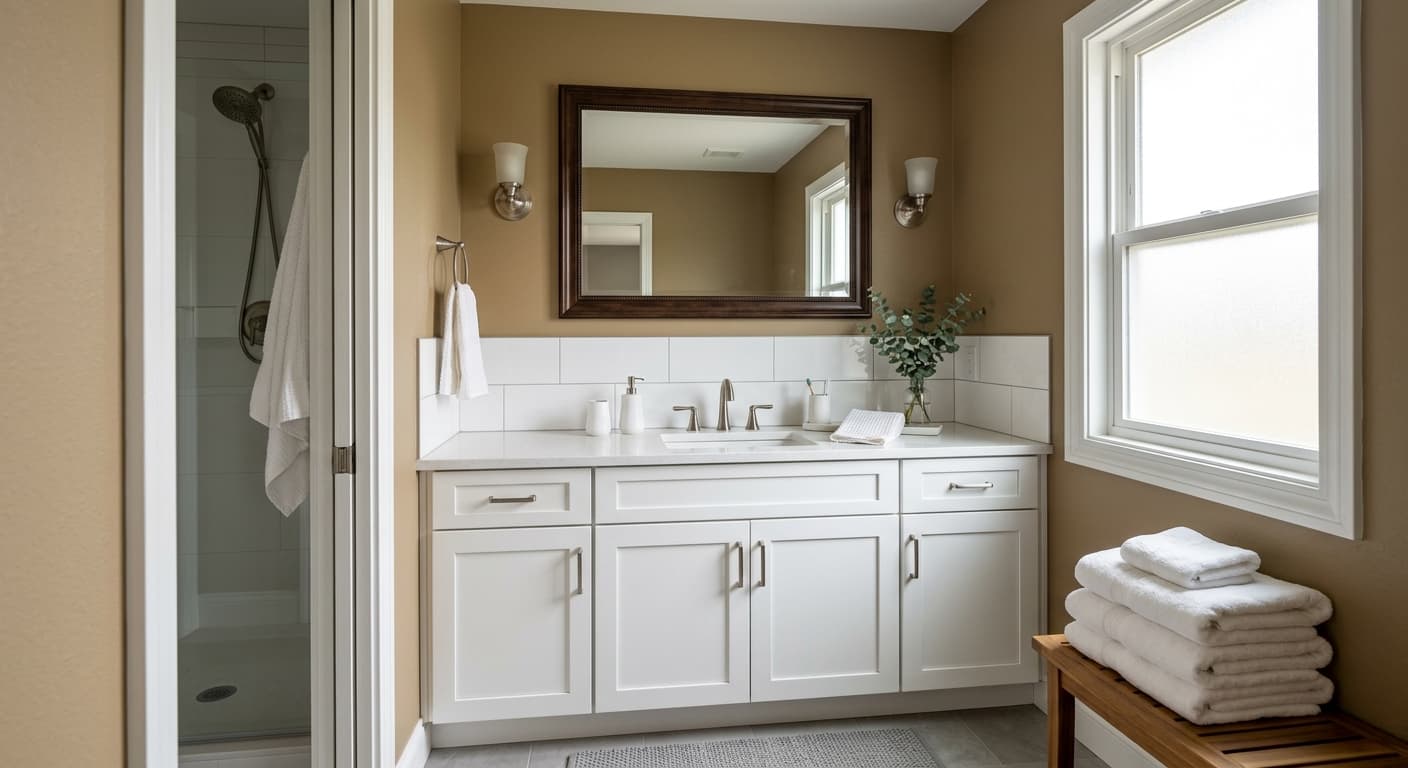
Stampede
What Stampede Actually Looks Like
Stampede is a warm, clay-driven orange with a grounded, earthy quality that keeps it from reading loud or cartoonish. Think terracotta pots, sun-baked brick, the color of canyon walls in late afternoon. It has real saturation, so this is not a shy color, but the brown underpinning gives it weight and maturity.
In bright, direct sunlight, you'll notice Stampede leans toward a glowing pumpkin tone. The orange comes forward and the room feels energized. As the light softens through the day, it settles into something deeper and more rust-like, almost adobe. Under warm artificial light in the evening, expect it to deepen further and pull toward burnt sienna.
What makes it distinctive is that balance between vibrancy and earthiness. A lot of oranges feel either too candy-bright or too muddy. Stampede sits in the middle. It reads as a confident, lived-in color rather than a trendy statement.
Stampede Undertones
The dominant undertone here is brown, with a faint red whisper underneath. That brown is what keeps Stampede feeling sophisticated instead of juvenile, and it's the thing you need to track when choosing companions. Pair it with cool, blue-gray trim and the contrast can feel jarring because the warmth has nowhere to land.
Pay attention to your flooring and large furniture too. Stampede sings next to warm wood tones and natural materials. Put it against a cold, gray-toned floor and the undertone clash will make the orange look slightly off, almost dirty. Keep your supporting cast in the warm family and the color behaves.
Where Stampede Works Best
This color thrives in spaces you want to feel intimate and welcoming. Dining rooms are a natural fit, since the warmth flatters food, candlelight, and skin tones. It also works beautifully in a study, a powder room, or as an accent wall behind a bed or fireplace.
South and west-facing rooms are where Stampede looks its best, because the warm light amplifies its glow without distortion. In a north-facing room, the cooler light can mute it and pull out more of the brown, which some people love for a cozy den feel and others find too dim. In small spaces, Stampede creates an enveloping, cocoon-like effect rather than making things feel cramped. Use it where you want pull, not where you want airiness.
What to Pair With Stampede
For trim, reach for a warm white or soft cream rather than a stark, blue-based white. Benjamin Moore White Dove (OC-17) and Swiss Coffee (OC-45) both keep the warmth intact and frame the color cleanly. If you want more contrast, a deep espresso brown or a warm charcoal works as trim or cabinetry.
On adjacent walls, earthy neutrals are your friend. Look at Shaker Beige (HC-45) or a muted greige to ground the scheme. For a richer, more layered palette, Stampede pairs gorgeously with deep olive green and dusty teal, both of which sit opposite it on the color wheel and create a designed, collected look. Bring in leather, rattan, terracotta tile, and warm oak flooring. Brass and aged bronze hardware finish it off nicely.
Colors That Clash With Stampede
Steer clear of cool grays, icy whites, and anything with a blue or purple undertone sitting right next to it. The contrast fights the color and makes both shades look wrong. Avoid pairing it with bright primary colors, which cheapen the earthiness, and resist the temptation to use it on every wall of a large, low-light room, where it can turn heavy and closed-in. Black accents in moderation are fine, but too much hard black can make the orange feel like a Halloween scheme.