Spanish Olive
What Spanish Olive Actually Looks Like
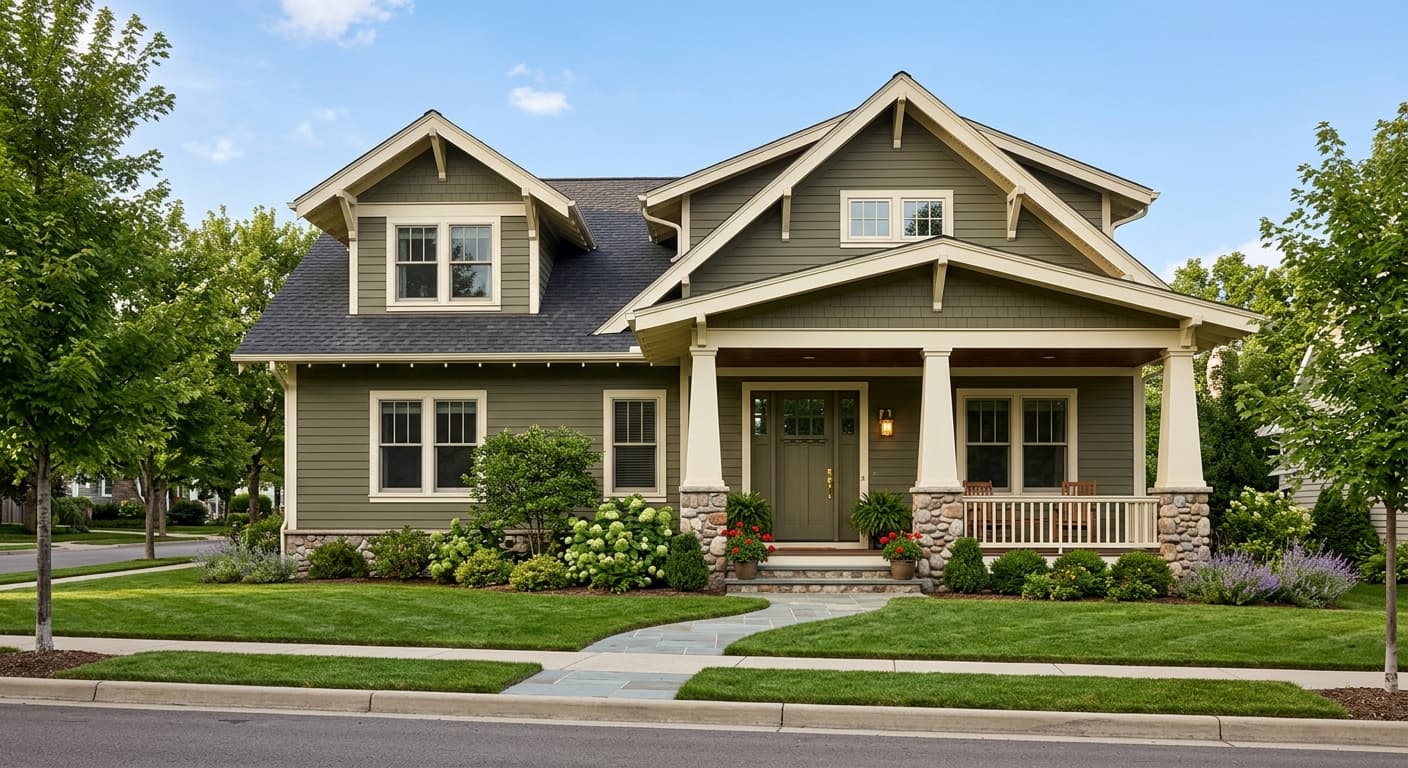
Spanish Olive is a dusty, grayed-down green that reads more like a soft sage than a true olive. The name suggests something darker and more saturated than what you actually get on the wall. This is a midtone green with a heavy dose of gray mixed in, which keeps it from ever looking loud or cartoonish.
In bright daylight, you'll notice the green comes forward and the color feels fresh, almost herbal. As the light fades toward evening, the gray takes over and the whole thing settles into something quieter and more muted. Under warm artificial light, expect a slightly brownish, earthy cast. Under cool LED, the green sharpens up and can lean a touch cooler than you might want.
What makes Spanish Olive distinctive is its restraint. It has enough color to feel intentional and grounded, but it never demands attention the way a brighter green would. People often describe it as a color that feels like it has always been there, which is exactly the quality you want in a calm, lived-in room.
Spanish Olive Undertones
The dominant undertone here is gray, with a secondary warmth that keeps the green from going cold. There is no blue pulling it toward teal and no yellow pushing it toward chartreuse. That neutral balance is why Spanish Olive plays well with so many other colors.
Undertones matter most when you start choosing trim and adjacent finishes. Because this green carries warmth, a stark blue-white trim can fight it and make the walls look muddy by comparison. Pay attention to how your fixed elements, like flooring and countertops, read against it. Anything with a strong pink or orange undertone nearby will exaggerate the green and shift how the wall reads.
Where Spanish Olive Works Best
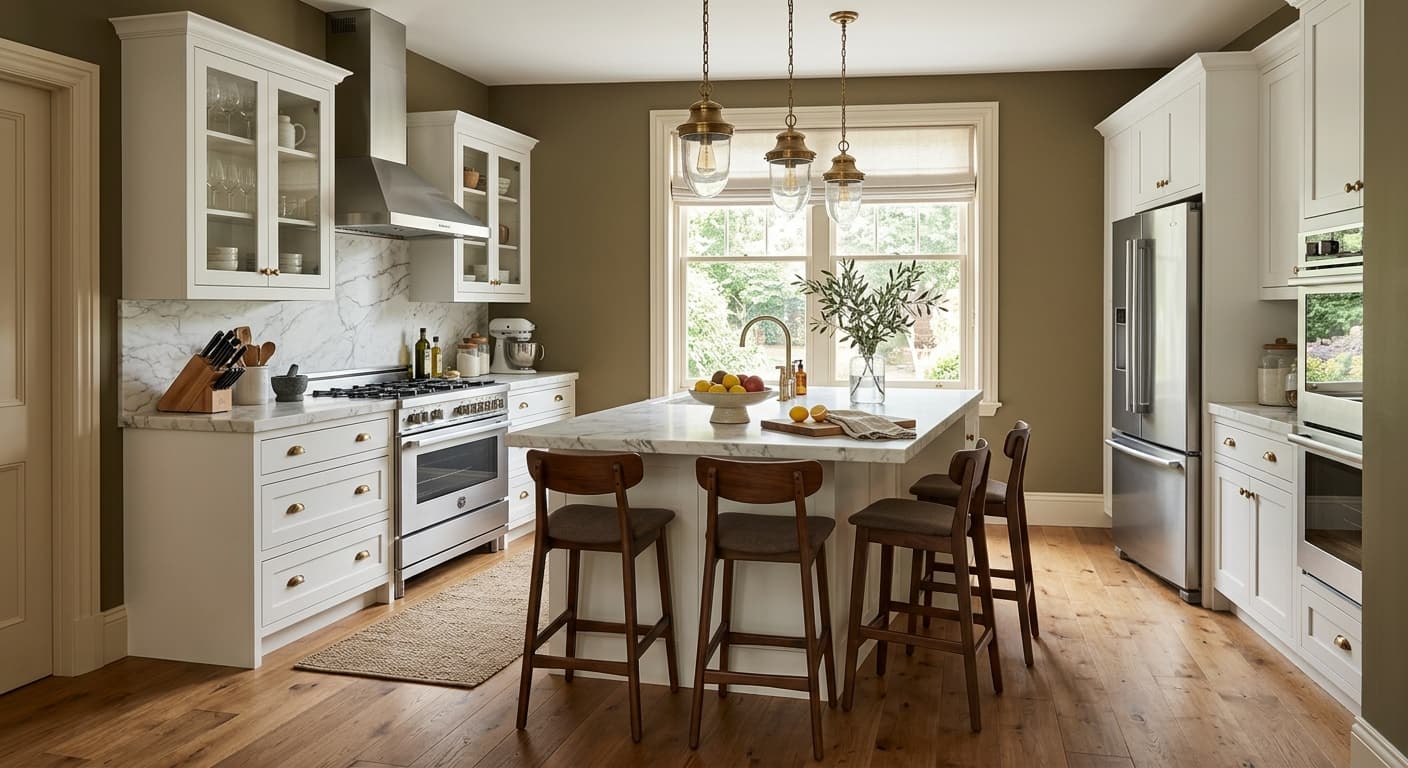
Spanish Olive thrives in studies, bedrooms, dining rooms, and any space where you want a sense of calm and enclosure. It also works beautifully on kitchen cabinetry if you want color without committing to something bold. In north-facing rooms, the cooler light will deepen the gray and pull out the moodier side of the color, which suits a den or library. South-facing rooms get the opposite effect, with sunlight bringing the green to life and keeping things feeling fresh.
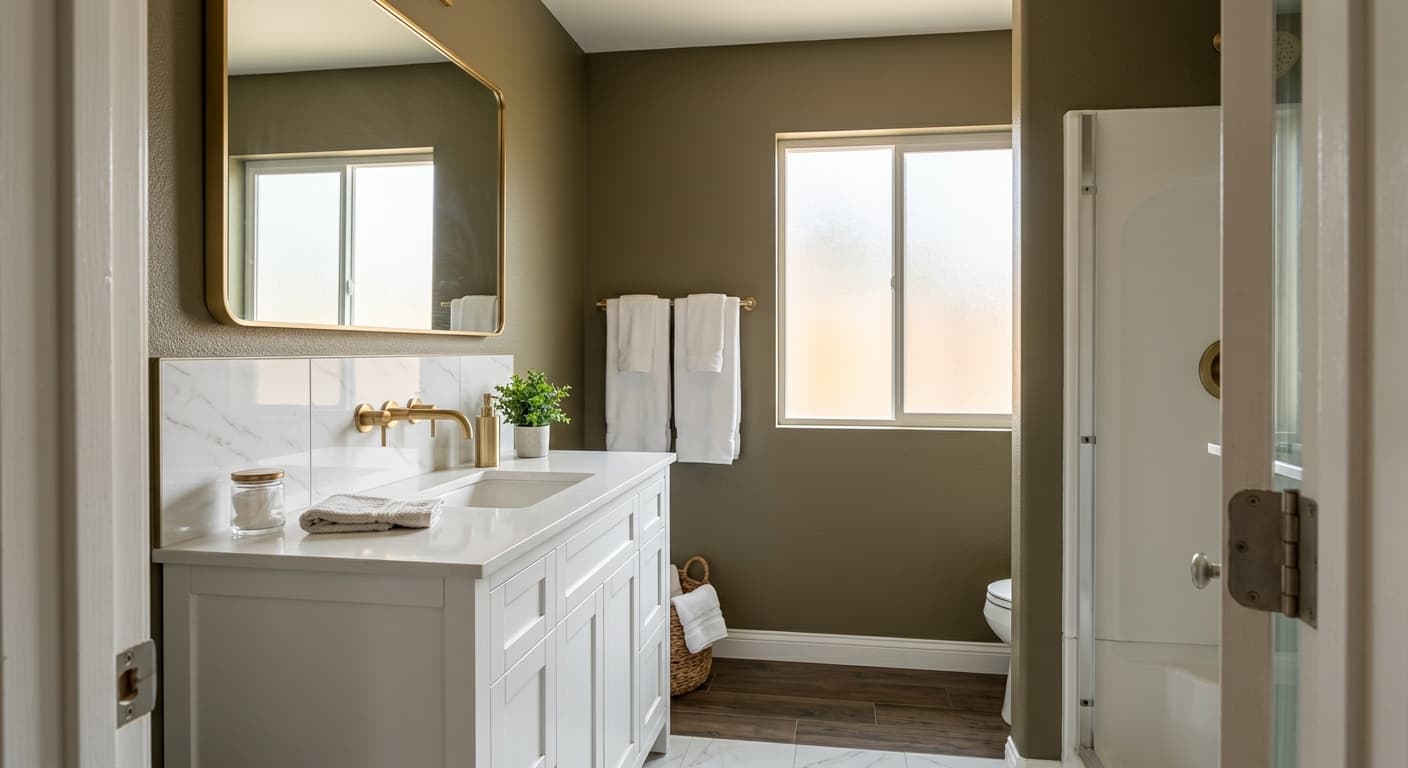
Because of its midtone depth, it works in both small and large rooms. In a small space, it adds character without closing things in too much. In a large room, it gives the walls weight and prevents that washed-out feeling you get with pale neutrals. Just remember that less natural light will make it feel noticeably darker, so test it on your actual walls before committing.
What to Pair With Spanish Olive
For trim, reach for a soft warm white like White Dove (OC-17) or Simply White (OC-117). These keep the contrast gentle and let the green stay the focus. If you want more drama, a creamy off-white like Swiss Coffee works nicely too.
Spanish Olive loves natural materials. Pair it with oak or walnut flooring, rattan, linen, and aged brass or bronze hardware. For a layered, tonal scheme, look at deeper greens like Tarrytown Green or warm neutrals like Pale Oak (OC-20) and Edgecomb Gray (HC-173). Terracotta and rust accents bring out its warmth, while charcoal and black add structure if you want something more grounded. Leather furniture in a cognac tone looks especially good against these walls.
Colors That Clash With Spanish Olive
Skip cool, stark whites with a blue base, since they make Spanish Olive look dull and slightly dirty. Avoid pairing it with bright, clean greens or pastels, which clash with its muted character. Cool gray flooring with blue undertones is another common mismatch that drains the warmth right out of the room. And resist using it in a space with almost no natural light, because it can flatten into a heavy, lifeless gray that loses everything interesting about the color.