Monterey White
What Monterey White Actually Looks Like
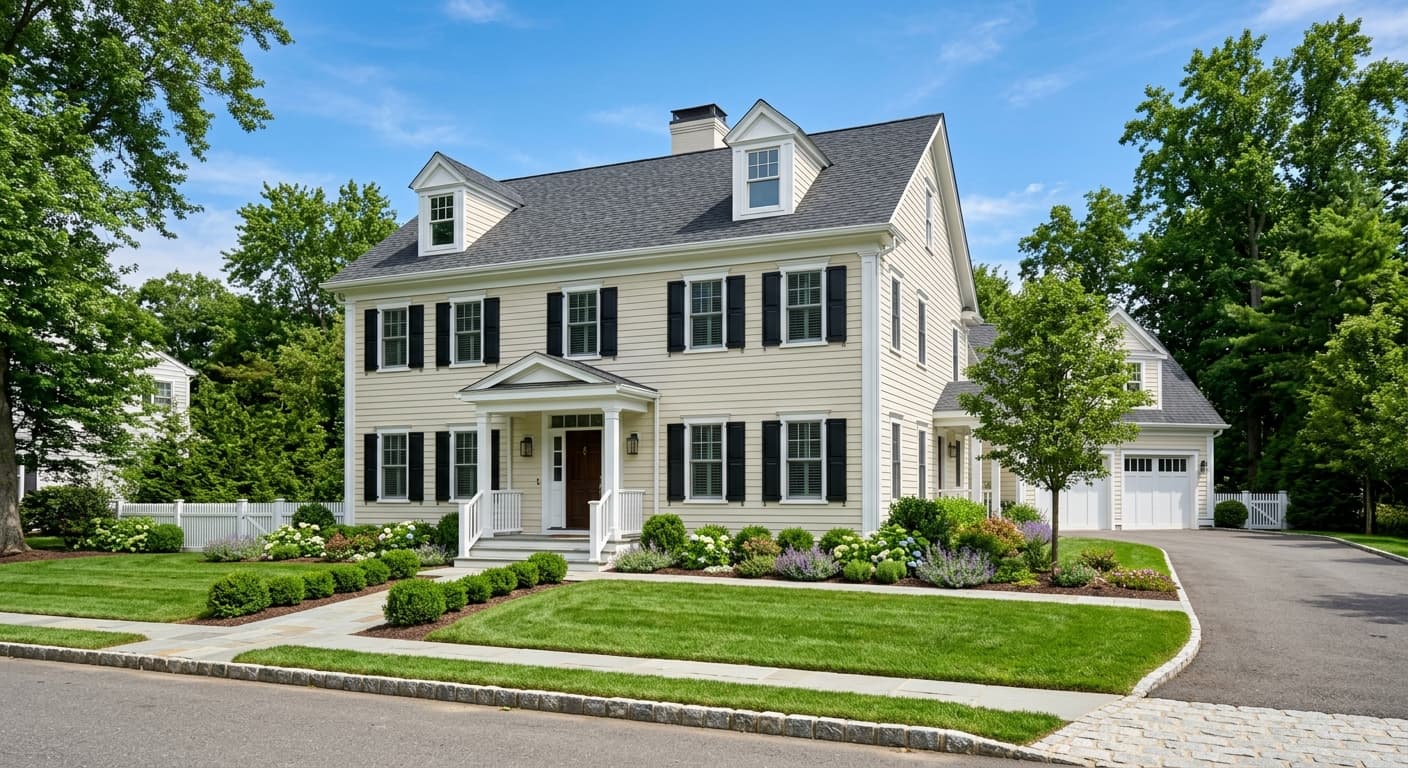
Monterey White is a soft, warm off-white that reads creamy without tipping into yellow. Put it next to a stark builder white and you'll see how much depth it carries. There's a quiet warmth here that keeps walls from feeling cold or clinical, which is exactly why it shows up in so many older homes and renovated farmhouses.
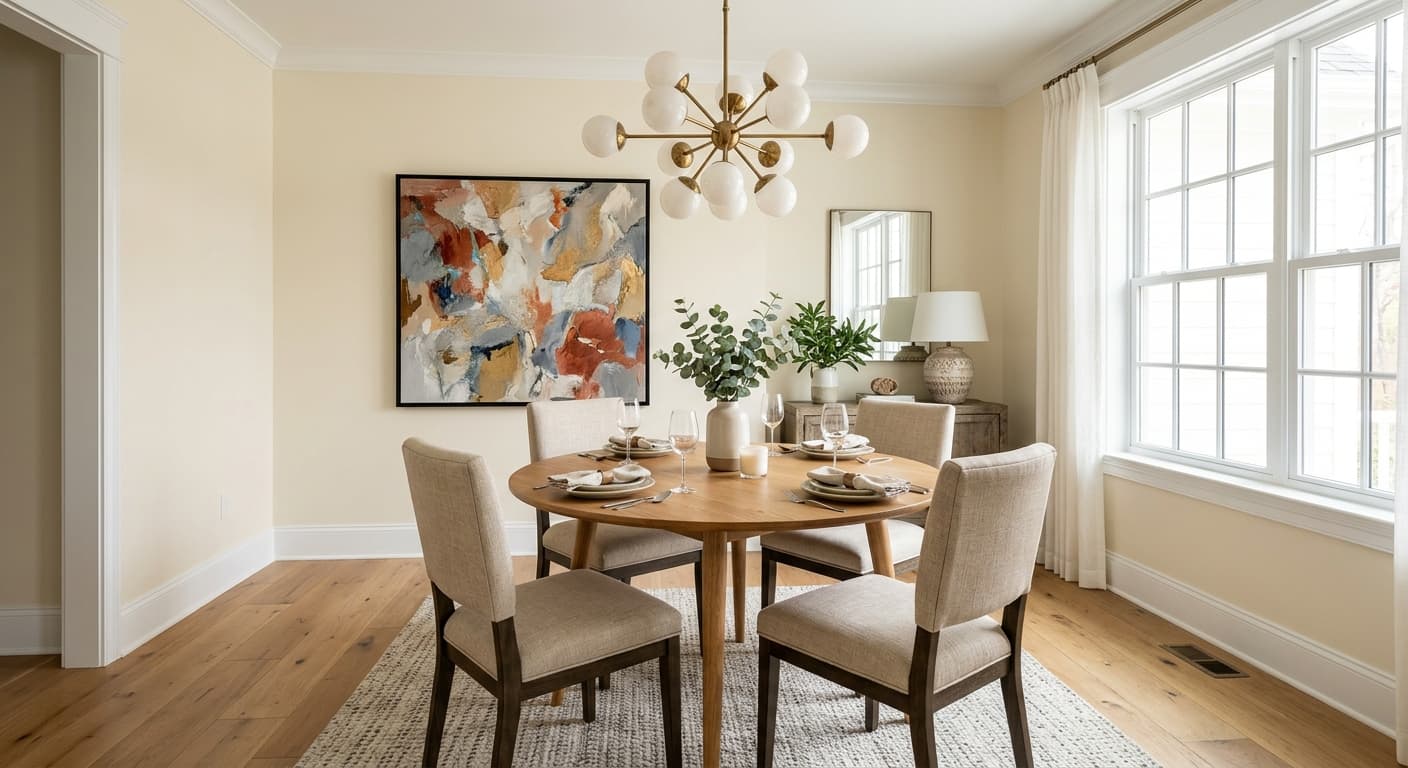
In bright, south-facing rooms, this color comes alive and feels almost buttery in the afternoon. Morning light keeps it gentle and clean. The thing to watch is how it behaves after dark. Under warm incandescent or low-temperature LED bulbs, Monterey White leans noticeably creamier, sometimes bordering on a pale antique ivory. Under cooler daylight bulbs, it settles back into a more neutral soft white.
What makes it distinctive is its versatility across surfaces. On flat walls it feels mellow and enveloping. On trim or cabinetry with a satin finish, it picks up a subtle glow that reads more refined. You get a different personality depending on the sheen, so test it the way you plan to use it.
Monterey White Undertones
The undertone here is warm, sitting somewhere between cream and a faint touch of yellow-gold. It is not a gray-based or green-based white, which matters a great deal when you choose what sits beside it. Pair it with anything that has a cool blue or gray undertone and the contrast can make Monterey White look slightly dingy by comparison.
Knowing this saves you from frustrating mistakes. If your trim, your tile, or your countertop runs cool, that warmth will fight you. Keep your companion colors in the same temperature family and everything reads intentional and cohesive instead of accidental.
Where Monterey White Works Best
This is a color that thrives in spaces you want to feel warm and welcoming. Living rooms, bedrooms, and kitchens are natural homes for it. It softens north-facing rooms that tend to feel flat and bluish, adding warmth those spaces usually lack. In south and west-facing rooms, it glows without going harsh.
Small spaces benefit too, since the high light reflectance keeps things open while the warmth prevents that boxed-in feeling cooler whites can create. Use it on walls in a den or a hallway and the room feels larger but still cozy. It is equally at home as an all-over color in an open floor plan where you want continuity from room to room.
What to Pair With Monterey White
For trim, a crisper white like Benjamin Moore White Dove (OC-17) gives you a gentle step up in brightness without breaking the warm family. If you want trim to disappear into the walls, paint it the same Monterey White in a higher sheen. For contrast on doors or built-ins, look at Benjamin Moore Pale Oak (OC-20) or a soft greige like Edgecomb Gray (HC-173).
Flooring in warm oak, walnut, or honey tones plays beautifully here. So do natural linen, rattan, aged brass, and unlacquered hardware. For deeper accents, navy or a muted sage adds depth without clashing. If you want a punchier moment, a warm terracotta or clay tone in textiles complements the cream beautifully.
Colors That Clash With Monterey White
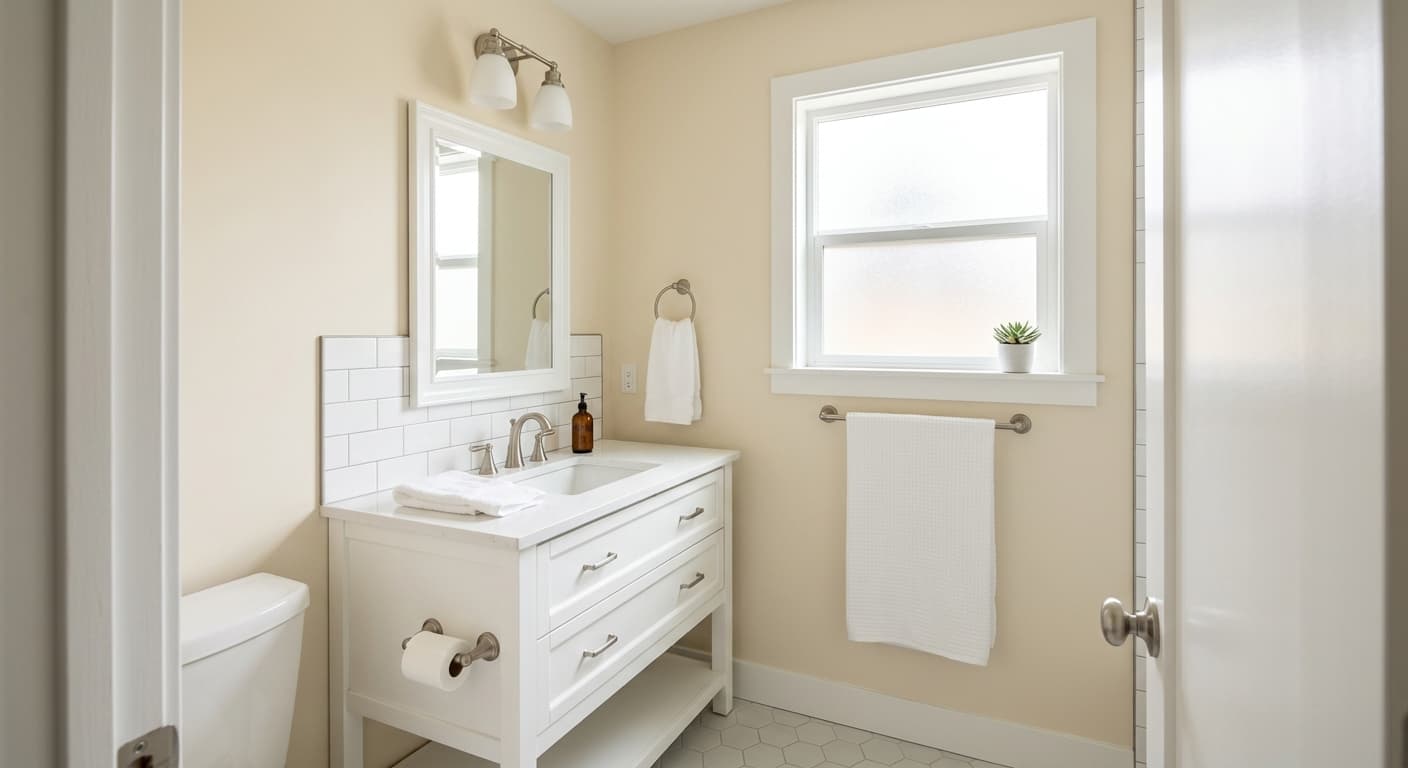
Steer clear of pairing Monterey White with bright, cool whites or anything with a heavy blue-gray cast. Next to a snowy, blue-leaning white, it can suddenly look yellowed and tired. Cool gray flooring and chrome or polished nickel fixtures also create a temperature mismatch that reads off. The common mistake is treating any off-white as interchangeable, then wondering why the room feels muddy. Match the warmth and you avoid the problem entirely.