Fossil
What Fossil Actually Looks Like
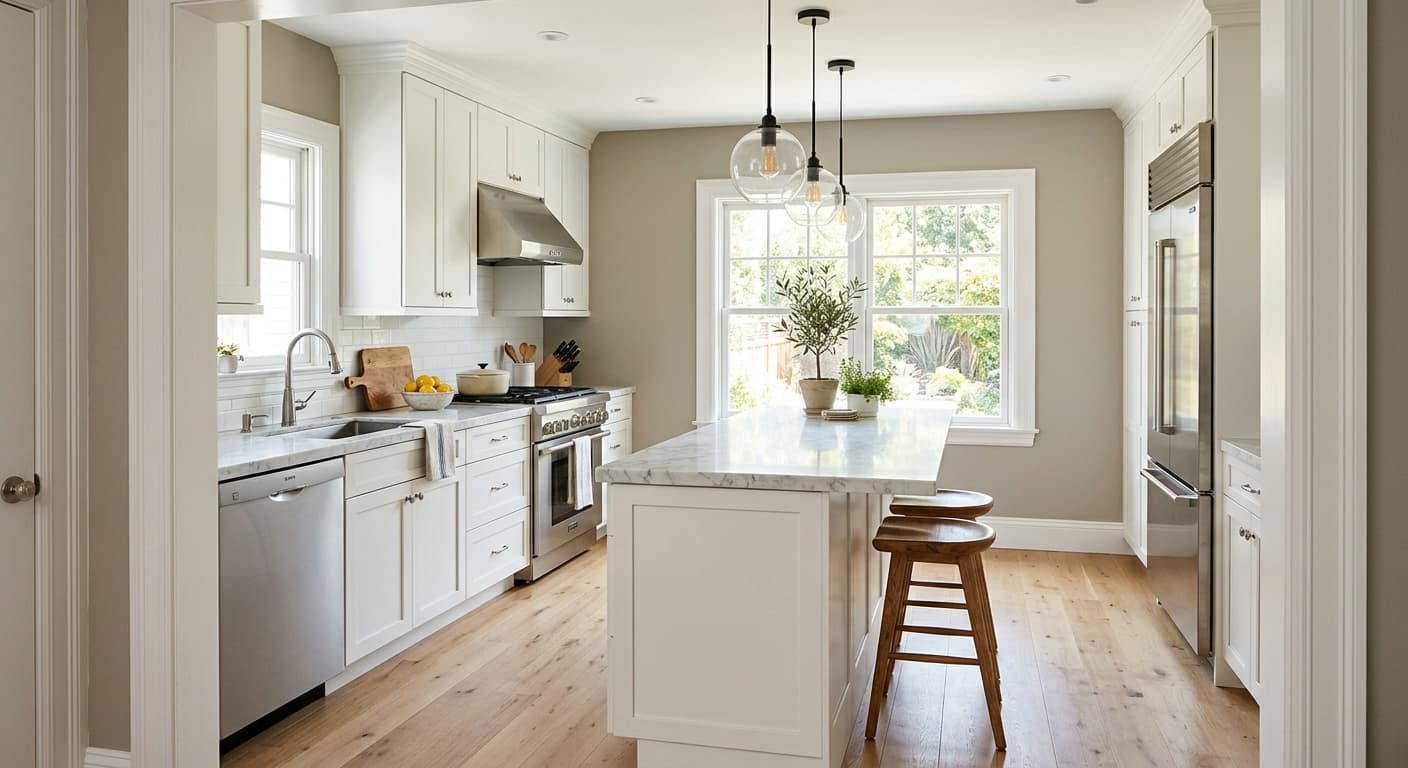
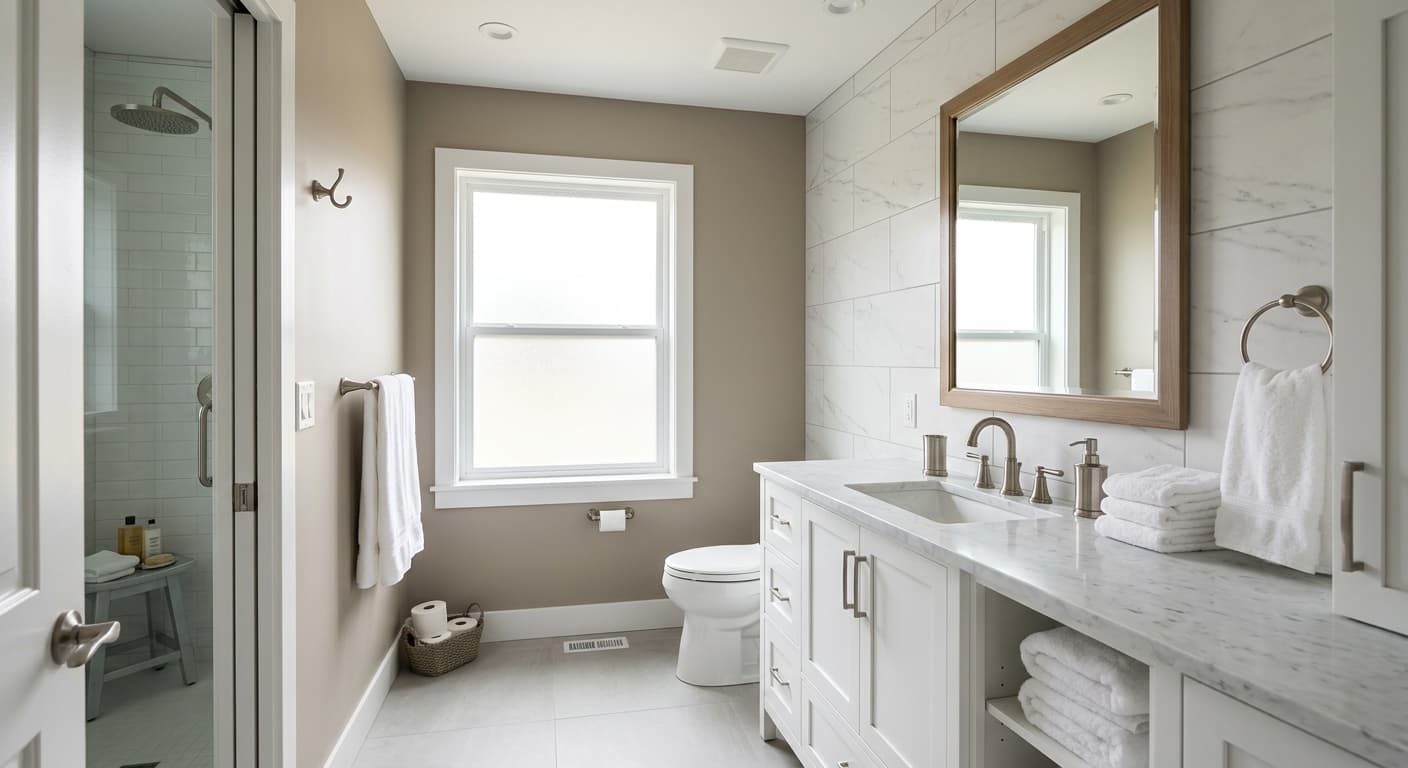
Fossil is a mid-tone greige that leans warm without tipping into beige territory. It reads as a soft, grounded neutral that holds its color in most rooms rather than washing out to plain gray. You'll notice a quiet taupe quality to it, the kind of color that feels settled and lived-in from the moment it dries.
The way Fossil behaves depends heavily on your light. In bright, south-facing rooms, it warms up and the taupe notes come forward, giving walls a soft, sandy glow. In north-facing spaces or under overcast skies, it cools slightly and the gray side of the greige takes over. Morning light tends to flatten it into something calm and even, while afternoon sun pulls out more warmth and dimension.
What makes Fossil distinctive is its balance. Plenty of greiges commit too hard to one side and end up looking either muddy or sterile. Fossil sits in the middle and stays flexible, which is exactly why it works across so many different homes and styles.
Fossil Undertones
The dominant undertone here is a warm taupe, with a subtle violet-gray quietly underneath. That violet base is the part people miss, and it matters. Next to a cool blue-gray, Fossil can suddenly look pinker or warmer than expected. Next to a creamy white, that same warmth feels intentional and cozy.
This is why testing on the actual wall is non-negotiable. The undertone shapes every decision you make around it, from your trim color to your sofa fabric. Bring home a sample and live with it for a few days before you commit, because the undertone will tell you what kind of palette the room wants to become.
Where Fossil Works Best
Fossil shines in living rooms, bedrooms, and open transitional spaces where you want a neutral that feels intentional rather than default. It handles south- and west-facing rooms beautifully, where the extra light keeps it from going heavy. In north-facing rooms it still works, but pair it with warm lighting and warm-toned accessories so it doesn't drift cool and flat.
Mid-size to larger rooms suit it well because the color has enough depth to fill a space without closing it in. In very small or dim rooms, Fossil can feel slightly weighty, so reserve it for spots with decent natural or layered lighting.
What to Pair With Fossil
For trim, go with a soft warm white like Benjamin Moore White Dove (OC-17) or Simply White (OC-117). Both keep the contrast gentle and let Fossil stay the star. If you want a sharper, more modern edge, a crisper white works, but watch that it doesn't make the walls read murky by comparison.
Fossil loves natural materials. Pair it with oak or walnut flooring, linen upholstery, and brass or aged bronze hardware. For a layered neutral scheme, Benjamin Moore Edgecomb Gray (HC-173) works as a lighter companion, and Kendall Charcoal (HC-166) gives you a grounded, deeper anchor for cabinetry or a feature wall. Black accents in lighting or window frames sharpen the whole room nicely.
Colors That Clash With Fossil
Steer clear of pairing Fossil with stark, cool-blue grays, which fight its warmth and pull out that hidden violet in an unflattering way. Avoid high-contrast bright whites if you want a soft, cohesive feel, since they can make Fossil look dingy. And don't use it in a dark, north-facing room without strong lighting support, because it will lose its dimension and turn flat and gloomy.