Winter Way
What Winter Way Actually Looks Like
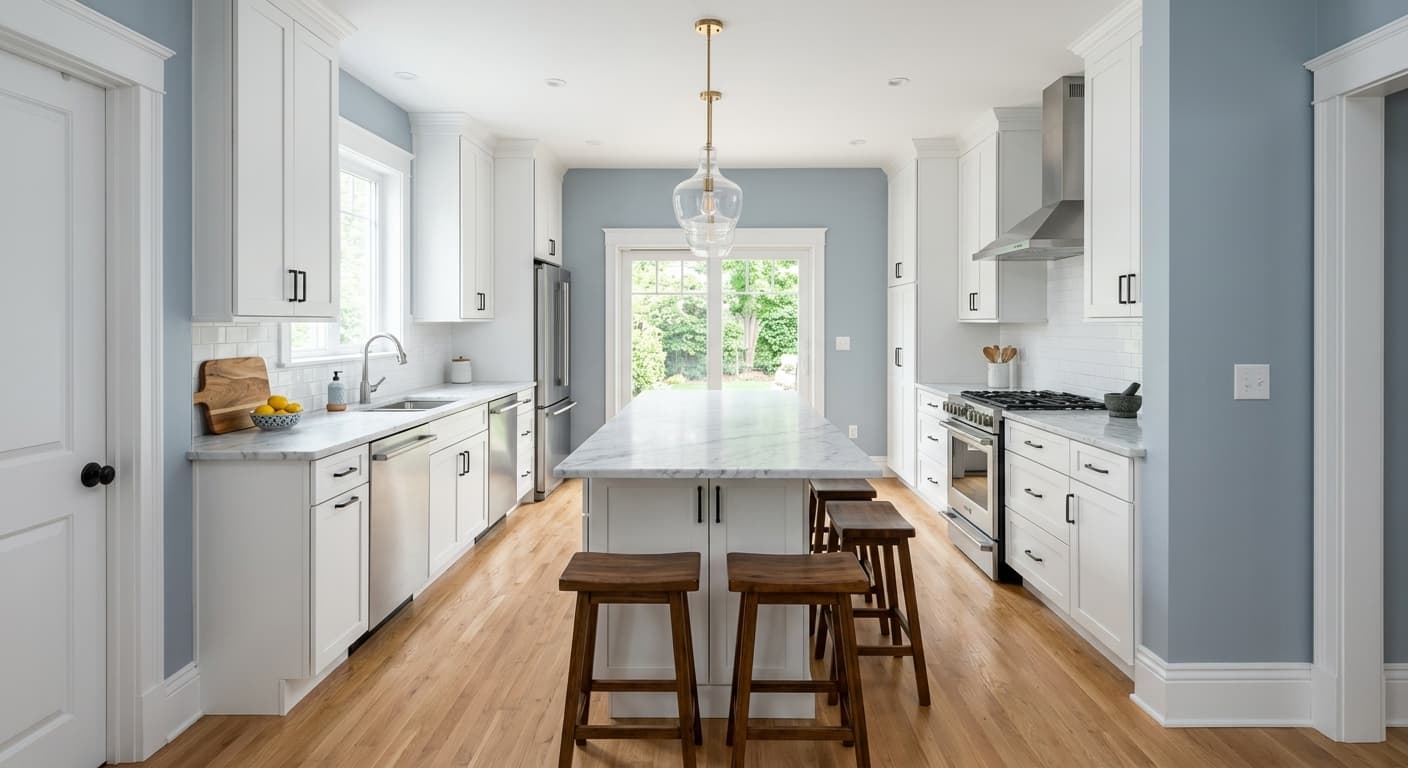
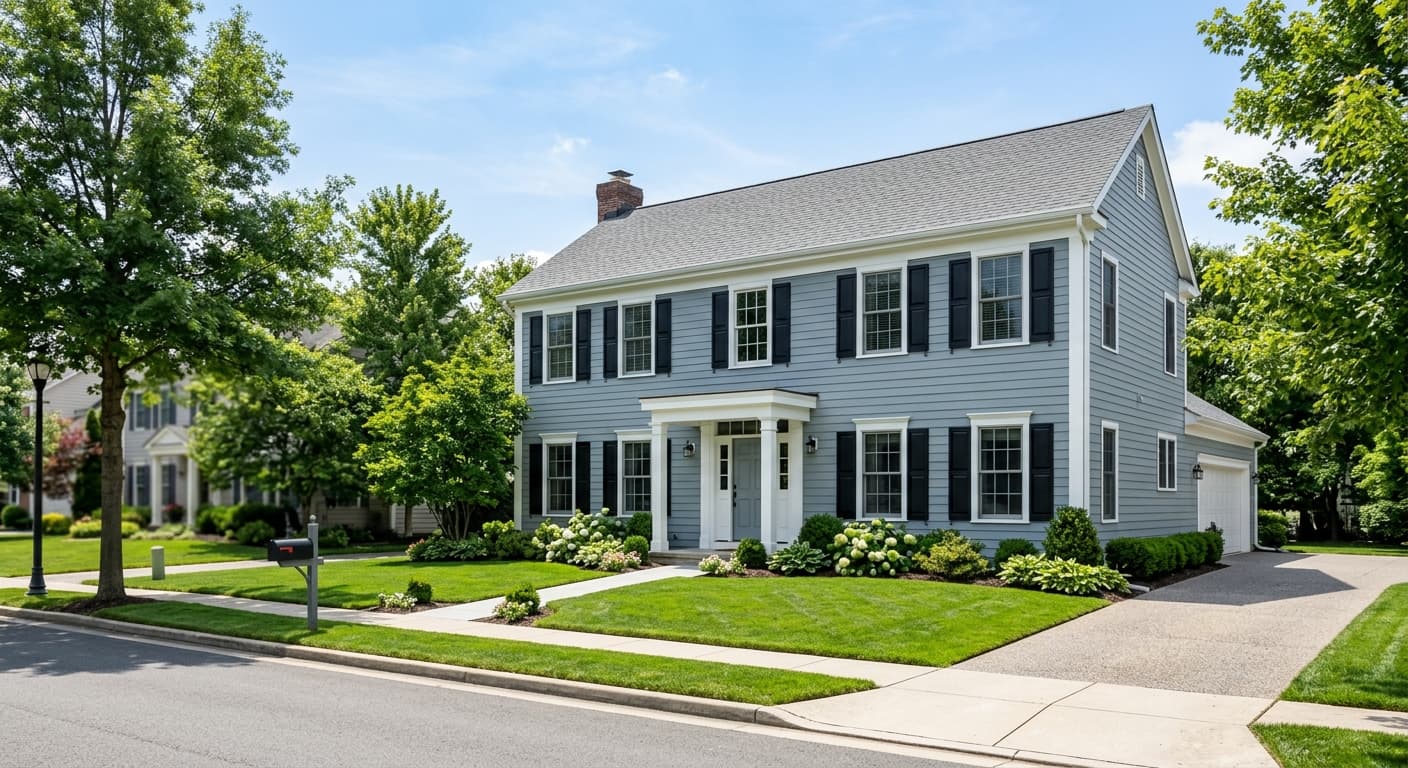
Winter Way is a pale blue-gray that reads more gray than blue in most rooms. Think of an overcast sky right before the light breaks through. It sits in that quiet middle ground where you might call it blue one minute and gray the next, depending on what the light is doing.
In bright daylight, the blue comes forward and the color feels cool and airy. Under warm artificial light in the evening, it settles into a soft greige territory and loses some of its chill. This shift is part of what makes the color useful. It does not commit hard to one identity, so it adapts to the room around it.
What sets it apart from a thousand other pale grays is the touch of blue that keeps it from going flat or dingy. You get freshness without the color shouting "blue paint." On a large wall, it holds its composure and never looks washed out the way some pale tones do.
Winter Way Undertones
The dominant undertone here is cool blue with a whisper of gray. That matters more than you might expect. Cool undertones can clash with warm-toned woods and yellow-based whites, so you need to pay attention to what surrounds it. Put a creamy, yellow trim next to Winter Way and the trim will look slightly dirty by comparison.
Because the undertone leans cool, it pulls cooler in north-facing rooms and warmer in south-facing ones. Test a sample on more than one wall before you commit. The same gallon can look noticeably different across a single room depending on which way the windows face.
Where Winter Way Works Best
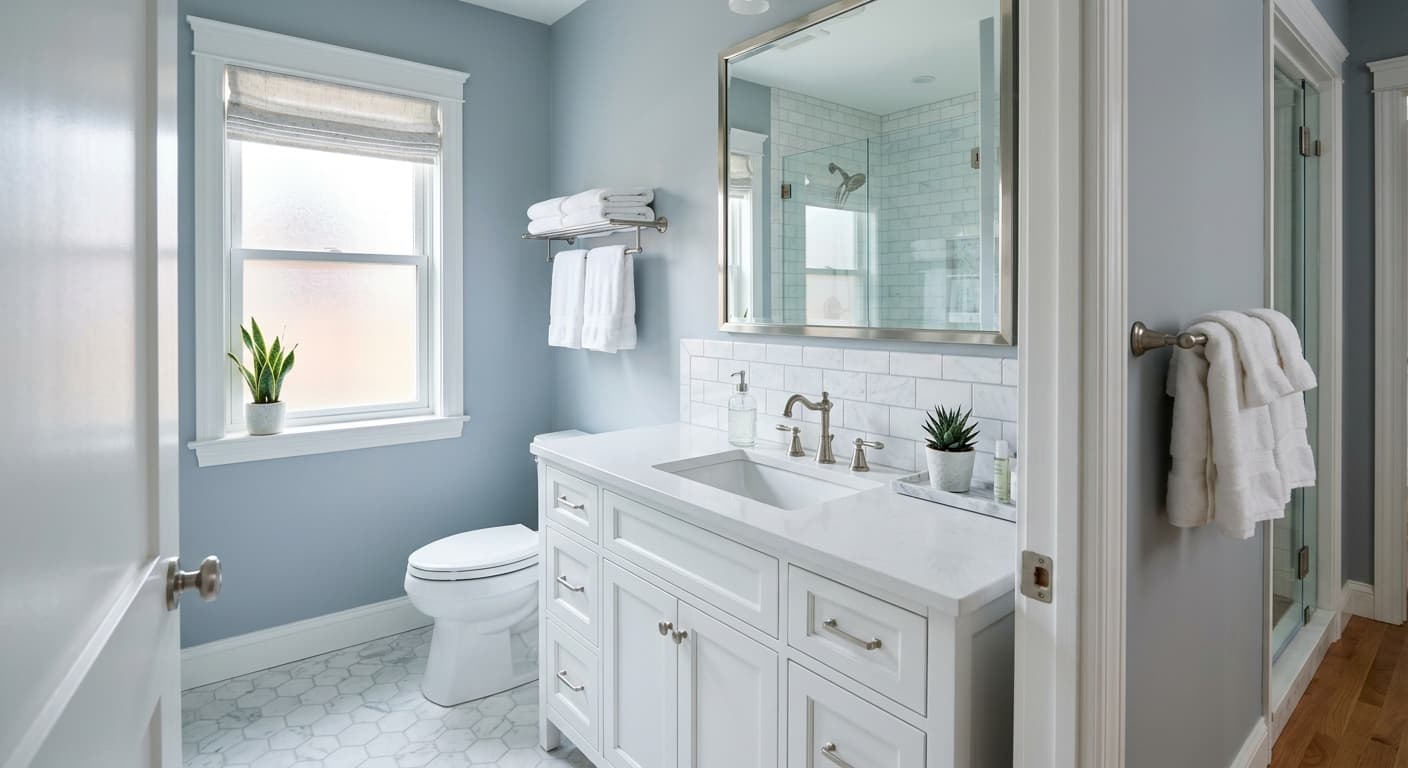
This color does its best work in bedrooms and bathrooms where you want a calm, restful feel. South-facing rooms warm it up and keep it from feeling cold, which makes those spaces a safe bet. North-facing rooms will lean cooler and a little more blue, so go in knowing that the result will feel crisp rather than cozy.
Small spaces benefit from its lightness. With an LRV of 60, it bounces enough light to keep a powder room or compact bedroom from feeling closed in. In larger open-plan areas it works too, though you may want a warmer accent somewhere to balance the coolness.
What to Pair With Winter Way
For trim, reach for a clean white with a cool or neutral base rather than a creamy one. Behr Ultra Pure White or a soft cool white keeps the crispness intact. For furniture, lean into cool grays, charcoal, navy, and pale woods like ash or whitewashed oak. Brass and matte black hardware both hold up well against it.
Flooring in light to medium tones works nicely. Gray-toned wood or a pale natural oak supports the cool palette. If you have warm honey or orange-leaning floors, expect some tension, and consider a rug to bridge the gap. For adjacent walls, soft whites and deeper blue-grays in the same family create a layered, cohesive look.
Colors That Clash With Winter Way
Skip the warm, yellow-based creams and golden beiges. Next to Winter Way they look muddy, and the contrast between cool and warm fights for attention. Heavy red-toned woods like cherry or mahogany clash with the blue undertone. Avoid pairing it with bright warm whites on the ceiling, since the difference will read as a mismatch rather than a deliberate choice.