Offshore Mist
What Offshore Mist Actually Looks Like
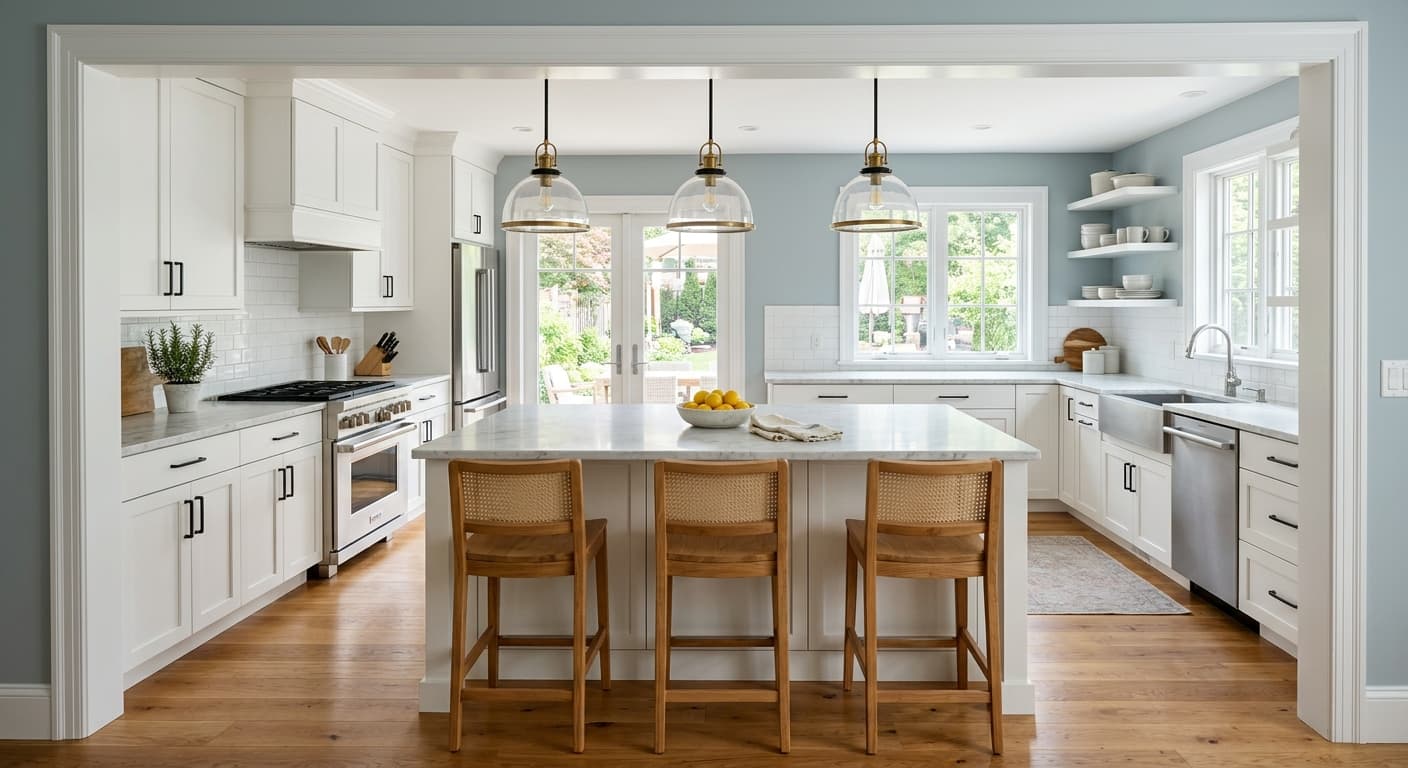
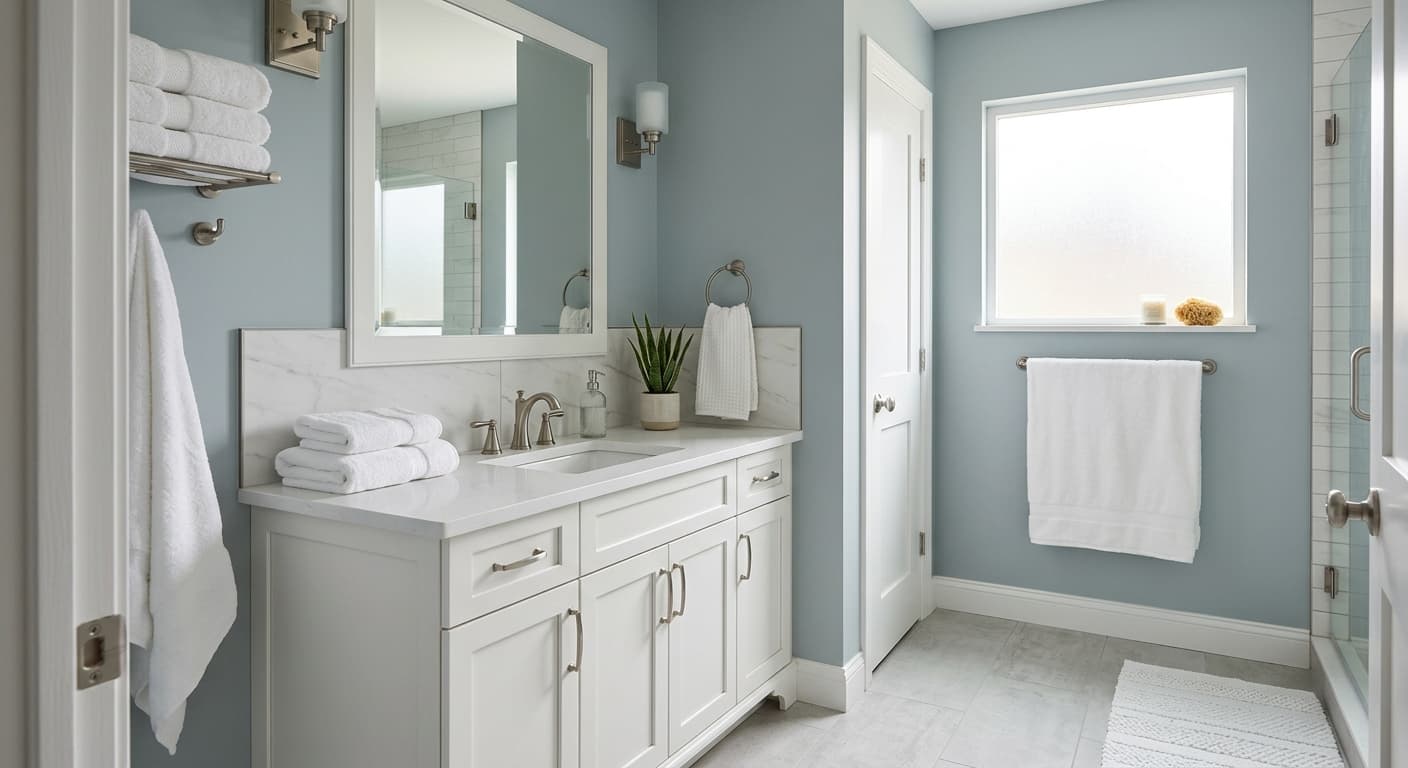
Offshore Mist sits in that hard-to-name space between blue, gray, and green. Most people call it a soft blue-gray, but spend a day with it and you will catch the green creeping in, especially when the light goes flat. It reads cool without feeling cold, which is the quality that makes it work in so many rooms.
In bright morning light, it leans clean and airy, closer to a pale sky blue. By late afternoon, when the sun drops and the light warms, the gray base takes over and the whole thing settles down. Under artificial light, it depends entirely on your bulbs. Warm white bulbs pull out the gray and soften the blue. Cool daylight bulbs sharpen the color and push it back toward that misty sea-glass tone the name promises.
What makes this color distinctive is its restraint. It has enough pigment to feel like an actual color instead of a fancy white, but not so much that it dominates. Walls in Offshore Mist recede. They give you a backdrop rather than a statement.
Offshore Mist Undertones
The undertone here is the whole story. Offshore Mist has a green-blue undertone sitting on a gray base, and that green is what you need to watch. Against a warm beige floor or yellow-toned wood, the green gets louder and the color can start to feel slightly muddy. Against cooler surfaces, the blue stays dominant and the color stays crisp.
Undertones matter because they decide what the color does to everything around it. Pick trim or furnishings without accounting for that green-blue lean and you will end up with a room that feels off without knowing why. Test it next to your actual flooring and fabrics before you commit. A swatch on the wall tells you half the truth.
Where Offshore Mist Works Best
This is a bathroom and bedroom color first. The cool, settled quality makes it good for spaces where you want calm, and it handles humidity well in Behr's Premium Plus Ultra finish. North-facing rooms get the most interesting results because the cooler natural light leans into the blue-gray and keeps it from going flat. South-facing rooms work too, though the warmer light will mute it slightly, so plan for that.
Small spaces benefit from the higher LRV, which keeps things feeling open. In larger rooms with good light, Offshore Mist can carry an entire open-plan space without feeling heavy. Just avoid rooms that get almost no natural light, where it can drift toward a dull, lifeless gray.
What to Pair With Offshore Mist
For trim, go with a soft white that has a touch of warmth to balance the cool wall. Behr Polar Bear or Swiss Coffee both work without fighting the blue-green. Avoid a stark, blue-based white, which will make everything feel clinical.
For furnishings, lean into natural materials. White oak, rattan, and linen in oatmeal or sand tones warm the room and keep the cool wall from taking over. Brass and aged gold hardware add a quiet contrast that flatters the green undertone. For flooring, light to medium wood with neutral undertones works best. Pale gray-washed floors reinforce the cool scheme, while warm honey-toned wood creates a more grounded, lived-in feel.
Colors That Clash With Offshore Mist
Steer clear of yellow-heavy beiges and orange-toned woods, which clash with the green undertone and make the wall look dingy. Skip cool, stark whites on trim unless you want a hospital feel. And do not put this color in a room that stays dark, because the gray base will flatten and the charm disappears completely. The biggest mistake is treating it like a true blue. It is not, and styling it that way leaves you confused when the green shows up.