Morning Zen
What Morning Zen Actually Looks Like
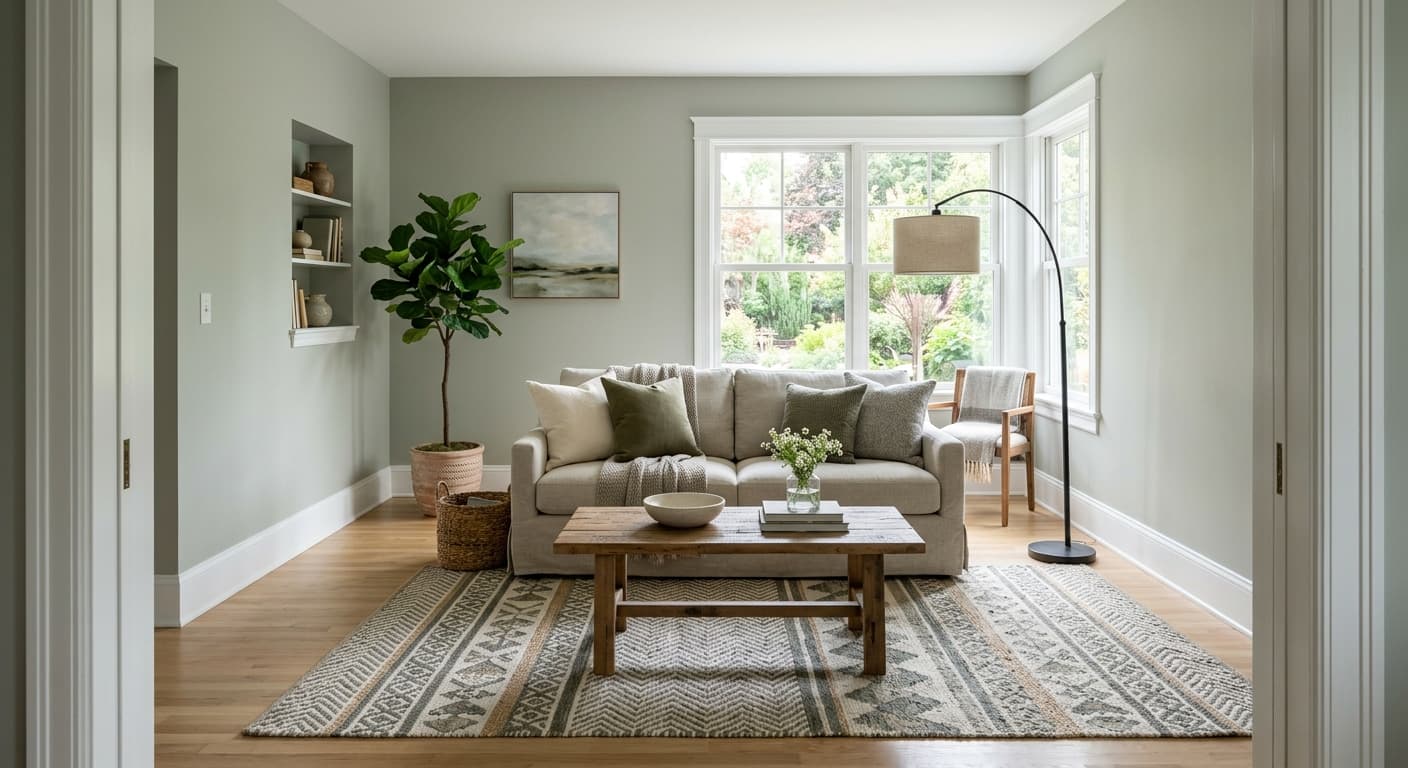
Morning Zen sits in that quiet space between green and gray, leaning sage but never committing fully to either side. In the bottle it reads almost neutral. On a full wall, the green comes forward and softens the whole room.
Light changes this color more than most. North-facing rooms pull it toward gray, giving you a cooler, more muted result that can edge close to a soft greige on overcast days. South-facing light warms it up and lets the green breathe, making the sage quality obvious. East and west rooms shift it throughout the day, cool in the morning and warmer by late afternoon.
What makes it work is the restraint. This is not a bold, saturated green that announces itself. It is the kind of color you live with comfortably for years because it never fights you. Some people walk in and call it gray. Others call it green. Both are right, and that ambiguity is the point.
Morning Zen Undertones
The dominant undertone here is gray, with green doing the work just underneath. That gray base keeps Morning Zen grounded and prevents it from going too herbal or springy. You will also catch a faint cool note that reads almost blue in certain north light, so test it before you commit.
Undertones matter because they decide what plays nice next to your walls. The cool gray base means warm woods and brass can either complement or clash depending on how much warmth you introduce. Pay attention to your fixed elements like countertops and flooring, since their undertones will either echo this gray-green or expose it.
Where Morning Zen Works Best
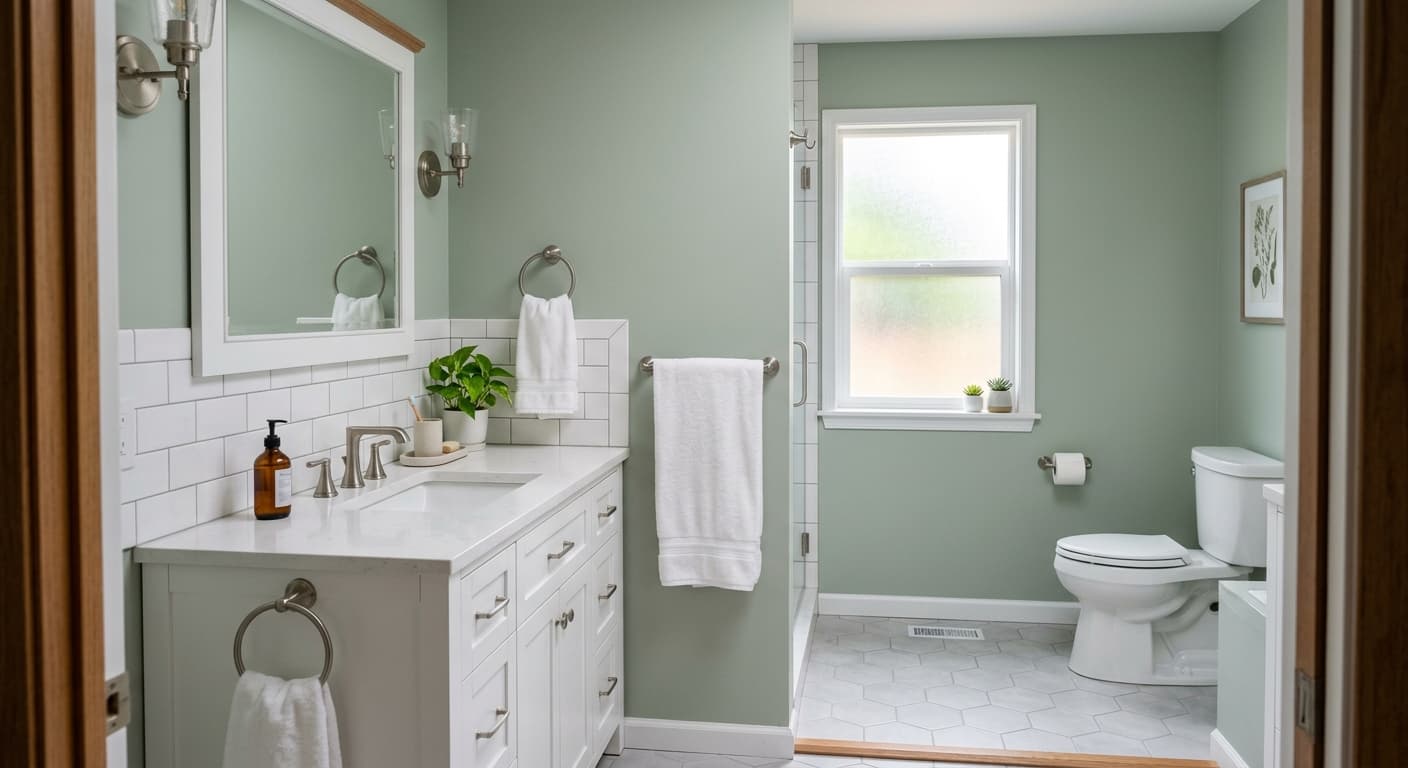
Bedrooms and bathrooms are the natural home for Morning Zen. The color has a calming, slightly spa-like quality that suits spaces where you want to wind down. It also performs well in kitchens, especially on cabinetry, where the soft sage reads as understated rather than trendy.
For orientation, south and west-facing rooms get the most out of it because the warmth pulls the green forward and keeps the room from feeling cold. North-facing spaces still work, but be ready for a grayer, moodier version. In smaller rooms, the lighter LRV helps things feel open. In larger rooms with good light, it holds up without going flat.
What to Pair With Morning Zen
For trim, a soft white with a warm or neutral base works better than a stark, blue-white. Behr Swiss Coffee or a creamy off-white keeps the contrast gentle and lets the sage stay relaxed. If you want more definition, a warm greige trim creates a tonal, layered look.
Wood tones are your friend here. White oak, natural ash, and light walnut all sit well against Morning Zen. For furniture, lean into linen, oatmeal, and soft taupe textiles. Black accents in small doses, like cabinet hardware or a light fixture, sharpen the whole scheme without overwhelming the calm. Flooring in light to medium wood or a warm gray tile keeps everything cohesive.
Colors That Clash With Morning Zen
Skip cool, blue-toned grays as a partner color, since they drag Morning Zen toward a clinical, washed-out feeling and kill the green entirely. Bright, glossy whites can create too much contrast and make the walls look dingy by comparison. Avoid pairing it with strong yellows or oranges, which clash with the cool base and make the green look muddy. And do not rely on a single test swatch under one light condition. This color shifts too much to trust at a glance.